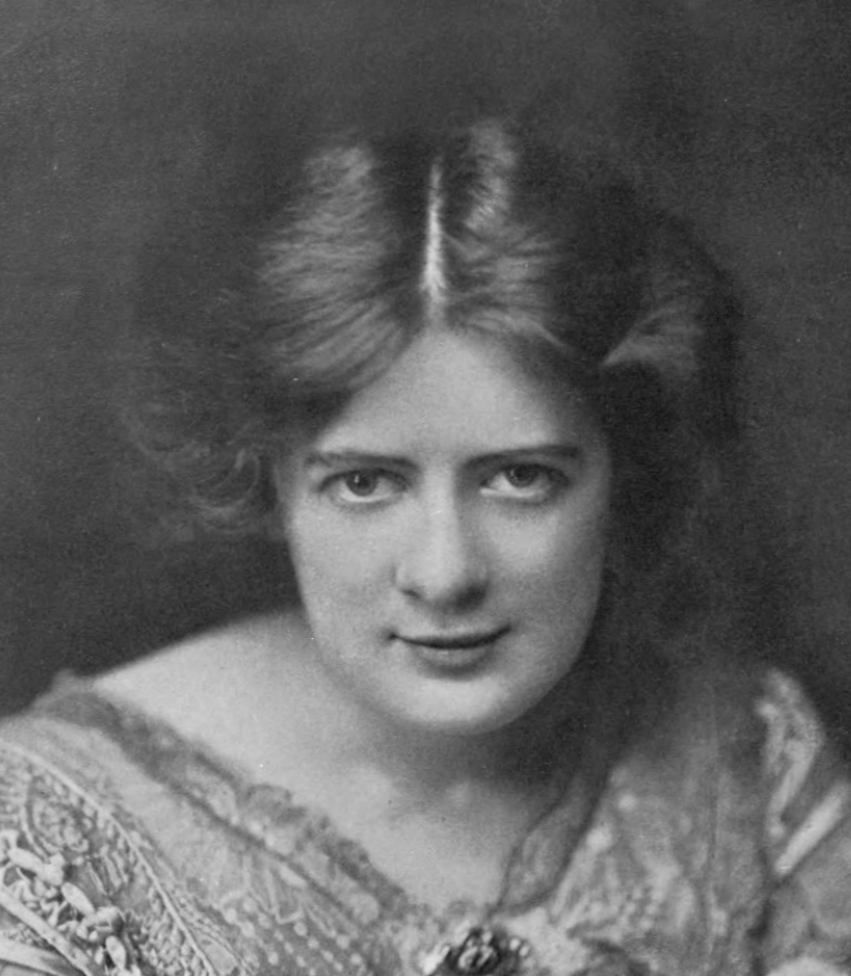
In the summer of 1912, rumors circulated at the principal hotel at Sea Girt, the Beach House. That was nothing new; each summer’s guests had triggered wagging tongues about celebrity visitors.
The quality of the patronage at the now 36-year-old hotel had fallen somewhat. Gone were the days near its opening when the hotel and its marquee managers attracted the most important political and business figures in America. Guests still loved basking in the memory of what had been the mansion of Commodore Robert Field Stockton, as if some of his moxie could be garnered from a stay at his estate. The wives of old-money Philadelphia Presbyterians, the staple of the 1880s, had also moved on from their annual stay at what they called “Our House.”
Not all the juice had been squeezed out of the Beach House. New Jersey’s Governor still spent the summer at the Little White House at the Guard Camp, and Governor Woodrow Wilson had recently launched his presidential run from its porch. As the closest hotel to the Governor’s mansion, the Beach House remained on the list of places with a good reputation. Repeat visitors dominated the guest ledger, and the talk that summer—away from the future President—centered on a striking young woman with two children: an actress enduring her second failed marriage.
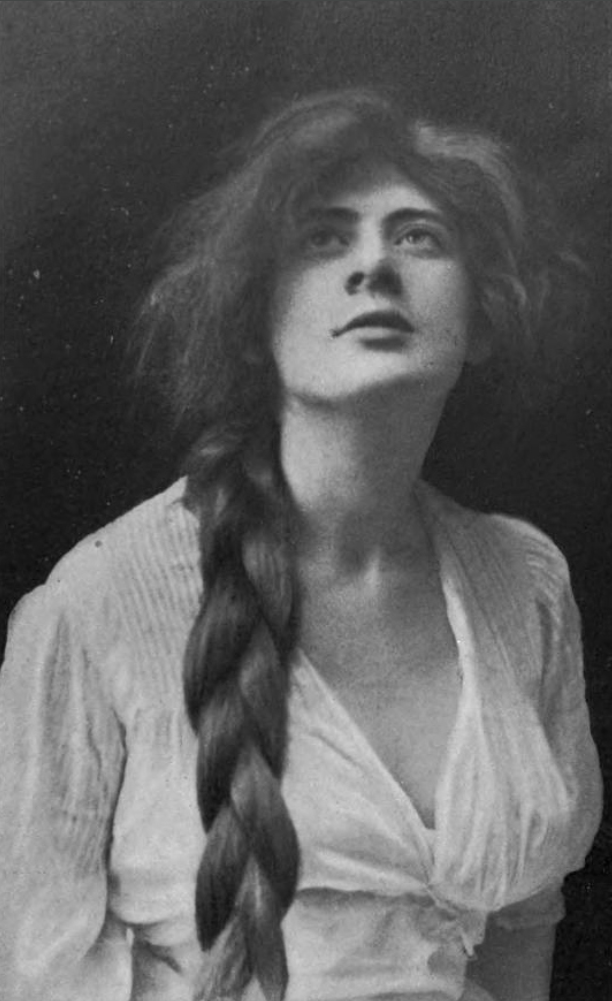
Publicity photo of a younger Bernice. The falling locks were considered risqué
Bernice Golden Henderson Heinze was recovering from childbirth and negotiating her second divorce. She sought the quiet of Sea Girt with her daughter, Kathryn Henderson, six, from her first union, and her infant son, F. Augustus Heinze Jr., from her second. The guests whispered, but at least she was a safe distance from New York reporters while her lawyers fought for alimony.
Bernice Golden, from Toledo, Ohio, used her grandfather’s inheritance to attend drama school. New York producer David Belasco discovered her at a school performance. He was intrigued by her long, thick locks of hair and deep-set sparkling eyes, which added drama to her acting. He signed her immediately, gave her personal instruction, and cast her in Sweet Kitty Bellairs (with Henrietta Crosman) at the Belasco Theatre in Manhattan. She found immediate success, but like many beauties in show business, wealthy men came calling.
In late 1904, Bernice left the stage to marry Charles A. Henderson, a flashy Wall Street high-roller and officer connected with the International Mercantile Agency an early competitor to Dunn and Bradstreet and later the Credit Clearing House. He showered her with his wealth. They had no fixed apartment but drifted between the top hotels—the Waldorf-Astoria, the Ansonia, the Majestic, and the Algonquin. After she gave birth to Kathryn, Bernice took the baby on a trip to Europe with her sister. Her husband was having business trouble.
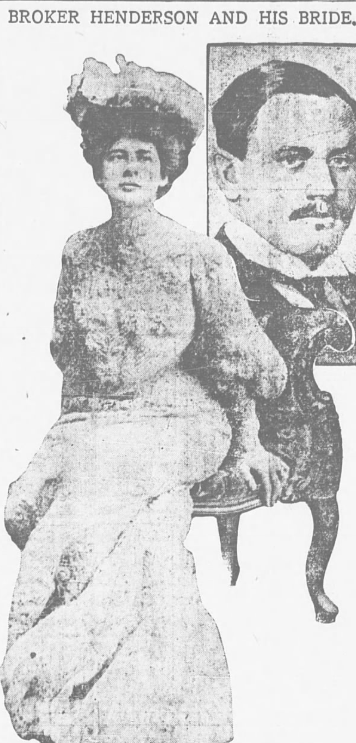
Shamed by the arrest of her husband, as noted in the Evening World, Bernice fled to Europe
While she was gone, in March 1906, Henderson was indicted and arrested on charges of swindling a prominent West Virginia millionaire and political figure, William P. Hubbard, out of substantial sums through inflated stock sales in the collapse of his International Mercantile Agency.
He was ruined and had no way of supporting his family. Bernice filed for divorce. She was rid of Henderson and would eventually be awarded $300 a month in alimony in 1908, but she had to feed her daughter in the meantime. Need drove her back to work.
In 1907, she was lured away from Belasco by agents of the Theatrical Syndicate of Klaw & Erlanger. She returned to the stage appearing as Kathleen in The Right of Way, from Sir Gilbert Parker’s novel, with Guy Standing as the star. She became the latest chapter in a war over control of the American theater.
Belasco, who had discovered and coached her, was reported deeply chagrined to see his former pupil captured by his bitter rivals. Since 1903, he had waged a fierce legal and commercial war against the Syndicate’s near-monopoly over American theater bookings, filing lawsuits over the undocumented trust, its hidden partnerships, profit-skimming, and coerced contracts. Bernice’s move to Klaw & Erlanger was a setback for Belasco, and he spoke unkindly about the situation. Despite the controversy, Bernice was lauded for her performance and secured additional roles. She later played the Vampire in A Fool There Was.
While she had work and good reviews, she did not enjoy the tension surrounding the business. This may have drawn her to Fritz Augustus Heinze, “the Copper King,” in 1910. They would find common ground. Fritz was also in the midst of a trust fight.
Born in Brooklyn in 1869, Fritz was trained as a mining engineer at Columbia. At nineteen, he headed for Butte, Montana, and rose through the aggressive application of federal mining laws—specifically the apex law, a statute that allowed a claim owner to follow a vein underground wherever it led, even beneath neighboring surface claims. He used relentless litigation against the Amalgamated Copper Company (controlled by Standard Oil figures Henry H. Rogers and William Rockefeller) and the Boston & Montana interests. The same trust strategies that had consolidated sugar, railways, and oil were being used to dominate U.S. mining. Fritz went to war against them. The Butte miners sided with the Copper King, who advocated better working conditions and helped cut the workday from ten hours to eight. He lobbied aggressively for laws that helped his interests.
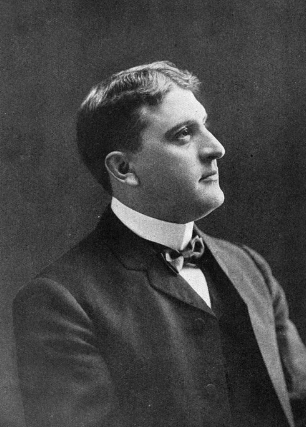
The Copper King Fritz Augustus Heinze
As one contemporary account put it: “He has youth and magnetism upon his side and is quite the hero of the state today. He has had laws passed that benefit every smelter and independent mine owner.… The more he is threatened, the more he laughs, and the brighter his songs and his raillery, as he entertains at the club the lawyers or the experts upon either side equally well.” 1
Heinze built the Montana Ore Purchasing Company and, by 1902, the United Copper Company. After running rings around Amalgamated, in 1906 he sold his principal Butte holdings to the Trust and dropped his lawsuits for an undisclosed fortune estimated between $10 and $20 million. He retained a substantial interest in United Copper, and the 37-year-old was widely dubbed the “Copper King.” He and his “copper boys” rolled into New York frequently, took in the shows, and took out the showgirls.
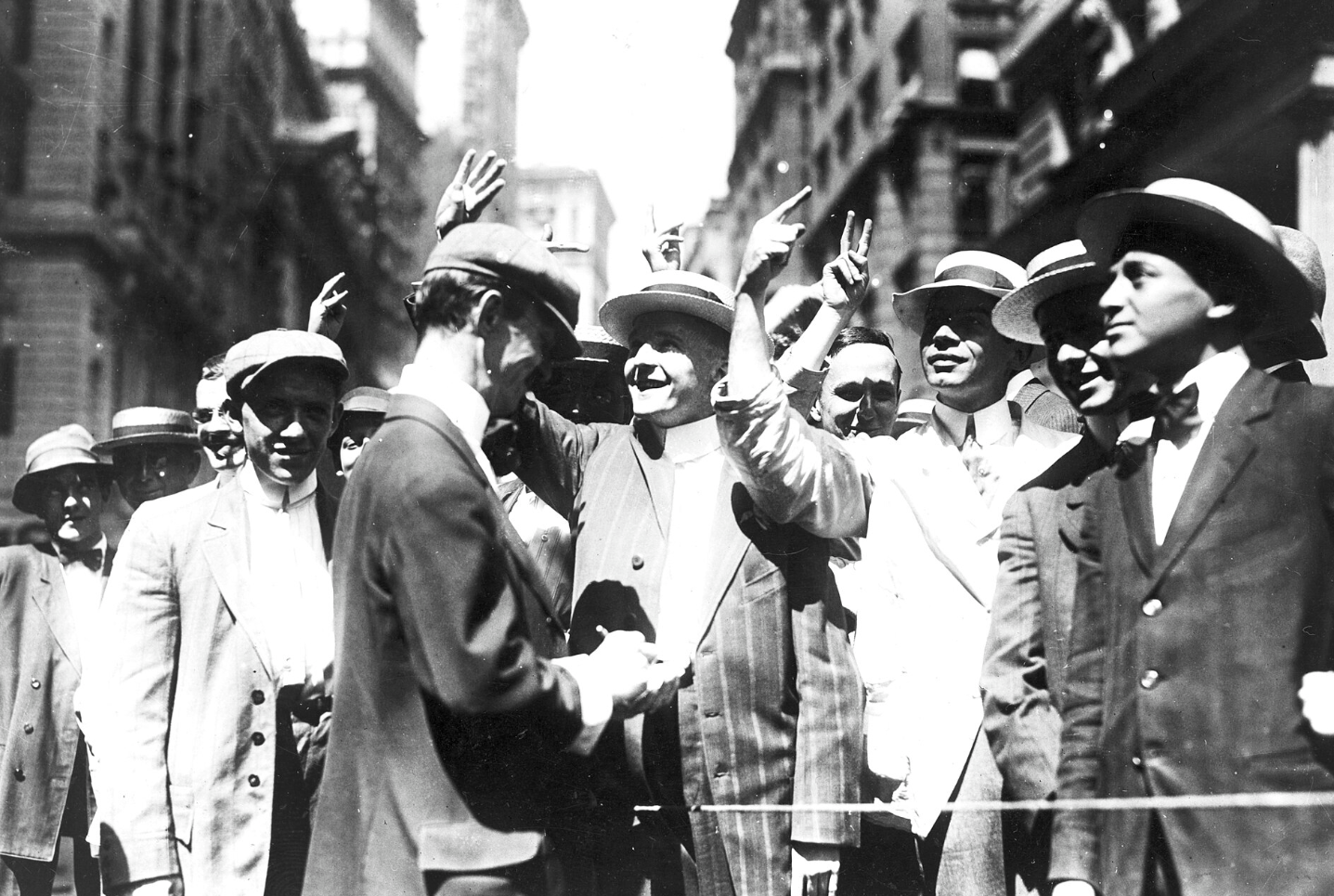
The Curb Exchange outside the NYSE (Bain News Service photo. From George Grantham Bain Collection. Via here at the Library of Congress
By 1907 he had settled back in New York and formed a banking alliance with the speculative operator Charles W. Morse, the “Ice King”. He rented space to his brother Otto for a stock brokerage. Fritz continued to feel the pressure of the trust. He suspected its interests were leading an effort to short United Copper’s stock and solidify their monopoly in Montana mining.
In October 1907, with Fritz’s consent, his brother Otto attempted to corner United Copper stock on “the Curb”—the outdoor market at the side of Broad Street outside the New York Stock Exchange where unlisted stocks traded before the American Stock Exchange formalized the practice. Otto intended to squeeze the short-sellers by driving up the price, calling in loans against the shorts, and urging Fritz not to sell his shares. Initially the stock ran up from about $35 to around $52, but Otto had miscalculated the shares floating in the market. Shares came in from out West, and other holders sold—some, it was whispered, unwilling to cross the powerful Rockefeller interests. The stock collapsed to $10.
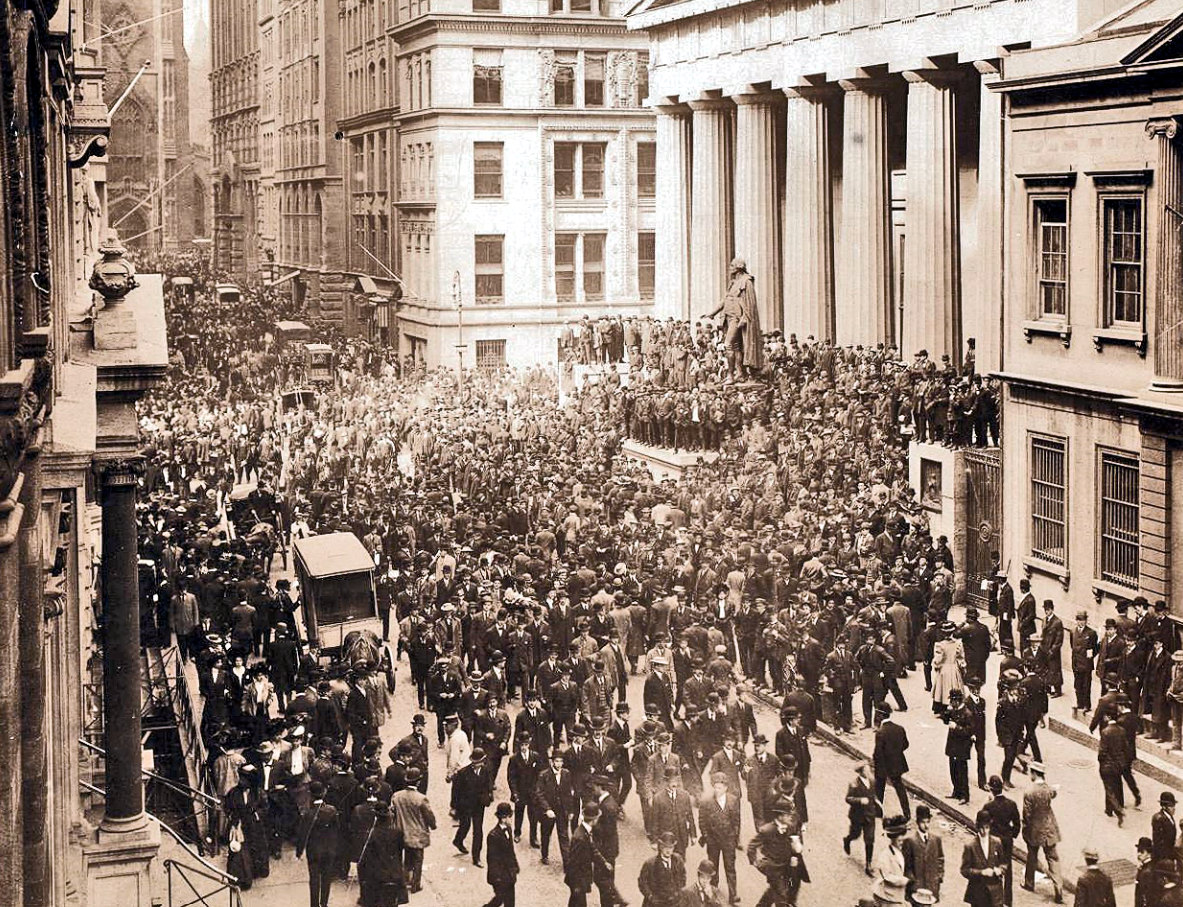
The panic of 1907 on Wall Street and Broad in New York (Library of Congress)
The failure helped trigger the Panic of 1907, which took down Otto’s firm and several metals-invested banks and brokerages. The Knickerbocker Trust Company, then the country’s third-largest, suspended operations as depositors rushed the doors. Its president, Charles Barney, who had denied Otto access to capital, sought a lifeline from J.P. Morgan. When Morgan refused, Barney took his own life. The Knickerbocker reopened five months later, but the damage was done. The scandal would lead to the formation of the Federal Reserve.
Heinze, then president of the Mercantile National Bank, was indicted on sixteen counts of willful misapplication of bank funds. He was ultimately acquitted, but the episode destroyed much of his fortune and reputation. He still had enough money to live a lavish lifestyle, and in 1910, as his litigation wound down, Fritz and Bernice began a romance. They shared a disdain for the business environment of the early 1900s, where smaller operators were being squeezed by big trusts. They were soon married in a quiet ceremony in Brooklyn.
Their son, Fritz Augustus Heinze Jr., was born in December 1911 after a difficult pregnancy. The marriage proved short and turbulent. Evidence in the divorce suggested heavy drinking and included a Pullman porter’s testimony about Heinze traveling with an unidentified companion—a young woman in her early twenties—while Bernice was pregnant.
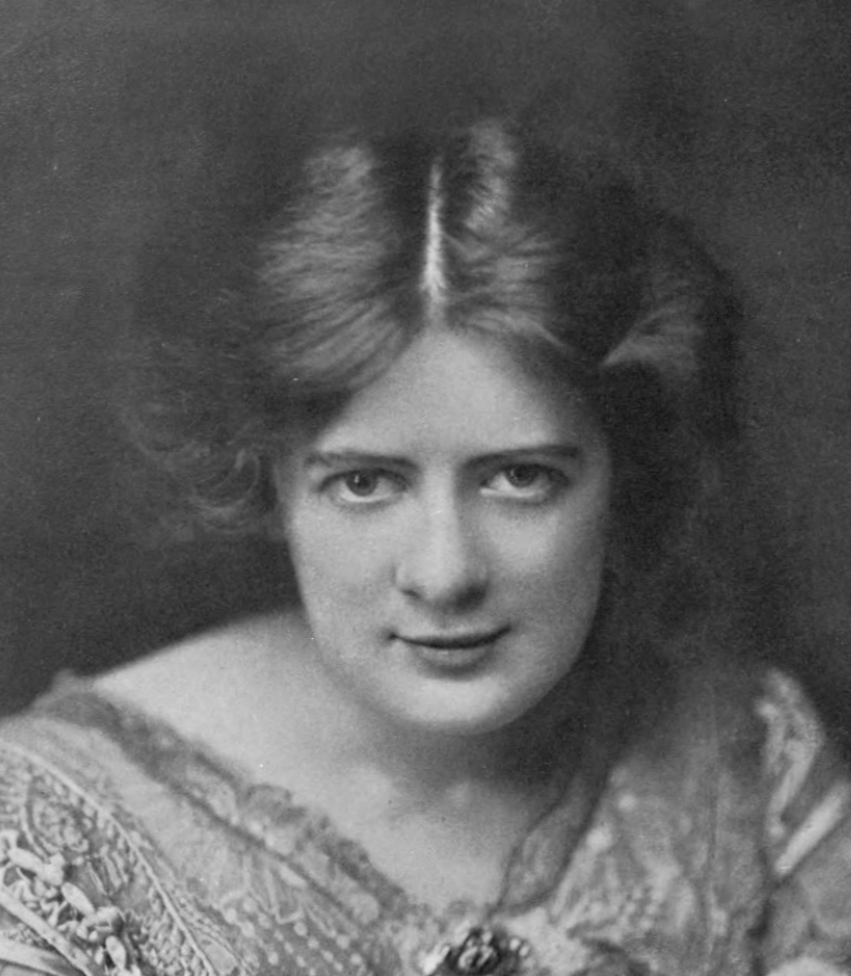
The slightly older Bernice in her late 20s
She sought the healthful sea air of Sea Girt that summer while her lawyers argued on her behalf. She never fully recovered from the childbirth. The whispers about the actress went beyond her stage roles. Two children by different husbands, and the sordid financial pasts attached to both men, made for lively talk on the Commodore’s piazza—the long deck overlooking the ocean lined with rockers.
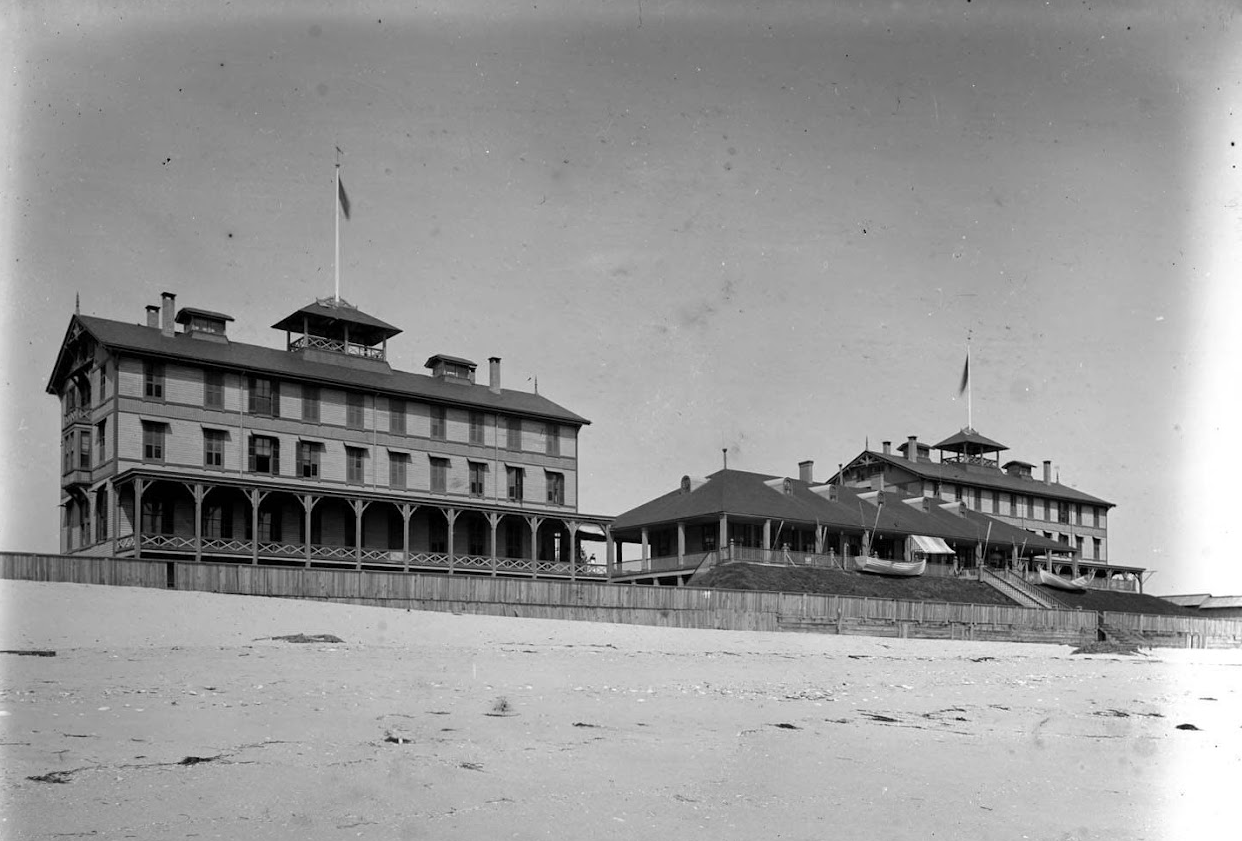
The Beach House. Stockton’s Mansion was the center building. Marriott C. Morris Photo Library Co of Phila.
In December 1912, Justice Arthur S. Tompkins granted Bernice an uncontested decree: $1,000 a month in alimony, payment of the $233 monthly rent on her Dorilton apartment until the lease expired, custody of the boy, and an order that his father fund the child’s education after age five. It was described as the second-highest alimony award yet seen in New York State.
The story ended tragically. Bernice’s health did not recover. On her deathbed in April 1913, she reconciled with Heinze. She died at the Dorilton, aged thirty, and was buried in Calvary Cemetery in Toledo. Heinze died nineteen months later, on November 4, 1914, in Saratoga, New York, of a hemorrhage attributed to cirrhosis of the liver, at age forty-four.