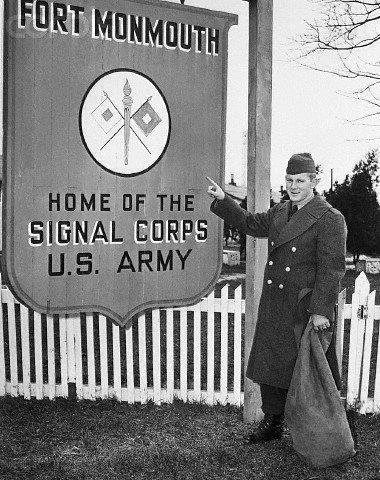
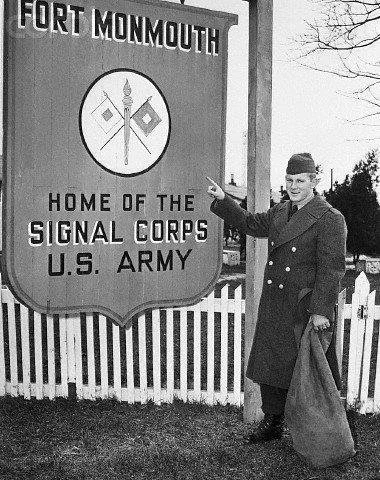
The US Signal Corps headquarters was assigned to Fort Monmouth in 1917 as Camp Little Silver . The unit focused on signal flags, lamps, observation balloons, and carrier pigeons, as well as the newer technologies of the telephone, radio, and photography. With the buildup to World War II, the Corps expanded rapidly, eventually training over 21,000 officers.
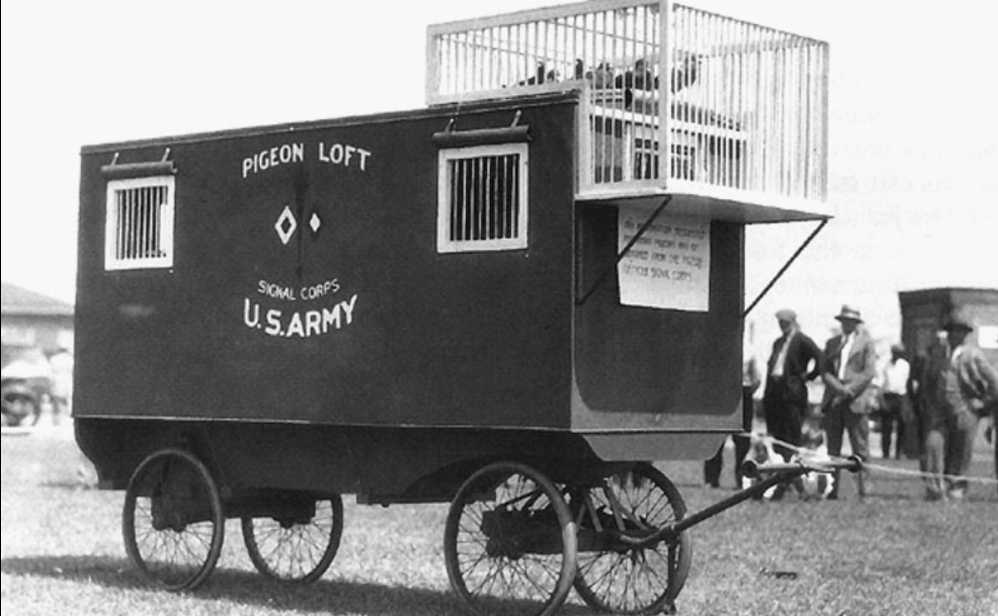
Pigeons carried messages to the front
Most of the recruits were in their late teens or early 20s. The Corps was the training ground for many young men who later found success applying the lessons learned during their service to other endeavors.
In the 1940s, the Corps was focused on key elements of radio technology, emerging radar, military communication, encryption, aerial film, and education and propaganda. They outgrew the Fort in Eatontown/Oceanport and commandeered the Guard Camp at Sea Girt. They also took over the Sea Girt Inn and Camp Evans in Wall, where they enhanced radio and eventually space communications.
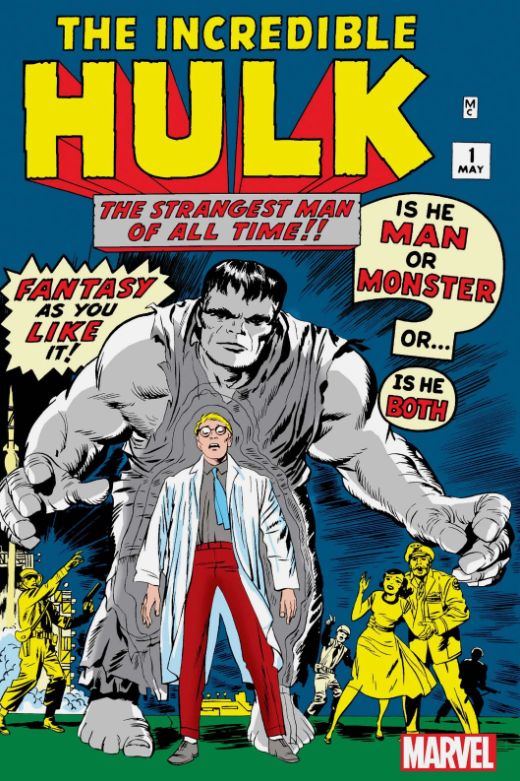
Marvel legend Stan Lee served in the Signal Corps
Stan Lee, who had just gotten his first comic book credit at Timely Comics on Captain America #3 was assigned to string telegraph wires from poles like a spider lays webs.
Frank Capra ran the Corps training film division in Astoria, NY. Frank, an Italian immigrant, had established himself as a top movie director in the late 1920s. His 1942 documentary for the Corps, “Why We Fight” won the Academy Award.
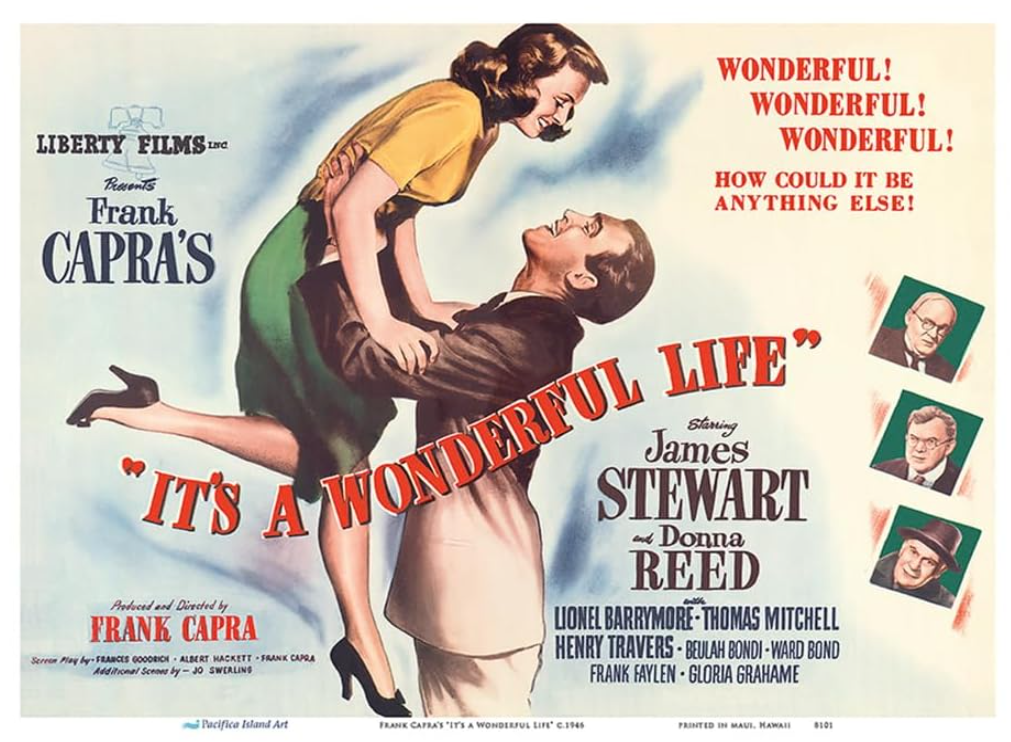
Most people have seen this 1946 Capra film
Frank poured through the ranks of the Signal Corps for anyone with artistic talent and hired Stan away from hanging wires in New Jersey and put him on comics duty. Training material would use drawings and comic style to teach men about hygiene, STDs, and equipment maintenance. Stan later created Spiderman and the universe of comic characters at Marvel: Fantastic 4, Hulk, Thor, and Iron Man. The Army tested the impact, and the comics were a great teaching tool.
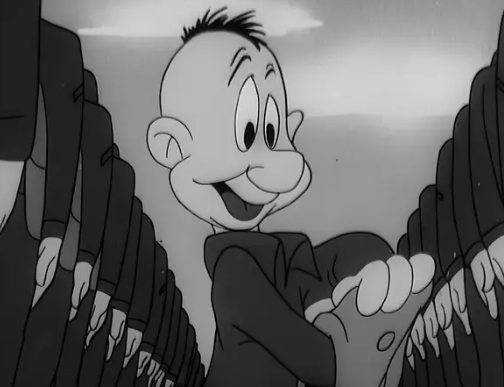
Snafu looked a bit like Elmer Fudd
Stan worked alongside Ted Geisel, later famous as Dr. Seuss, who also had a knack for drawing and wrote the Private Snafu series of animated shorts. The Private (Snafu stood for Situation Normal All Fouled Up), would make or witness a serious situation and handle it with humor.
The shorts were produced by Leon Schlesinger, who made the Merrie Melodies cartoons. He underbid Walt Disney for the work. The young directors who would later be famous for Bugs Bunny, Daffy Duck, Yosemite Sam, and Porky Pig, Chuck Jones, Fritz Freleng, Bob Clampett, and Frank Tashlin, directed the films.
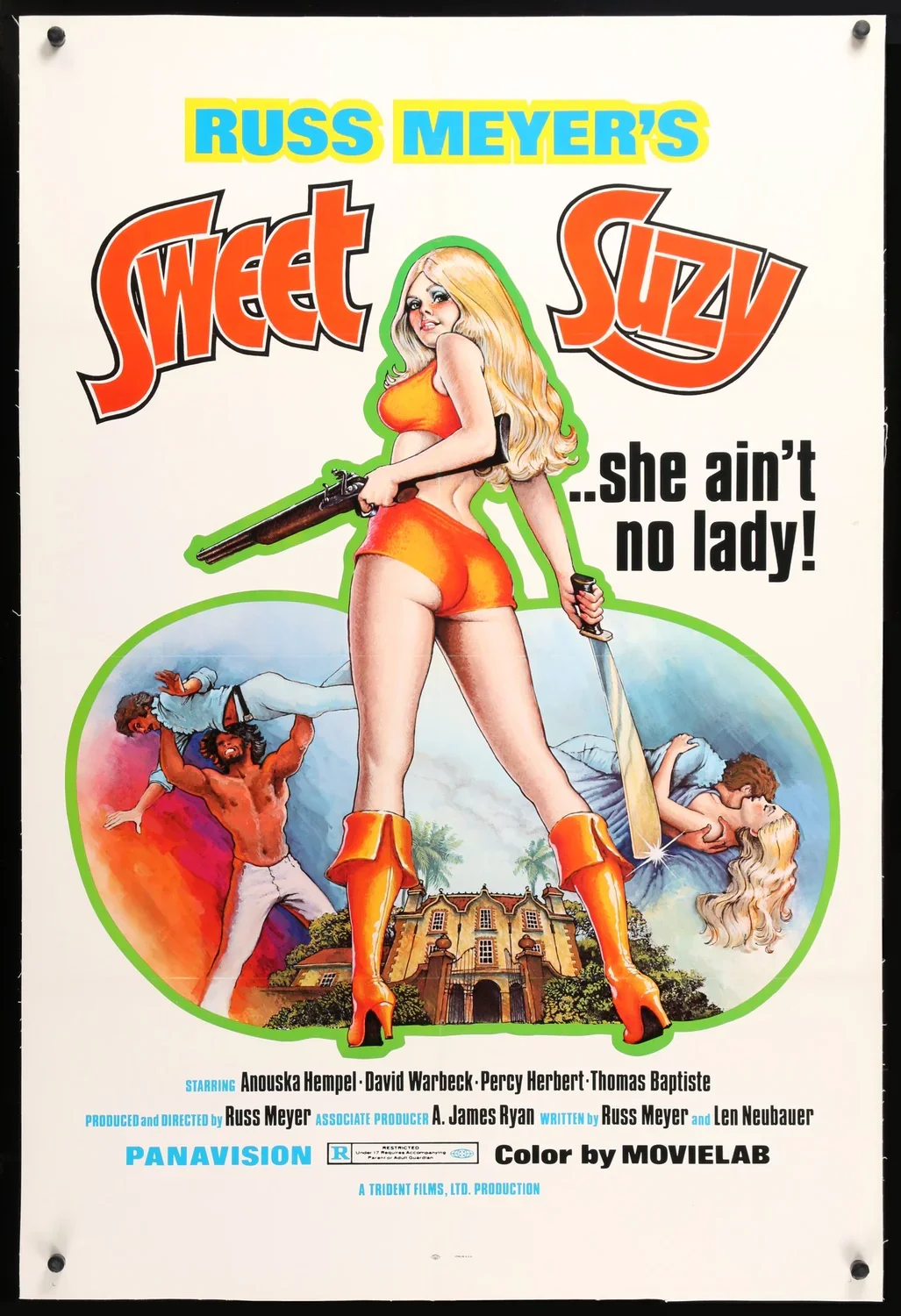
This is one of Meyer’s tamer posters
Photography in battle was another important role. Russ Meyer, who later was the king of the B movies of the 60s and 70s, was one of the Signal Corps photography experts. The recruits were trained to shoot battle scenes and rapidly develop film while on the move. He served in France and Germany following General Patton’s troops.
Radio was as important. Roger Colton developed a new form of radio; FM was superior. It did not pick up static from the engines and electronic equipment around the receivers. Tony Randall of TV’s The Odd Couple was a radio operator for the Corps with his actor’s voice.
Jean Shepherd, who was a famous radio personality and who also narrated the classic movie, A Christmas Story, served as a radar technician at Fort Monmouth, where he worked on technical aspects of radar systems.
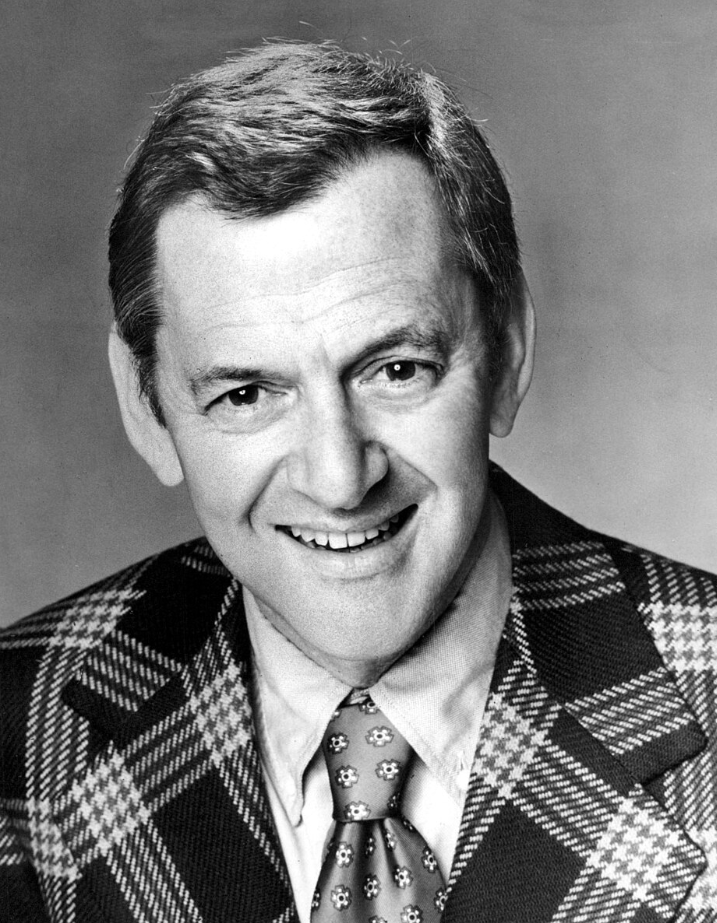
Randall’s most famous role was Felix Unger
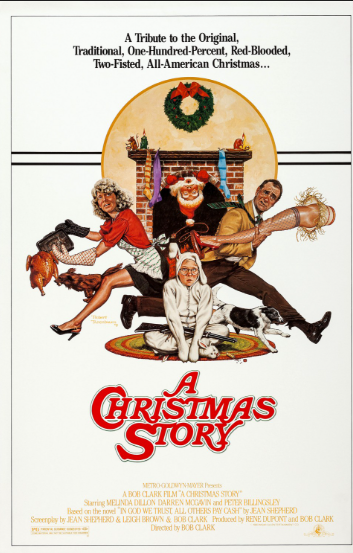
Jean Shepherd told the story as narrator.
The US enjoyed a significant advantage over Germany with the radar advances developed in the Signal Corps. The need for parts smaller than vacuum tubes to detect microwaves led Fort Monmouth to produce the high-purity crystals, which would be critical for solid-state transistors and silicon chips. This led to a discovery at AT&T’s Bell Labs in Holmdel in 1947. The semiconductor led to most modern electronics.
The top-secret nature of the work attracted spies. Working at Fort Monmouth as civilian engineers, Julius Rosenberg, Joseph Barr, and Alfred Sarrant formed part of a Soviet espionage ring passing classified technical information on radar, electronics, fire-control systems, and other military technologies to the USSR. Rosenberg was executed in 1953 along with his wife, Ethel, whose brother worked at Los Alamos and passed Julius atomic secrets. The arrests and executions fed the Red Scare and Senator Joe McCarthy’s search for communist spies embedded in America.
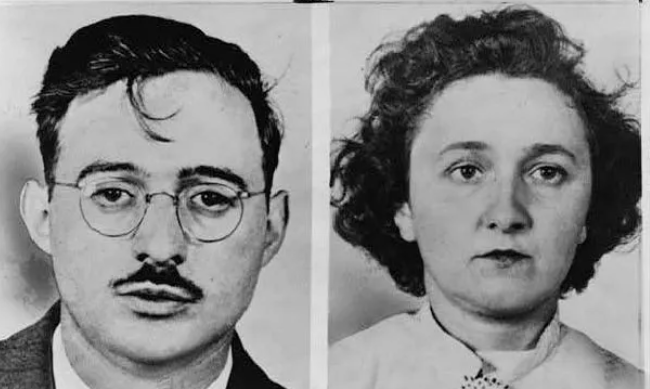
Julius and Ethel Rosenberg got the electric chair for their spy activites.
The Corps worked closely with defense contractors to acquire and also share technology. Elmer Matthews graduated from Notre Dame at 19 and entered the Corps at Fort Monmouth at the end of the war. They put the aspiring lawyer to work negotiating contracts. As he finished his JD at Forham, he worked on the contracts for the Nike, the Department of Defense's first surface-to-air missile system, and as the system was to be used for all three services, they moved him from Fort Monmouth to the Pentagon.

Nike Missiles
When he returned home, Matthews was elected to the NJ General Assembly at age 28. He quickly rose to Speaker of the General Assembly, which made him, on several occasions, Acting Governor of New Jersey. He was the primary sponsor of the legislation that authorized the acquisition of the PATH railway and the construction of the original World Trade Center by the Port Authority.
Elemer entered private practice as an attorney and, with his wife Peggy, purchased a house in Sea Girt with a view of the Guard Camp. For 40 years, he provided counsel to the NJ Catholic Conference of Bishops. Elmer Matthews passed away in 2015 at 87. His family still lives in town.
The Signal Corps wound down operations very slowly. The Guard Camp was returned to State use, The Sea Girt Inn returned to entertainment. Camp Evans wound down operations. Eventually, Fort Monmouth was sunsetted, with most of the communications functions moving to Maryland in the late 1990s. Netflix has been systematically taking down many of the buildings at the fort for movie production facilities.
Remember the contributions