Ask parents whether their child is smarter or better behaved than average, and the answer is almost always yes.
Ask drivers about their skills, and 80 to 90 percent claim they are safer than most.
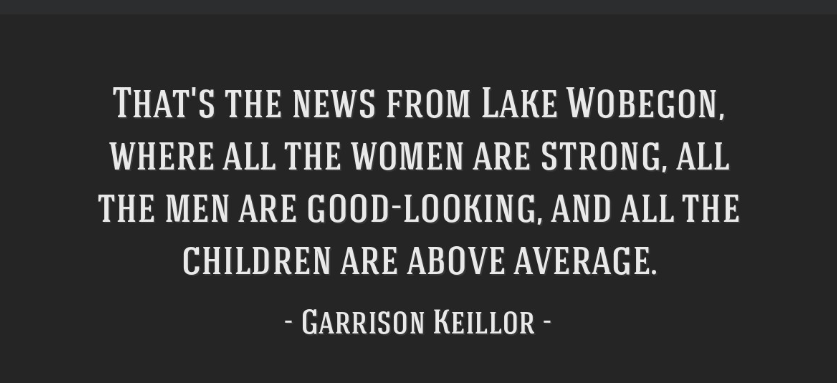
We systematically rate ourselves above the mean. Psychologists call this the Lake Wobegon effect—the quiet conviction that we, personally, will beat the averages.
Mathematics is less forgiving. Roughly half of us fall below the median on any given measure.
In retirement planning, this bias becomes especially costly. Most people spend decades optimizing for lifespan—making sure the money lasts until their 80s or 90s—while treating healthspan the years lived free of significant chronic illness, mobility limits, or sharp declines in stamina- as an afterthought.
In the United States, average life expectancy hovers near 78. Healthspan, by many measures, ends considerably earlier, often in the mid-to-late 60s.
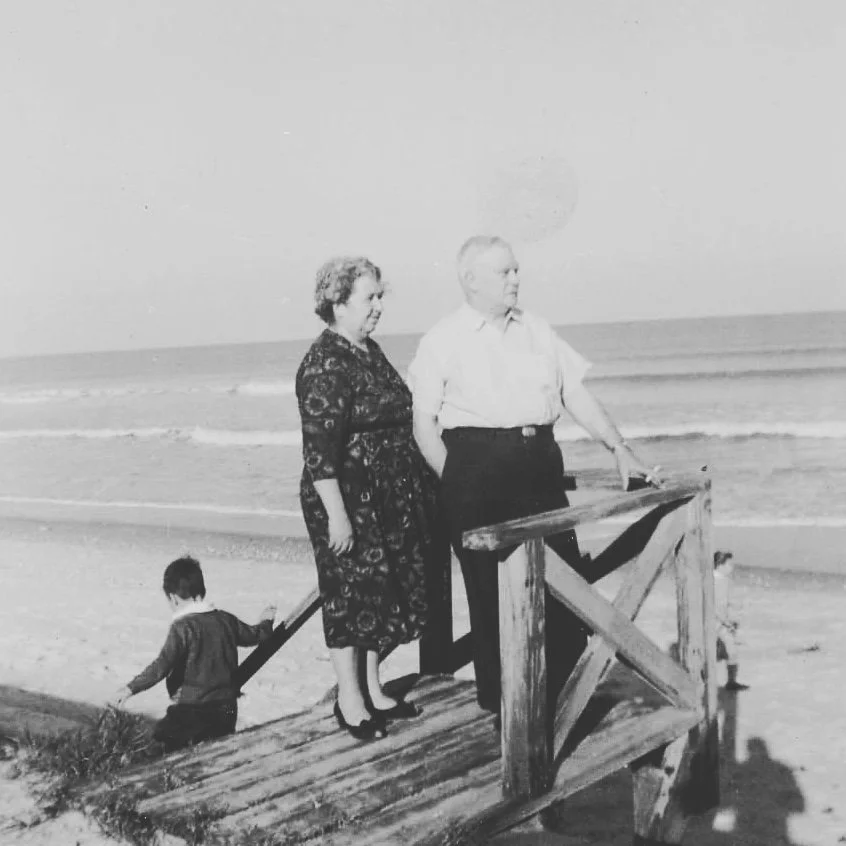
The resulting gap is measured in years of reduced capacity. Yet many professionals continue working hard, right through their 60s, whether they need to or not, under the unspoken assumption that their (and their spouse's) physical prime will simply continue. “Gotta plan for our 90s,” I say, live for your 60s - it’s a much better bet than planning to be the Tom Brady of aging.
If you are fortunate enough to have the choice to retire, consider yourself privileged, and don’t delay the opportunity lightly.
LIFE IN THIRDS
Life unfolds in broad stages that share a common pattern. The early portion of each stage tends to carry the highest concentration of energy and possibility; the later portion grows heavier with constraint.
The first third (birth to around 30) begins in growing freedom, awe, and the joys of childhood. It ends under pressures: academic, early-career, and romantic pressure to “find adulthood”.

The wonder of childhood is overcome by the growing responsibility to achieve adulthood
The middle third (30s, 40s, 50s) opens with the excitement of adult independence and expansion, then acquires mortgages, family obligations, career demands, neglected friendships, and accumulating fatigue. Large-scale studies, like Blanchflower and Oswald’s 500,000-person sample, suggest life satisfaction ebbs to its lowest point during this third of life. They describe a U-shaped curve of life satisfaction. (Social Science & Medicine April 2008, Volume 66, Issue 8
Pages: 1733-1749 https://doi.org/10.1016/j.socscimed.2008.01.030)

Marriage, Kids, home, career Exciting start to adulthood gets heavier as you get to your 50s
The final third (60s-90s) offers more freedom and self-direction—if the body cooperates.
People often linger in the demanding later years of the middle third, extending work and compressing the healthiest window of the final third.
This is where the book, The Rule of 70: A Single Rule for a Rewarding Life, becomes useful.
The book’s premise rests on a simple observation most career-oriented people prefer to ignore: physical vitality has a sharper expiration date than financial assets. It uses age 70 as a proxy for the end of “your good years”, the time when most can expect to be free of physical limitations.
The exact age when this will impact you, or any personal financial situation, may vary widely, but the point of the book is we don’t prepare well enough for the changes we all must face.
The Kansas song, “Dust in the Wind” notes, “It slips away…and all your money won’t another minute buy.”
Those that enter the third phase in good health enjoy advantages into old age, but no one escapes the decline that comes, usually in a wave, starting for most in their mid-late 60s.

Expect happiness in your later years, but accept they come with limitations
Retirement spending data consistently show that outlays and activity peak early and then decline.
A 2026 Boldin survey of 1,331 clients asked what worries them more about retirement travel. 51% said running out of healthy years to enjoy it, compared to just 8% who said running out of money. Another 36% said both worries weigh equally. That fear is already reshaping when people travel: 29% expect to concentrate most of their travel into just the first five years of retirement, and most expect to be largely done traveling well before their later years. https://www.prnewswire.com/news-releases/americans-nearing-retirement-fear-running-out-of-time-more-than-money-302837633.html
The final decades tend to divide into three overlapping phases:
Adventure years (60s–70): higher residual energy, appetite for ambitious travel, physical hobbies, and new experiences. Spending and active living often crest here. These years also offer something rarer: the time and cognitive flexibility to invest in the long hours needed to master something completely unrelated to a former career. Deep skills can open paths to new identity and new relationships. The window of high-return learning narrows noticeably in the 70s and shrinks further in your 80s.
Adjustment years (the 70s): pace slows; long-haul travel and high-intensity pursuits become more taxing; comfort and routine gain importance as we adapt to our older selves. People are more confident, more content and spiritual. Intelligence crystallizes. Daily enjoyment is higher, there is less anger, and lower stress. The tight circle of friends you enjoyed in the Adventure years will be disrupted by death.
Attunement years (80 and beyond): life narrows toward health maintenance and meaningful close relationships over broad social activity. Travel becomes more limited, with greater accommodation needed. Many savor deep reflection, positive solitude, creativity, spirituality, and show less interest in material concerns. Discretionary spending shrinks to its lowest levels. These years come with inescapable physical decline. Many 85+ year olds are tired, but more content. They understand their mortality, and await their spiritual resolution, with a majority believing in another phase: an afterlife.
Working deep into your 60s to accumulate “just a little more” does not purchase extra high-energy years at the end.
Working later substitutes for the Adventure window itself. You cannot fully preserve the physical capacity to execute long-delayed plans. There is nothing wrong with working in and of itself. For some it continues to be their source of joy, for others, money needs require it.
The Rule of 70 is not an argument for pessimism. Research regularly finds that people in their 70s and 80s report higher life satisfaction than they did in the midlife Third. Freed from status competition and daily hustle, many experience deeper relationships and a quieter contentment.
If your goals include mountains, distant cultures, watercolors, and high-energy pursuits, those activities belong in the years when the body is still a willing partner.
Honor the Rule of 70 by protecting the Adventure window while health remains. When the Adjustment years arrive, the transition can then be made without the extra weight of regret or forcing something you are no longer comfortable doing.
Money earned by working longer cannot purchase additional years of robust health. The framework is simple. The consequences of ignoring it are not.
This post was inspired by my friend Joe Mella, who continually discusses the Rule of 70 with his friends and former colleagues, noting that many understand the concepts, but still hesitate to pull the trigger.