As James Martin stepped off the train at Spring Lake in the Summer of 1881, he was certainly given the greeting deserving of one of George Pullman’s most important employees. Martin was Superintendent of the Atlantic division of the Pullman Palace Car Company. He was responsible for juggling the company's fleet of plush private sleeping cars, dining cars outfitted for formal dinners, and chartered Pullman coaches East of the Mississippi. The ultimate luxury for a Gilded Age industrialist was to have their own train car. Martin had the delicate job of letting down very wealthy people when even richer or more influential passengers had bumped their spot.
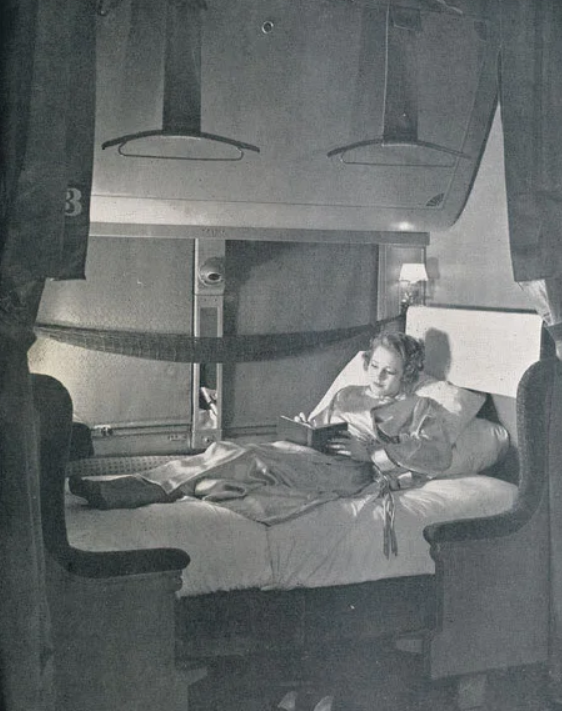
From the late 1860s to the 1950s, Pullman sleepers meant luxury travel (Museum of the American Railroad)
EV Patterson, the station master and eventual first mayor of Spring Lake, took Martin and his family to the Monmouth House, the most modern and elegant hotel on the coast in 1881. Martin would be rubbing elbows with his most important customers. The Spring Lake and Sea Girt resorts were established by a syndicate of railway men, most associated with the Pennsylvania Railroad, the most powerful corporation in the country. Most of the guests had the means to arrive in Pullman rail cars.

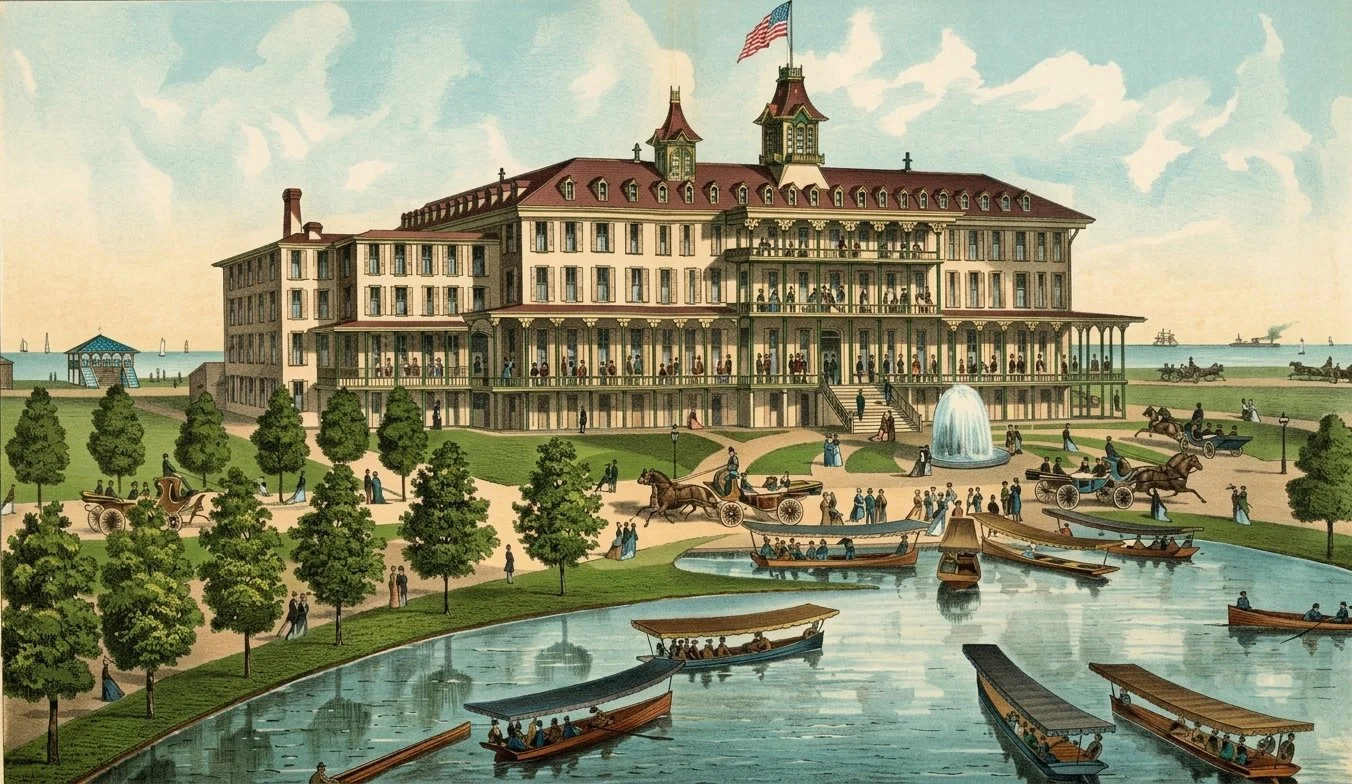
1884 view from the front entrance to the Monmouth House looking west (MCMorris Library Co of Philadelphia)
James Martin had worked for Pullman for almost 15 years. He knew how to cater to the demands of his boss. George Pullman expected nothing less than perfection in service to rail passengers needing a private car. The velvet, brass, and mahogany cars came with their own porters, African-American men, specially trained to provide the most meticulous service, handling bags, preparing bedding, and serving meals. The passengers routinely called all the men “George,” a legacy of slavery days, when slaves were often referred to by the name of their masters. The rolling palaces became the private jet of their day, and as demanded in Victorian America, it segregated the upper classes from the casual rail passenger.
Demand was brisk. As his superintendent took a brief holiday in Spring Lake, Pullman was supervising the construction of a town of his own making. A tree-lined oasis, Pullman, Illinois, was being built to house and feed his growing skilled manufacturing staff; the artisans who turned the rich woodwork, wired the chandeliers, and stitched the velvet seats of Martin’s rolling fleet.
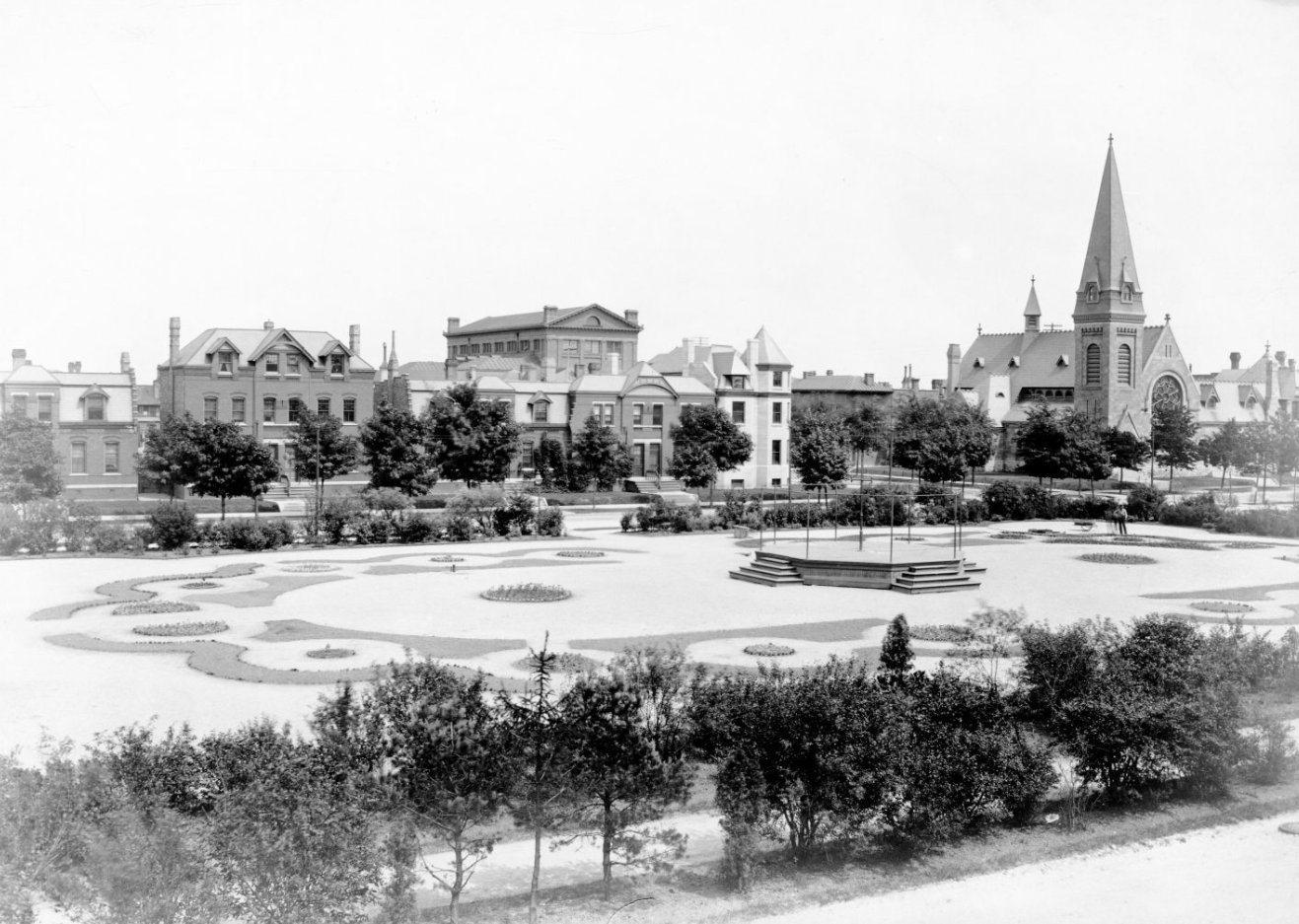
Pullman Illinois in the 1880s
The town was billed as a utopian society, where rent, water, and groceries were taken directly from employee paychecks. There were no saloons to stir up trouble, and company supervisors could inspect the homes to ensure they were kept tidy. In addition to the red brick housing, the treelined streets offered a theater, a library, a Pullman school, and a church. Visitors could stay at the Queen Anne-style Hotel Florence.
The Martin family rode in E.V. Patterson’s coach down Warren Ave. The children had a lovely view of Spring Lake to their left, with its boats filled with tourists, and a wooden walkway surrounding its shoreline. Other hotels were to their right: The Lakehouse, the Palmer and the Carleton catered to the less well-off. The Monmouth House was the crown jewel at Spring Lake Beach. It was immense, a two-block-long, multi-story hostelry crowned with mansard roofs, rising between the lake's southern edge and the open surf.
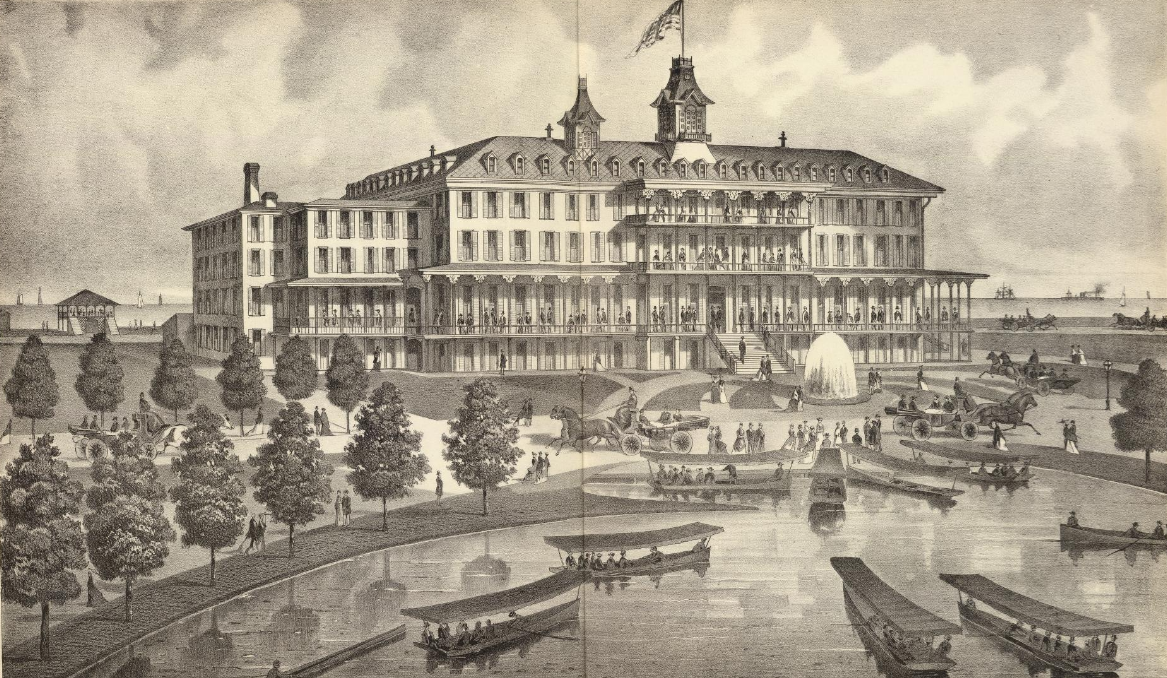
1879 Wolman and Rose Atlas lithograph of the Monmouth House. It burned in 1900 and was replaced with the New Monmouth in 1904 and it stood until the 1970s
It offered 270 guest rooms, two cavernous parlors facing the sea, and a gas-lit dining hall that seated a thousand guests at a single sitting. Rising to the north, Anna Baird, the widow of Baldwin Locomotive President Matthew Baird, was constructing her Hastings Square complex. Anchored by the Essex and Sussex rooming houses, it was a series of elaborate cottages, joined by common porches.
The Monmouth’s broad verandas wrapped the building, providing a stage for the conservative rituals of Philadelphia and New York high society. Seating was highly regulated. They took morning ocean dips from striped bathing tents, post-tea carriage drives up to the Shark River and down to Sea Girt’s Beach House. They filled the evening with Chamber music, plays, or elaborate ‘Germans’, orchestrated dances, designed to rotate dance partners and allow for some flirtation.
Guests dined on three sumptuous daily meals, and nursemaids in starched white uniforms took care of the young Martin children, giving James’s wife a much-needed rest. Women often lingered as their husbands returned to work. James Martin would be needed before summer’s end.
On July 2, 1881, President James A. Garfield was shot at the Baltimore & Potomac station in Washington DC. Standing footsteps away was Garfield’s Secretary of War, Robert Todd Lincoln—the son of Abraham Lincoln, whose own martyred journey home in 1865 aboard the prototype sleeper Pioneer had first vaulted George Pullman to national prominence.
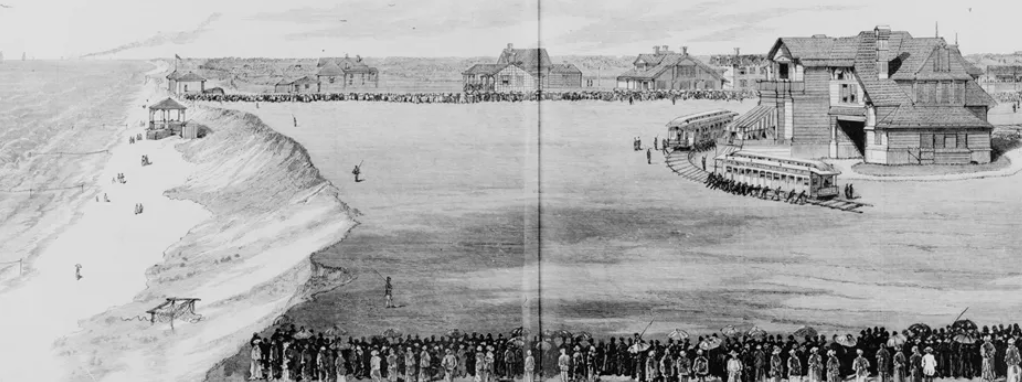
The scene on the bluffs when a special train brought President Garfield to Elberon
Garfield lingered with a bullet lodged in his body and a fever from an infection caused by fingers probing the wound. His medical team resolved to move him to the breezes of Elberon, just miles up the coast from Martin’s veranda at the Monmouth House. They needed private cars and Martin’s logistics. In early September, an emergency hospital train carrying the dying president traversed the New Jersey coast. The PRR built a special siding at Elberon station to take the president right up to the cottage on the ocean donated by Cunard chairman Charles Franklyn. George Pullman had an estate, Fairlawn just 500 yards north on Ocean Ave.
When Garfield succumbed two weeks later, Pullman cars carried the President’s body, and a mourning nation, back to the Capitol.
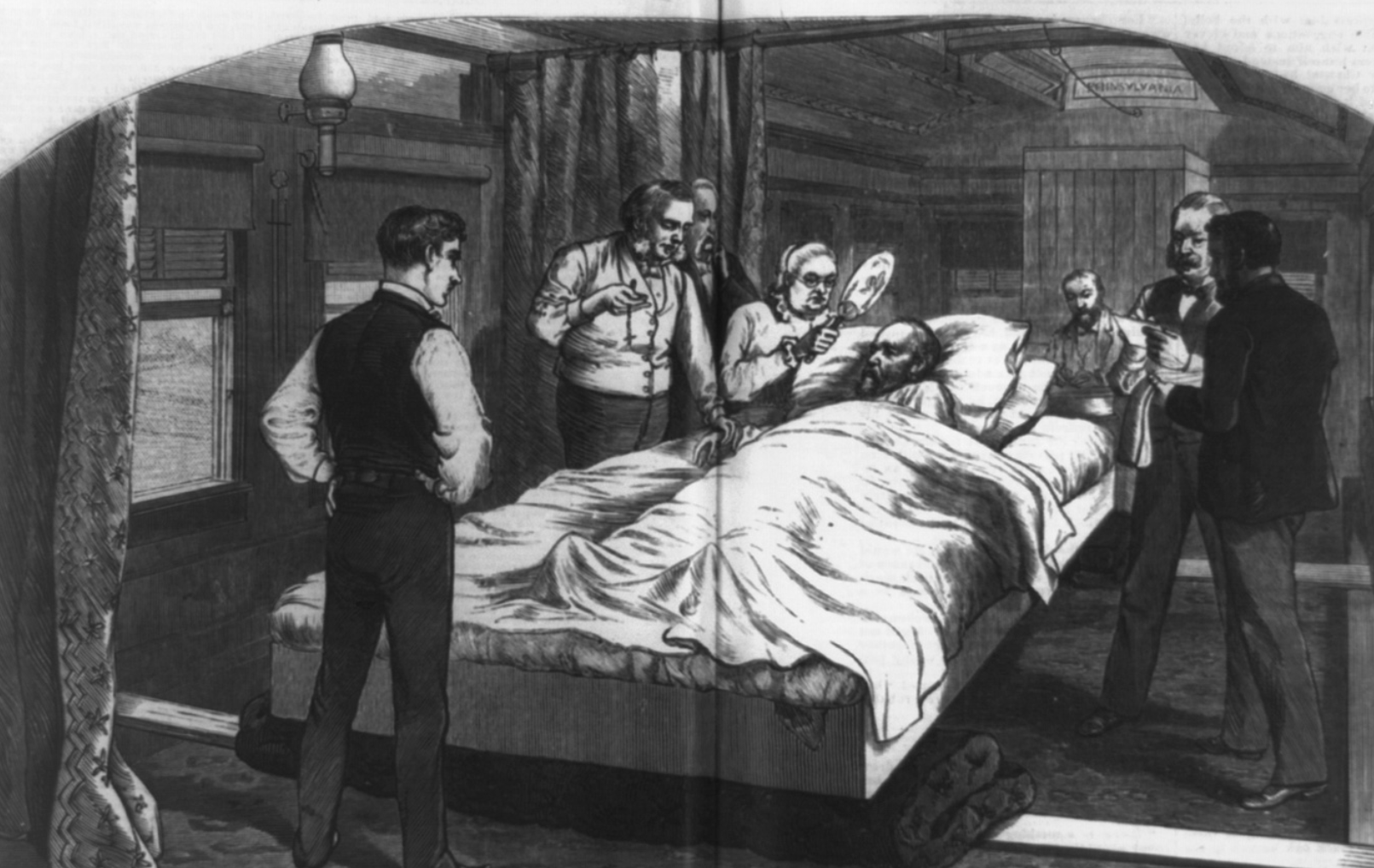
The railroad brought Garfield from Washington and would return him after his death
Throughout the next decade, James Martin kept the Atlantic Division running with clockwork precision. By 1891, Martin took deep professional satisfaction when President Benjamin Harrison toured the nation in bespoke Pullman coaches, drawing warm praise from the White House for the cars' appointments and flawless execution. Under Martin’s regional watch, Pullman was the undisputed rolling salon of the executive branch.
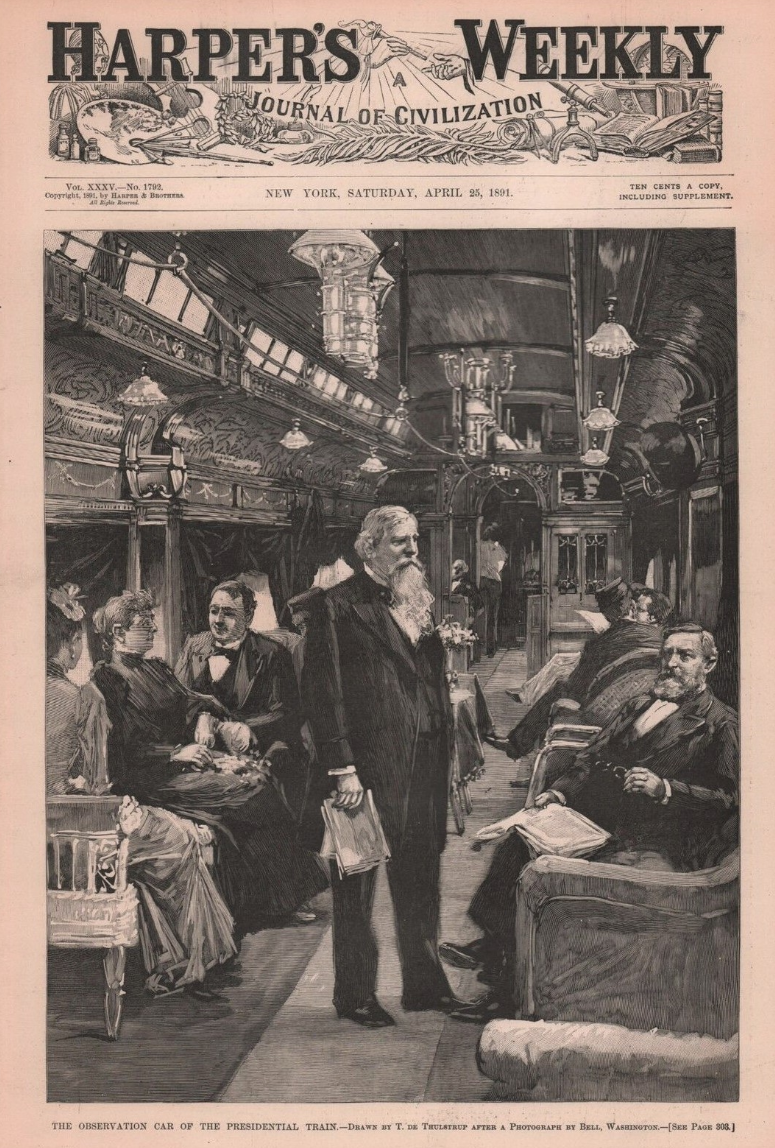
Pullman cars in 1891 escorted the president and the press over 10,000 miles across the country
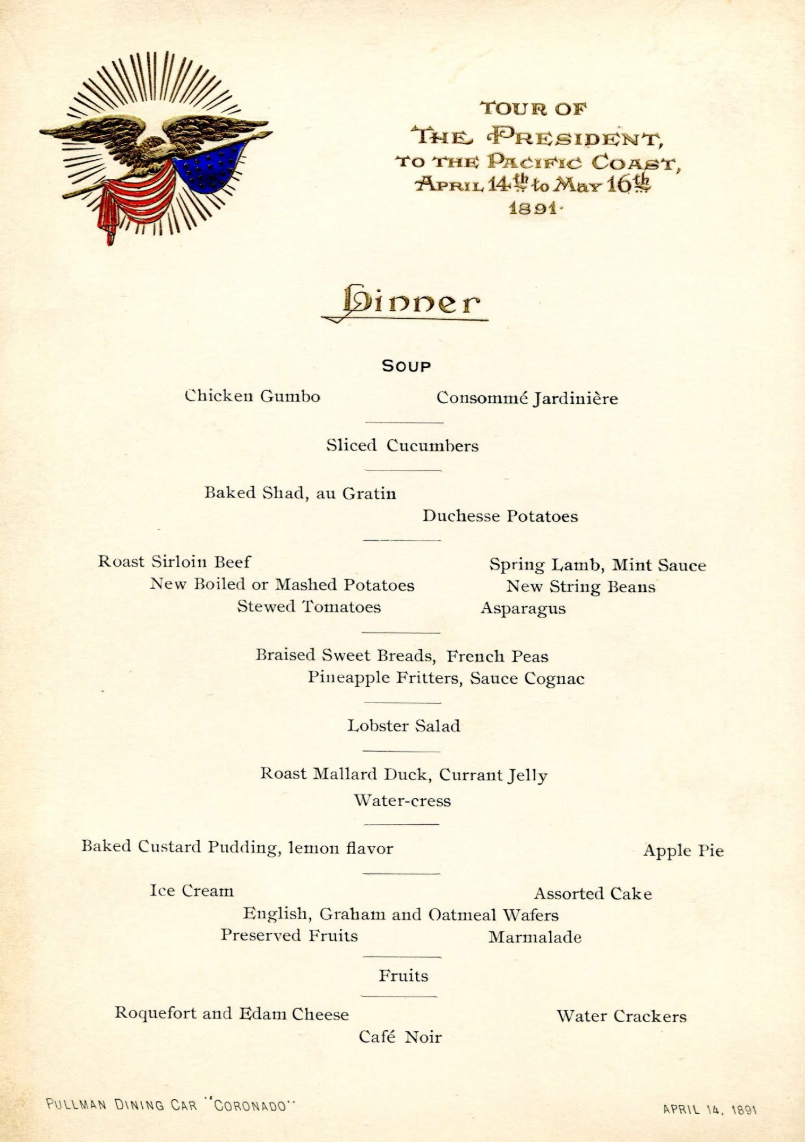
James Martin ensured the dining car was fully stocked with delicacies at each stop along the Presidential route.
Cracks in the Gilded Age:
The hyper-growth of the American railroads, heady since the end of the Civil War, screeched to a halt when several high-profile failures caused the Panic of 1893. With many redundant lines and the country crisscrossed with tracks, rate wars erupted, and a quarter of the nation's rails defaulted on bonds.
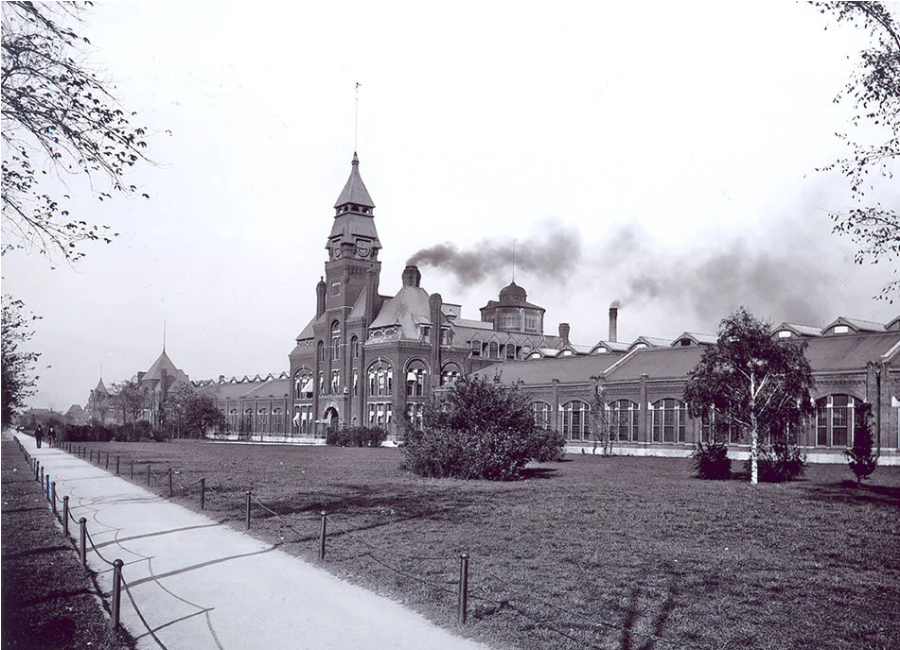
The Pullman plant employed 5,800 at the time of the strike. Another 20,000 worked around the country for the company
This gutted the American economy, and the demand for private cars collapsed. George Pullman laid off staff and slashed factory wages by nearly thirty percent. Pullman then made the mistake of maintaining his eight percent dividend, while steadfastly refusing to lower employee rents or water rates in his company town. Some workers brought home just a few pennies after their chargebacks.
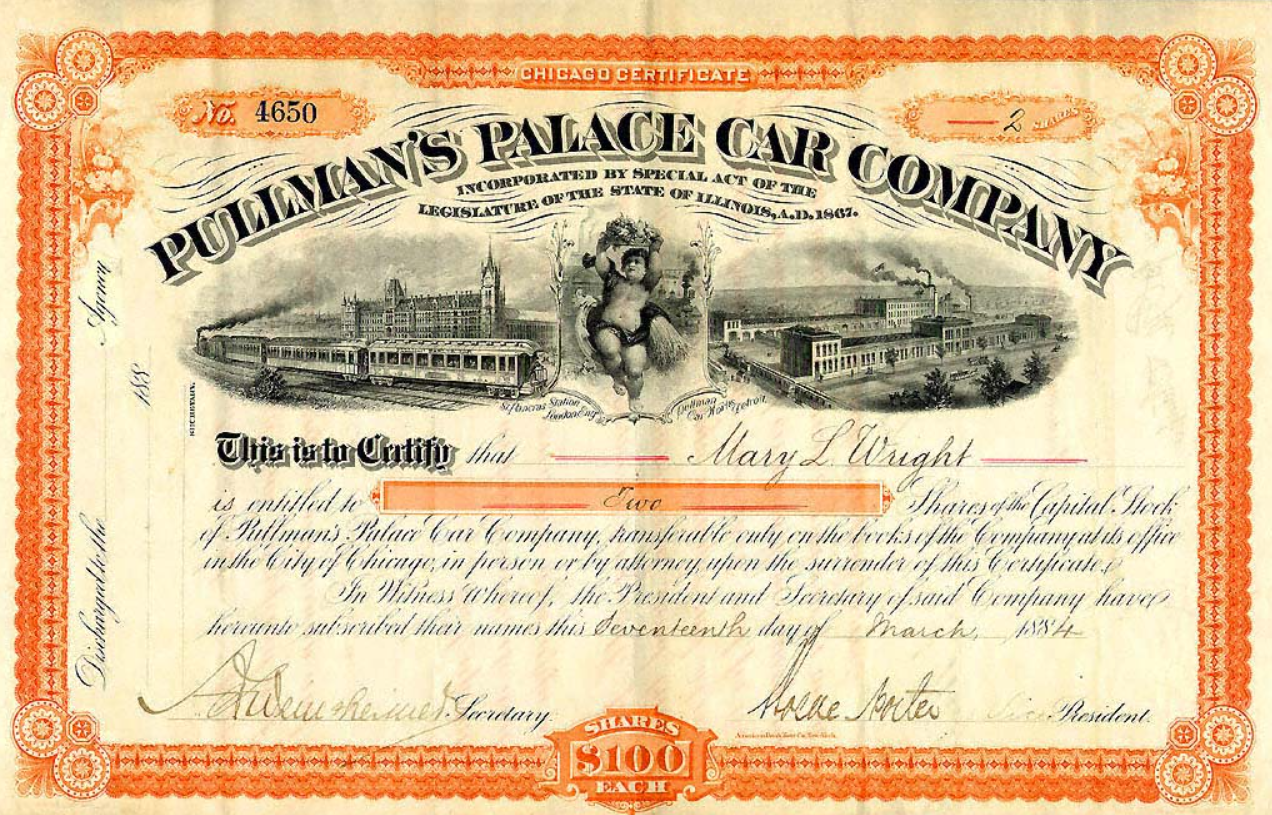
George Pullman was criticized for paying shareholders and not attending to his factory workers.
A group of workers formed committees that took their grievances to Pullman. He fired the leaders for organizing and insisted that the company town’s rents be paid in full.
They sought help from Eugene V. Debs and the American Railway Union (ARU). Pullman’s workforce voted to unionize and walked out en masse in May 1894. ARU members joined the strike in support of Pullman’s employees. 27 of 29 ARU railways across the country were shuttered.
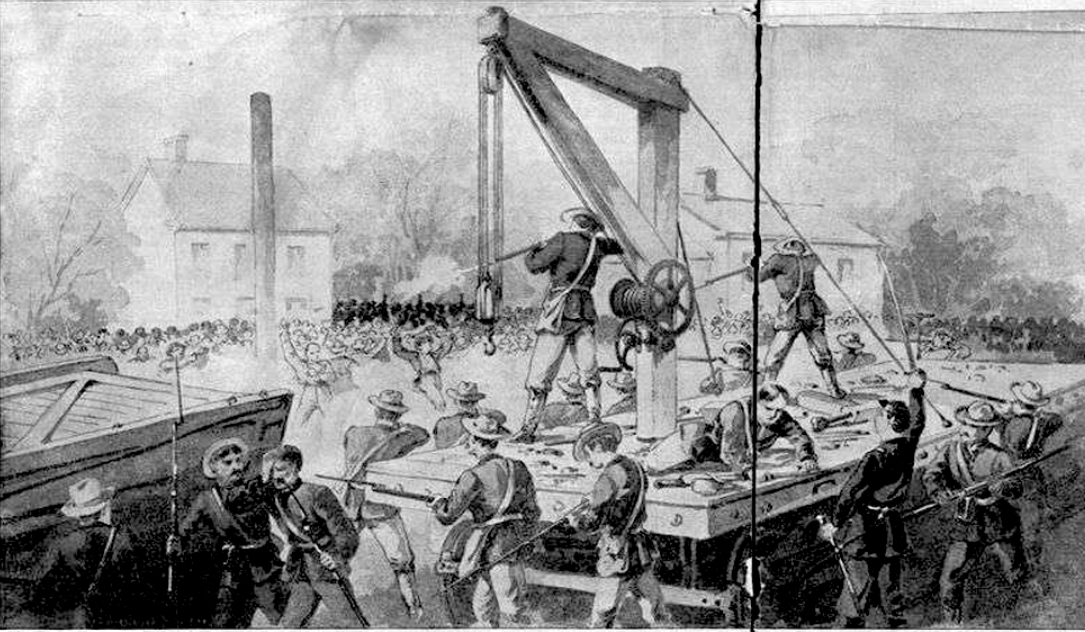
The deaths damaged the Pullman name as the company was uniquely associated with the strike.
The “Pullman Strike” paralyzed the country. Mail, industrial goods, and food delivery were disrupted until President Grover Cleveland dispatched federal troops to break the picket lines with bayonets and sweeping court injunctions. As Chicago stockyard workers burned and tipped over boxcars to block the tracks, federal guardsmen were pelted with rocks and iron scraps. Vastly outnumbered, they fired into the crowds. Thirty people were killed in Chicago, and another forty in clashes around the country.
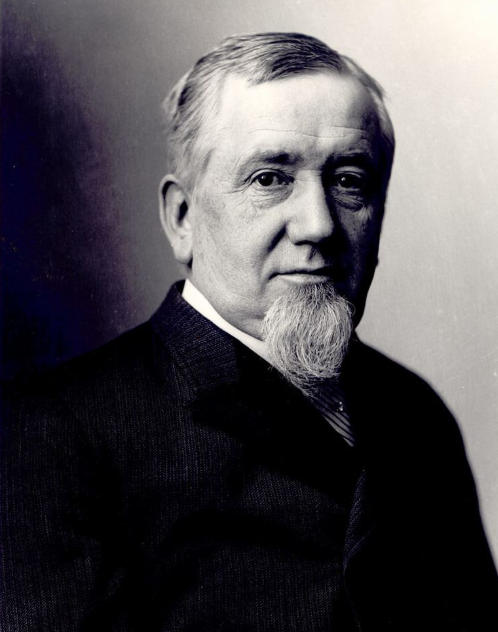
George Pullman left a personal fortune of $17 million.
James Martin worked frantically to keep the vital eastern corridors running, but the company's reputation for service and accommodation was permanently damaged.
George Pullman never recovered from the strike. When he died of a heart attack in October 1897, he was one of the most reviled corporate figures in the nation. Fearing the public fury would lead to grave robbery or desecration, his family took extreme precautions: Pullman’s lead-lined casket was sunk into an asphalt trench at Chicago's Graceland Cemetery and encased beneath tons of concrete reinforced with steel railroad rails. The following year, the Illinois Supreme Court delivered the final rebuke to his social experiment, declaring the company town an illegal overreach of the corporate charter and forcing the firm to sell off all residential land.
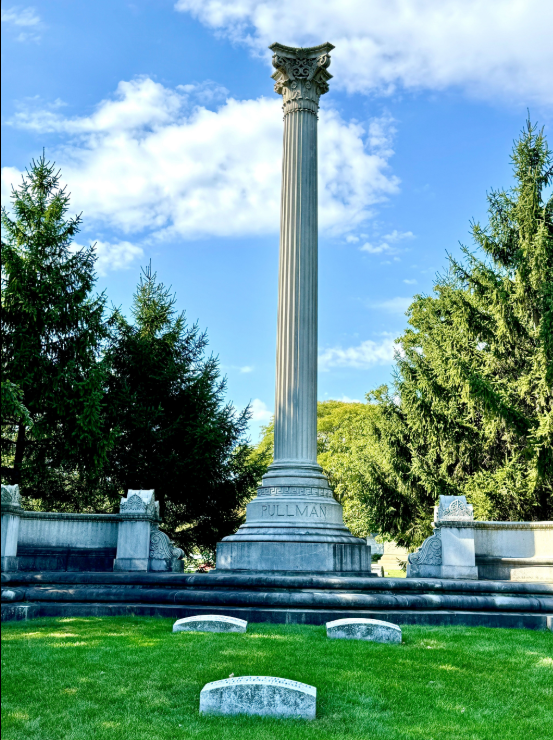
Pullman’s grave (www.findagrave.com) Kathy Panek
The company reorganized, and to restore its reputation, the Board of Directors selected Robert Todd Lincoln as President.
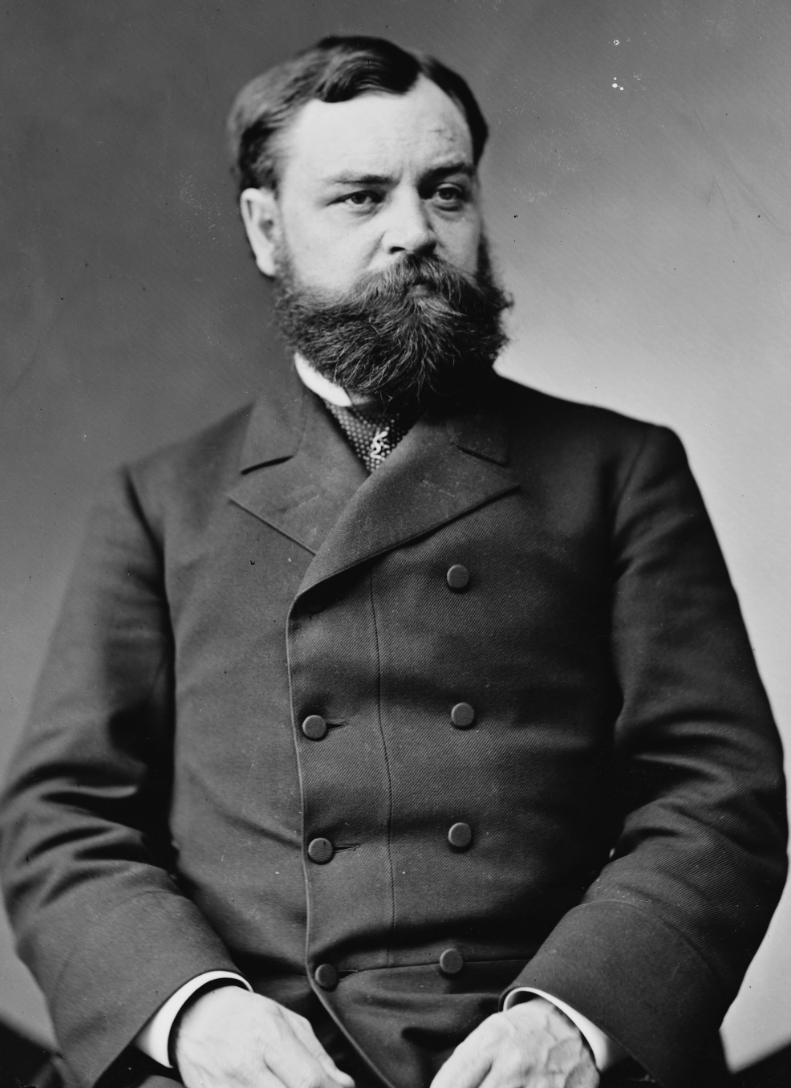
Robert Todd Lincoln was associated with three presidential assassinations
Four years later, in September 1901, Lincoln’s grim curse struck once more. He had just stepped off a train and was entering the Pan-American Exposition fairgrounds to meet President William McKinley when Leon Czolgosz shot the president in a handshake line. For the third time, a "solid Pullman" funeral train carried a fallen president home, with Abraham Lincoln’s son the witness to his third national tragedy.
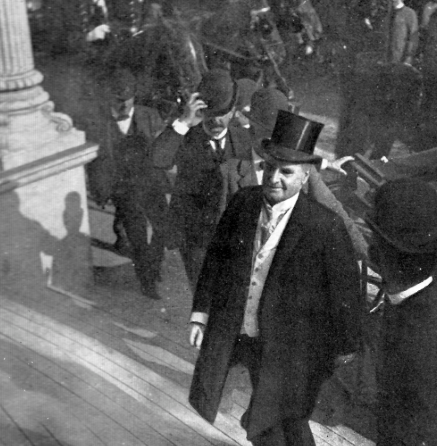
The last photo of President McKinley on his way into the Music Hall, where he shook hundreds of hands before being shot.
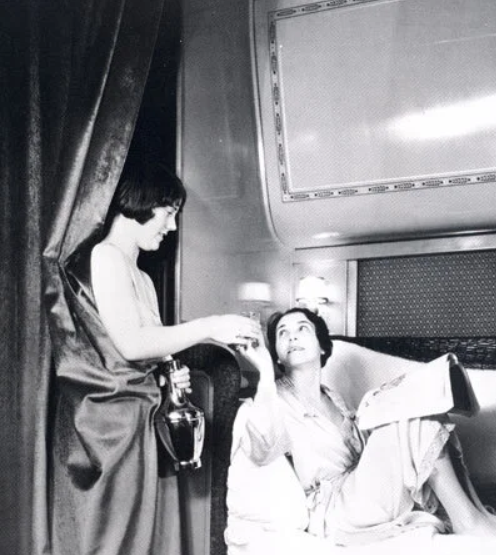
Pullman’s luxury continued for the finest passengers. Steel replaced wooden cars in 1910.
The McKinley assassination elevated Theodore Roosevelt to the presidency, ushering in the progressive era of trust-busting that targeted the unchecked monopolies of the rail barons. Pullman’s suffocating hold on the construction and operation of sleeping cars would eventually face the antitrust axe, leading decades later to federal court orders mandating the complete separation of its manufacturing and car-service operations. While the manufacturing company made many classes of vehicles after the end of the wooden car era in 1910, the automobile, and then the airplane, killed off most rail travel.
Pullman made cars throughout the first half of the 20th century, expanding beyond luxury, but always focused on quality.
James Martin witnessed the entire arc of the Pullman company, working 40 years for the firm before dying of a stroke in 1911. He was remembered for his steadfast efforts to please the wealthy and powerful during the heyday of rail travel.