
As we celebrate America's workers on Labor Day, I looked back about 2,000 years for wisdom for those with their heads down in the daily grind, and those returning from Summer break, looking toward a productive Autumn.
Around 49 AD, Seneca the Younger penned De Brevitate Vitae (On the Shortness of Life). In it, he offered an unvarnished warning: we live under the dangerous illusion that our time is infinite, perpetually kicking the can of actual living down the road to an uncertain future.
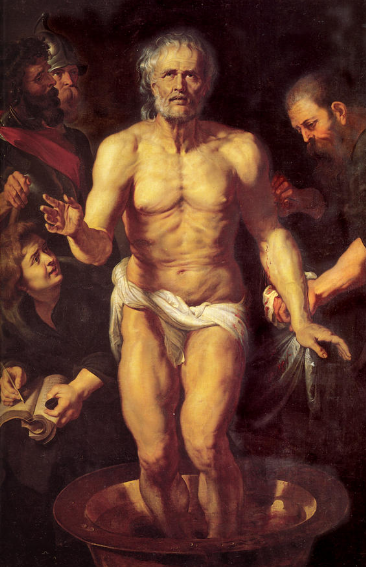
Seneca the Younger depicted in Peter Paul Rubens, c.1614 painting "The Death of Seneca"
“You live as if you were destined to live forever; no thought of your frailty ever enters your head, of how much time has already gone by, you take no heed. You squander time as if you drew from a full and abundant supply, though all the while that day which you bestow on some person or thing is perhaps your last.”
Our daily routine has a way of numbing us to the calendar. Seneca wasn’t arguing that life is inherently brief; he pointed out that we waste far too much of it. "Life is long enough, and it has been given in sufficiently generous measure to allow the accomplishment of the very greatest things if the whole of it is well invested."
We surrender our prime hours to pointless meetings, chronic worry over things we cannot control, FOMO, and the relentless accumulation of things we don't actually need.
Drive any commercial highway, and you'll notice our unhealthy relationship with self-storage facilities. We spend our precious hours earning money to pay rent on lockers of stuff so unimportant to daily life that we literally pay to push it out of sight.

Have you seen what people put in these?
We operate under the comfortable assumption of continuity—that tomorrow will look just like today. We rarely recognize when an encounter with a place, a friend, or an aging parent is the last time it will happen.
Anyone who has stepped away from an infant for even a few weeks understands how fast a unique chapter closes, never to return.
Seneca’s contradiction persists: “You have all the fears of mortals and all the desires of immortals.”
We live consumed with anxiety over low-probability events, our position relative to peers, and choosing the wrong diet, haircut, or exercise regimen, while chasing immortal-scale desires—unlimited accumulation, perpetual relevance, never aging, and the belief that we can postpone real living until after the next bonus-cycle.
Seneca pulled no punches when dismantling this trap:
"You will hear many men saying, 'After my fiftieth year I shall retire into leisure, my sixtieth year shall release me from public duties.' And what guarantee, pray, have you that your life will last longer? Who will suffer your course to be just as you plan it?"
"Are you not ashamed to reserve for yourself only the remnant of life, and to set apart for wisdom only that time which cannot be devoted to any business?"
While infant mortality in ancient Rome dragged average life expectancy into the mid-30s, A good percentage of adults reached their late-60s and beyond.
Seneca himself was 68 before Nero sentenced him to end his life over an alleged conspiracy. His core argument remains rock solid: waiting until your twilight years to start living for yourself is a losing bet.
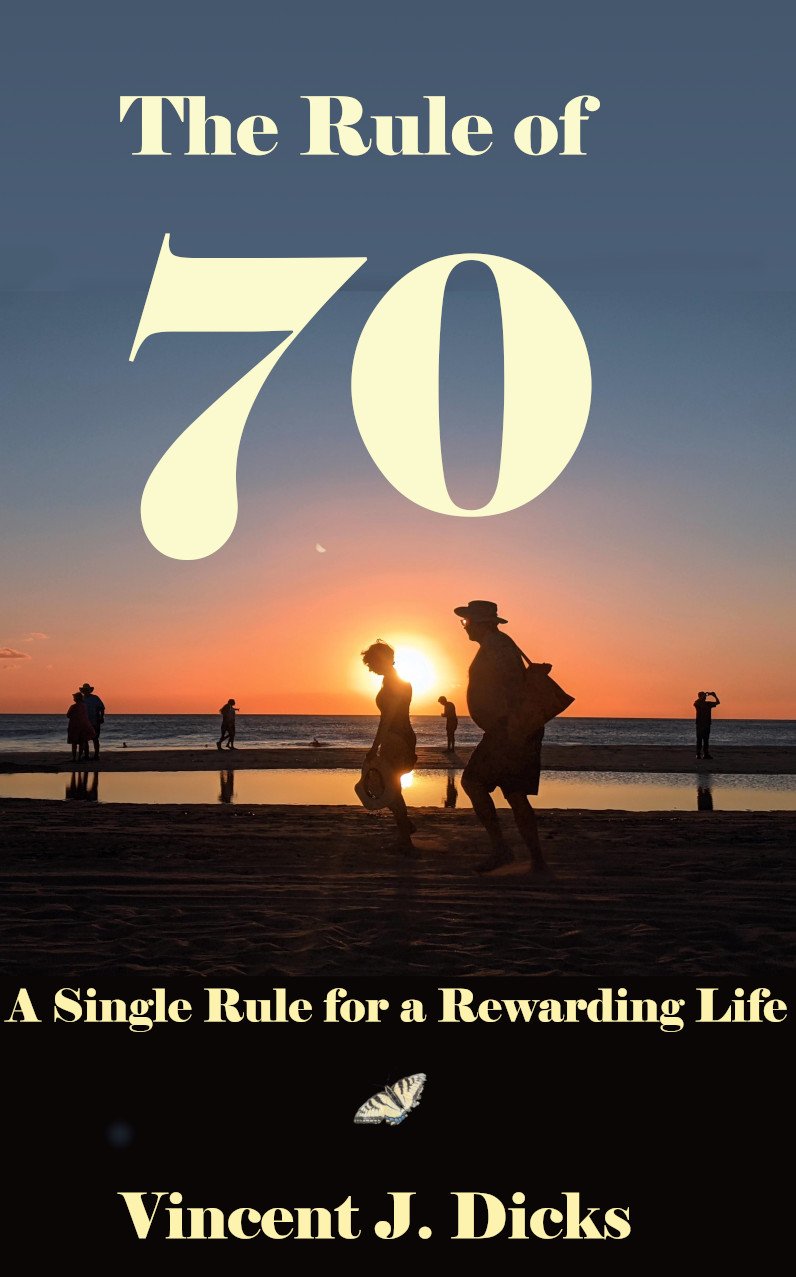
Two thousand years later, this ancient truth sits at the very heart of my book, The Rule of 70: A Single Rule for a Rewarding Life.
Where Seneca offered philosophical insight, The Rule of 70 delivers an unapologetic reality check. We make a fundamental error when we confuse overall lifespan with active healthspan. The window where your body, mobility, sensory sharpness, and energy align to do the things you truly care about narrows dramatically as you approach age 70. Your individual mileage may vary, but Mother Nature is undefeated.
If you are 40, you don't have an indefinite future; you have roughly 30 good years left—about 1,500 weeks. By 60, you are likely down to 520 weeks of prime runway.
Framing time this way isn't morbid. It is the ultimate antidote to procrastination. Once you calculate your remaining active margin, the trivial noise falls away. You also realize that happiness isn't bought with more possessions, but by shrinking what you want. Arthur C. Brooks has a formula: Satisfaction equals the things you have, divided by the things you want. You control the denominator.
Buy back time for what actually matters: shared experiences, deep relationships, and meaningful events with the people you love. As you lose the desire for things, you can empty the storage facility.
Seneca diagnosed the disease of deferred living, but The Rule of 70 prescribes the solution: stop saving the best parts of your existence for the remnants. Take ownership of your remaining margin while the clock is still on your side.
Life after 70 can be the most content, joyful chapter of your life—especially if you arrive without the burden of regret, having lived your preceding decades with purpose, presence, good relationships, and the clarity that you need very little to live well.
I appreciate your labor. Don't wait till retirement. Honor your time, now, and be as effective as possible.
The audiobook version is now available