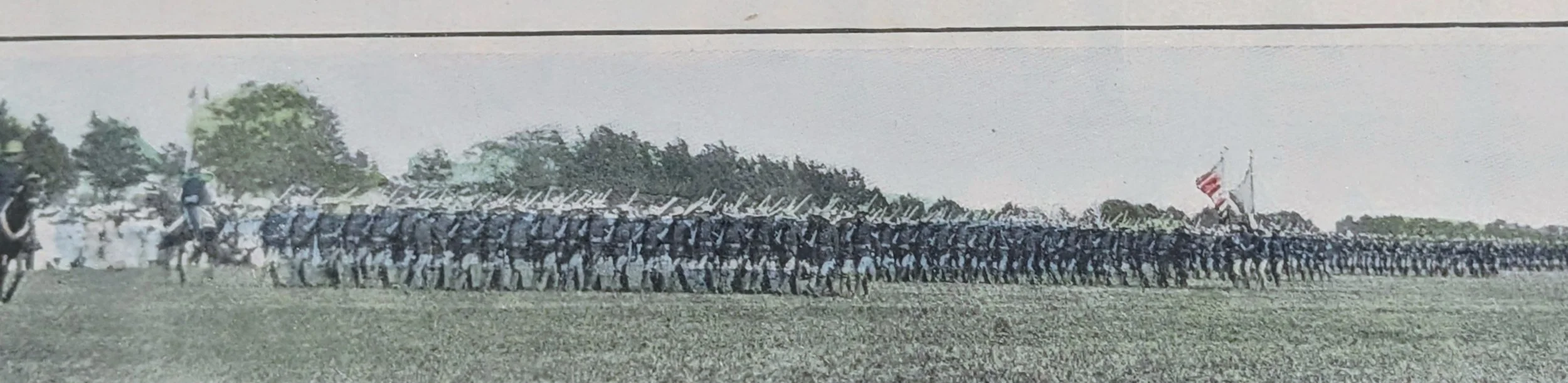
I was gifted a framed news page of several photos. Titled “THE PRESIDENT AT SEAGIRT” and undated, it is in color, from Harper’s Weekly, and describes:
"On July 24th the President left Oyster Bay in the Mayflower and sailed to Atlantic Highlands. There he was met as he stepped on New Jersey soil by Governor Murphy, conducted to Seagirt (spelled as one word), and there reviewed the state militia in camp.”
How do we know the year?
1) The president and governor are on horseback. Governor Murphy is clearly not Recent Gov. Phil Murphy.
2) The image is in color. Or is it? The grass is green, the sky is blue, and the uniforms are a deeper blue. But something is off.
3) SEAGIRT is spelled as one word. Mary Blackey was the first Post Mistress in Sea Girt in 1895. Despite the Postmaster General wanting all single-name post offices for new openings, Mary had her husband Henry paint “Sea Girt” as two words above the family store on the corner of Washington and the Railroad. This was how Commodore Stockton and the Sea Girt Land Improvement Company spelled it. It took several more years for the two-word name to become the standard in the press, and even more until the post office used the two-word name.
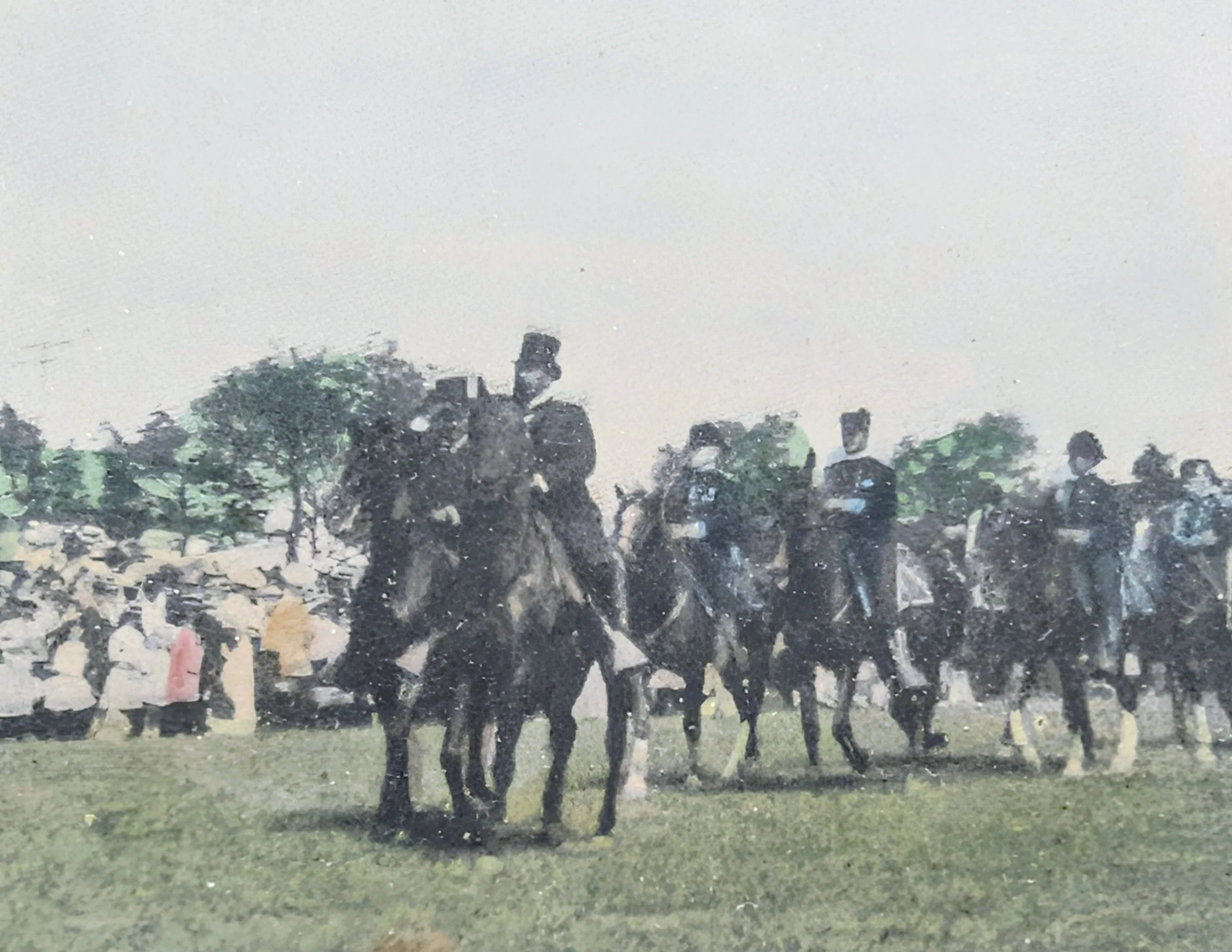
Teddy Roosevelt is on the left, Gov. Murphy to the right in front.
This can only be 1902.
President Teddy Roosevelt had a summer home in Oyster Bay, and his own yacht, called the “Mayflower.”
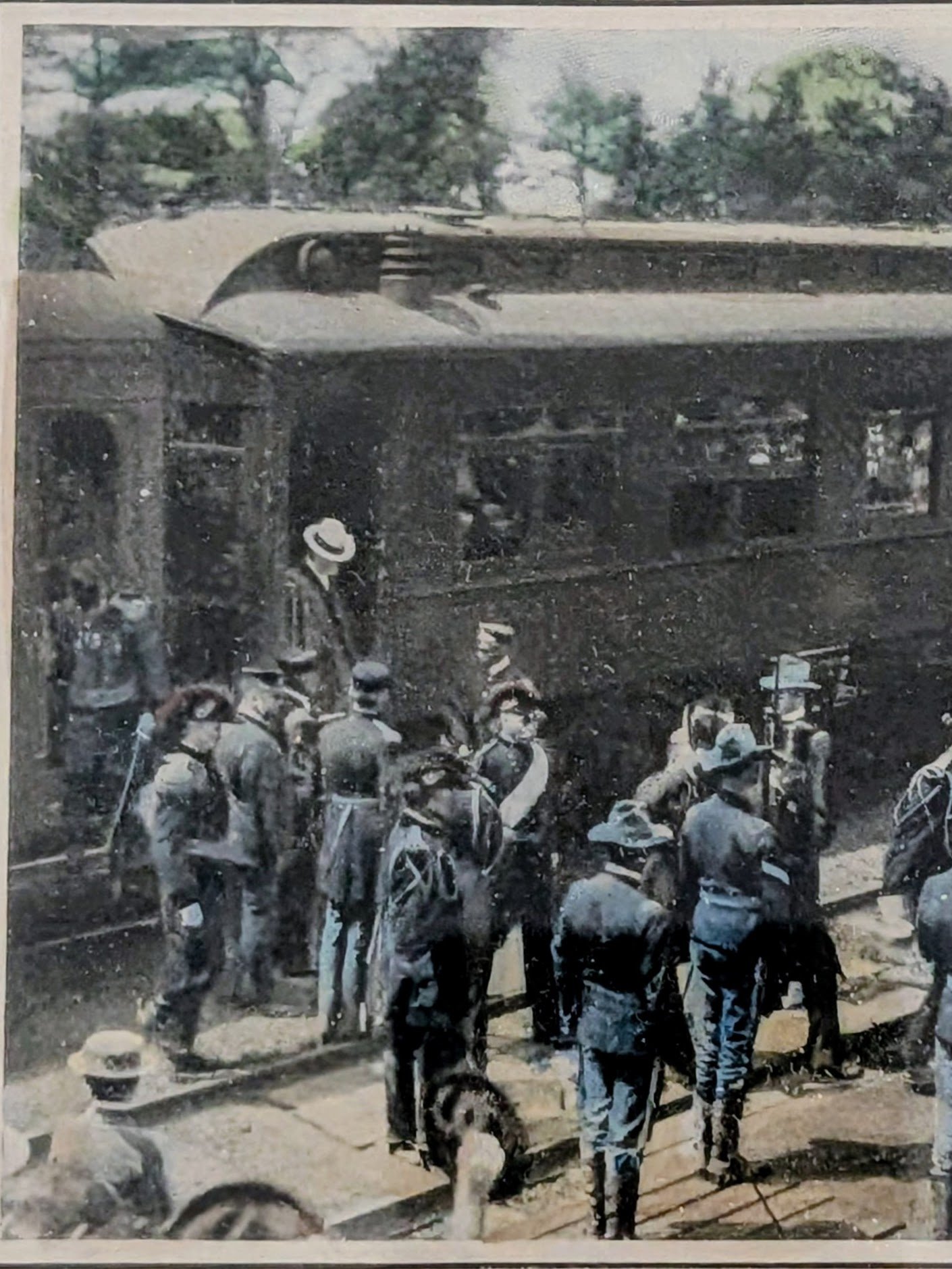
The train at SeaGirt Station
Local newspapers noted 20,000 spectators were waiting at the camp for the train to arrive at little SeaGirt Station. Roosevelt mounted a horse and rode with the governor to the camp. Franklin Murphy was the Republican Governor from 1902-1905.
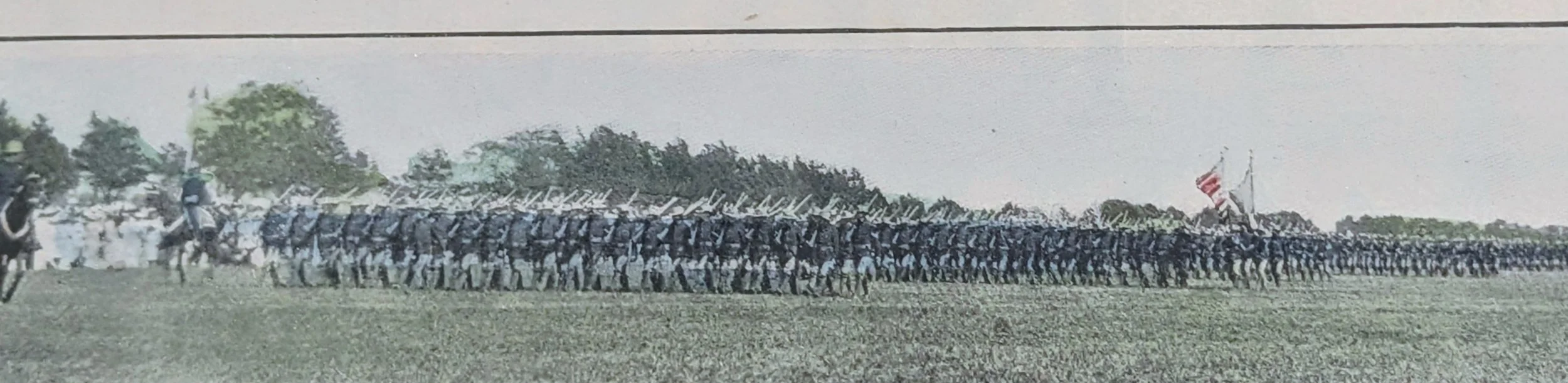
The American Flag, the trees, grass and the troops all got colorized. Troop Review at Sea Girt 1902
Theodore Roosevelt became President after the shooting of William McKinley at the Buffalo Pan American Exposition in Sept 1901. Teddy was famous as the leader of the Rough Riders, cavalry riders who broke in horses, and for leading the charge up San Juan Hill in Cuba in the 1898 Spanish-American War.
The horse ride from the train showed he still had command of horses. After reviewing the troops, Teddy gave a short speech that emphasized the importance of the National Guard and the need for good shooters.
“I earnestly hope and believe you never will get into battle, but if you do, it is going to be mighty important to hit the other fellow; and you are going to be able to do it largely in consequence of the way you have put in your time, knowing your rifle until it is just part of yourself, until you can handle it, take care of it, and use it as it has been the pride of the American Army in the past, that our troops always have used their rifles—efficiently.
We have prided ourselves upon having an army of marksmen. Our army has given us a just pride in it, because its constant and zealous effort has been to take care of itself in the field and in all that pertains to the duties of a soldier. I think, gentlemen, that much help can be given to the National Guard of the States by the action of the United States Government. I want to see the National Guard with the best and most modern weapons.”
The Harper Brothers had a massive printing facility in Manhattan and churned out two magazines (Harpers Monthly and Harpers Bazaar), a weekly newspaper (Harpers Weekly), and many books and periodicals. The brothers started in 1817, and by the 1860s were dominant in the American printing industry.
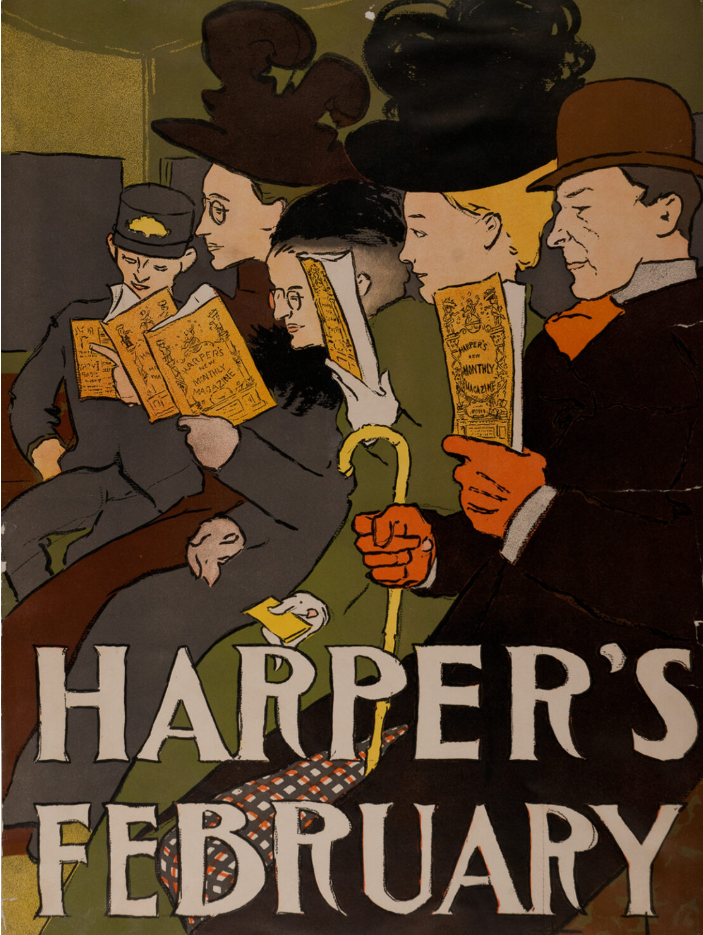
Magazine covers stated with drawn colorized covers in the later part of the 1800s
Color was introduced to books and magazine covers, first as line art. In 1892 the Chicago Inter-Ocean published the first color comic supplement. A year later, the New York Recorder published the first American newspaper color page. A few months later, Joseph Pulitzer’s New York World published a notable color comic supplement featuring Walt McDougall's "The Possibilities of the Broadway Cable Car".
1896: William Randolph Hearst’s New York Journal heavily utilized color comics, featuring Richard F. Outcault's "The Yellow Kid." This evolved into a regular Sunday color comic supplement and gave rise to the term “Yellow Journalism”.
Late in the decade, photos were added to traditional line drawing as equipment improved.
"Color photography" was still a complex laboratory experiment, not something a journalist could use in the field. The "color" you see in the Harper's photos was created at the printing plant. It wasn't captured; it was added.
The illusion was made when a photographer took a standard black-and-white photo, and after the development, the artists looked at the gray photo and made educated guesses. They decided where the blue of the sky should go and what shade of chestnut a horse should be.
The Layers: The paper was run through the printing press multiple times. One pass printed the black-and-white photo. Subsequent passes stamped down layers of colored ink—pale blues, dusty reds, and muted yellows—on top of it. It was essentially a high-speed, mechanical version of "paint-by-numbers." Only a weekly like Harpers had the speed and the technology to turn out colorized photography in their paper. It was more commonly seen in the booming postcard industry.
It was only in the early 1900s that the alignment was good enough, and the thin paper did not jam with multiple passes to get the finely colored photographs we see in these 1902 photos.
At the time, Harper & Brothers was boasting that they could produce over 20,000 completed magazines an hour. They were using electricity—a relatively new addition to the plant—to power the massive cylinders. They marketed this as "The New Harper’s," emphasizing that the "color plates" (like the Roosevelt spread) were bringing the "vibrance of the world" to the subscriber's doorstep.
Autochrome Lumière was an early colour photography process patented in 1903 by the Lumière brothers in France and first marketed in 1907. It used three plates of potato starch grains dyed to primary colors, and several filters to capture true color photos. National Geographic printed some in 1910.
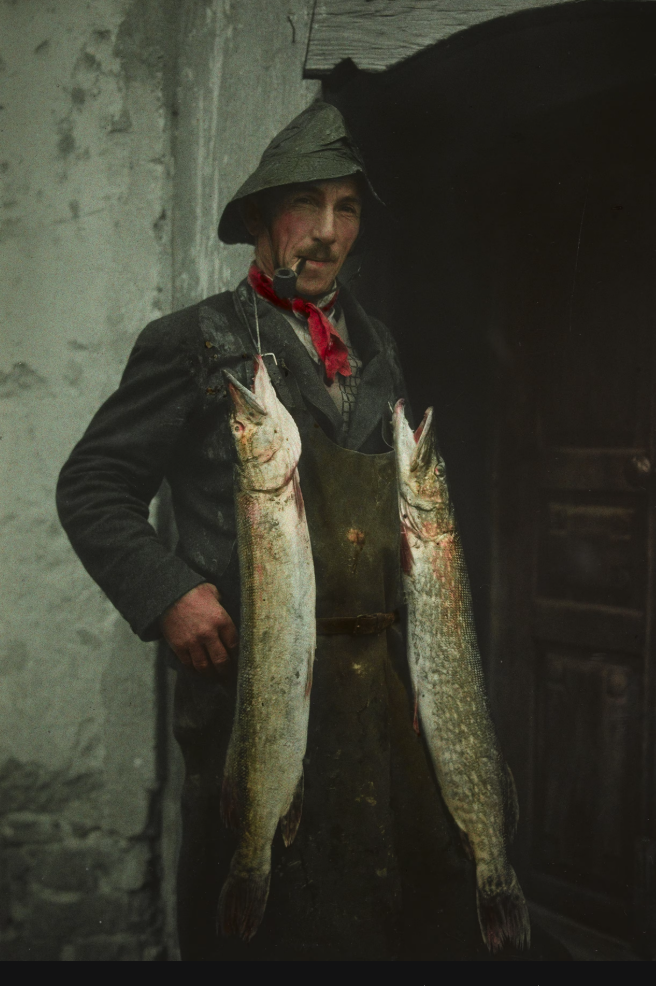
1910 National Geographic Image using Autochrome.
By the early 1930s, Kodak invented a much less complex Kodachrome process, and soon most magazines would have high-quality paper and color capabilities. Newspaper color photography was not widely used until the late1970s. Intermediate publications like Harper’s Weekly folded around World War I. Harper Collins, one of the Big 5 publishing houses, is a remnant of Harper Brothers’ printing operation, and Harper’s Bazaar still prints ten fashion magazines a year.
Thanks to Jim Rotolo for the Harper’s Weekly page. It’s a rare piece of Sea Girt History.