
Trash or treasure?
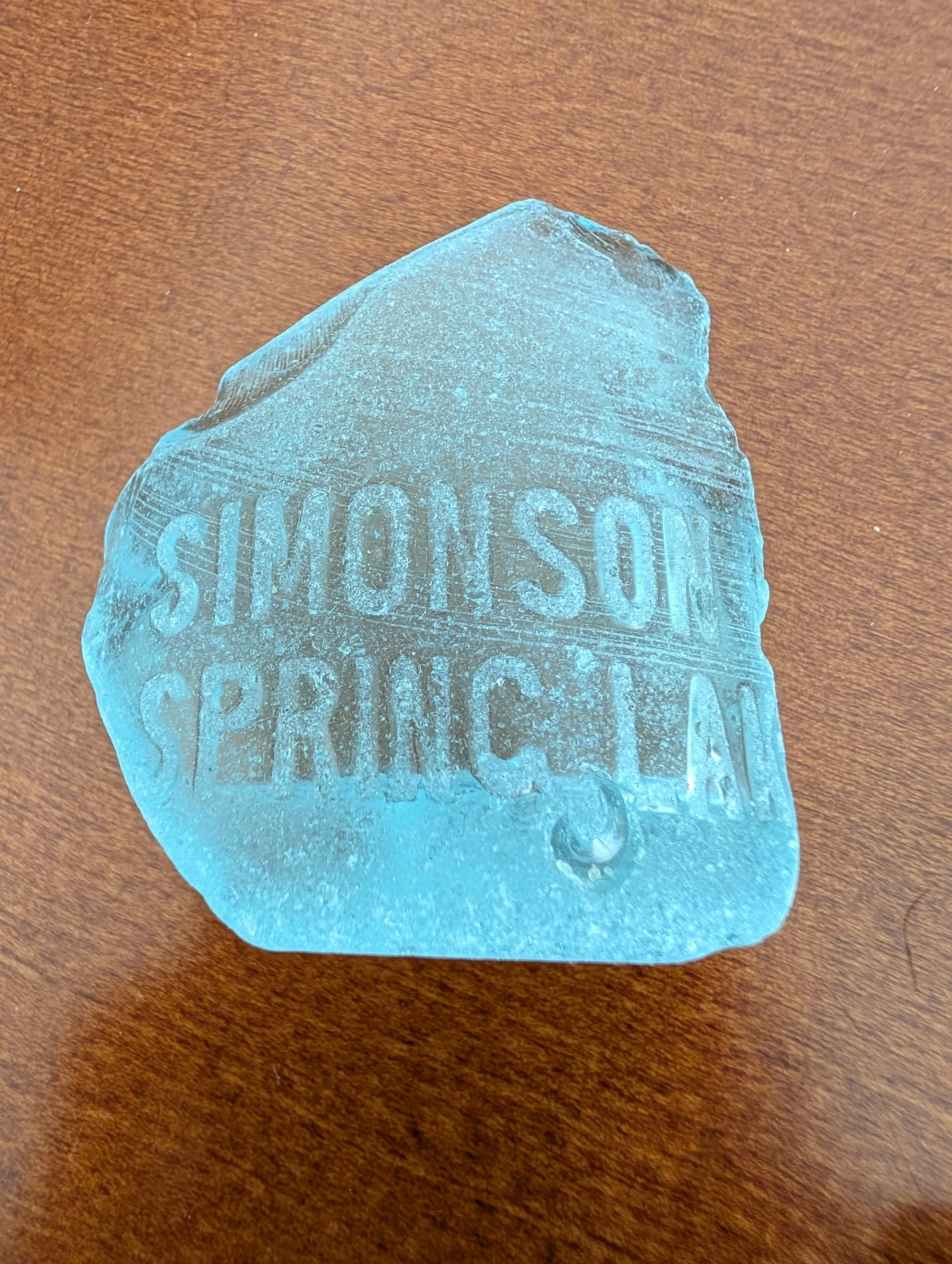
The Moontide is a feature of a full or new moon, exacerbating wave action. Combined with onshore winds in last week’s full moon, the Sea Girt Beach experienced a major dump of shells, rocks, and other assorted prizes. One was this piece of local history.
Simonson’s bottles held beer.
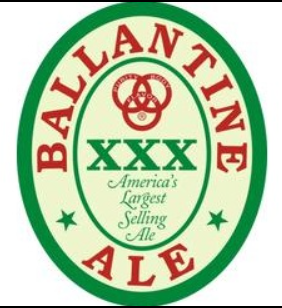
In 1820, Peter Ballantine emigrated from Dundee Scotland. He settled in Albany NY and worked in the beer business. By 1830, he had opened his first brewery. He moved south to be closer to the New York City Market and in 1840, leased an old Newark brewery site with Erastus Patterson. In just five years, he had made enough money to open his own large plant along the Passaic River with his three sons Peter H., John, and Robert. Ballantine made Ales, and used the ancient symbol of three interlocking Borromean rings for purity, body and flavor.
The five largest brewers in America sold lagers, pilsners. The lighter-colored and shorter-fermented beers popular with German immigrants. Ballentine focused on darker, cold-brewed ales.
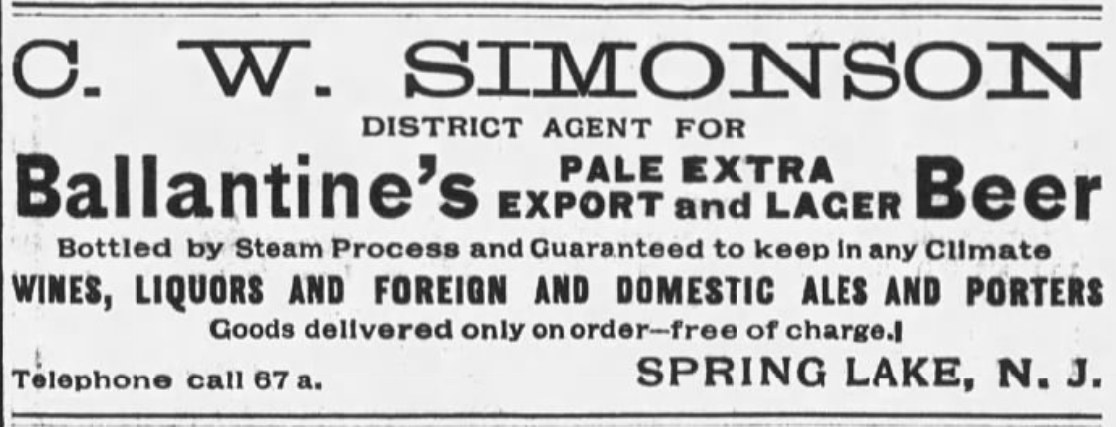
When Peter Ballantine passed away in 1883, his sons continued running the brewery. By this time, they had developed a distribution process for the beer, which was standard prior to prohibition. Beer was delivered in barrels to local distributors. The local distributor bottled the beer, and steam-pasteurized it, to kill any remaining active yeasts and fermentation.
This prevented the beer from exploding in the pantry or going bad. It was shelf-stable for many months. Heavy wooden cases of empty bottles were returned to the local bottler when he dropped new full bottles. Transportation costs for the brewery were low.
Starting in 1894, Charles W. Simonson ran his bottling business in Spring Lake, on Jersey Ave near the railroad tracks, with his brother Edward. For $150 licencing fee, he could deliver the product he purchased from Ballantine to the hotels and cottage owners. By 1898, Edward had branched out on his own and started a similar distributor in Freehold.
Charles ran a successful business and eventually expanded his business to real estate and in the early 00s he ran the Spring Lake Beach concession with Joseph Cliver.
In 1908, he began to run into trouble. He opened a bar near his house on 5th and Passaic. In 1909 he had his licence denied and subsequently lost the beach concession. The town did not like the character of the patrons and did not want a standalone saloon.
And then in 1911, his son Charles Jr. had a rooming house hotel built at the property, intended for full-year operation. They applied for a liquor licence for the rooming house. The town leaders had no good reason to deny this hotel’s licence when the other houses could serve their patrons. The community came out in force to object. The case went to court. James Bradley, founder of Asbury Park, and a temperance advocate, paid for full-page ads to promote the opinions of the local residents who did not want a Rum Tavern there.
“Here is a Remonstrance Against Charles W Simonson Jr's Rum Application. To the Court of Common Pleas:
The undersigned residents of Spring Lake in the County of Monmouth respectfully protest against the granting of an Inn and Tavern License or any other license to Charles W.
Simonson, Jr., for the sale of intoxicants at a new building erected in the said Borough of Spring Lake. Remonstrants believe that such a license place will be an unquestioned detriment to our town. The location of the new building is such that it can only result in the establishment an objectionable Road-house at that place. It is in a part of the town unfrequented by our people and where it would be possible to conduct a Road-house that would be a positive injury to good morals and good government.
It is not at a point where it would be under constant observation of the public and hence where it would be difficult to prevent objectionable characters from congregating at or resorting to it.
Spring Lake is a place of exceptionally high repute for its general character as a summer residence. Its whole future is dependent upon the preservation of its present high standing as a seaside resort of exceptional excellence and the Court should not permit a license to sell liquor to be granted here, at a place which cannot be otherwise than a menace to everything that is for its best interest. We respectfully request that the Court refuse to grant such a license at this place, to the said Charles W. Simonson, Jr., or any other persons if such license shall be applied for in any other name.”
Simonson pulled the application and then resubmitted it in April 1911. Charles Sr. and 50 friends testified on his son’s behalf. The judge denied the application. Charles Sr. retired and closed his bottling plant shortly after the denial in May 1912 at age 54.
Charles Sr. had many friends from his days as a beer bottler, and went into local politics, eventually becoming Postmaster at Spring Lake and participating in the fire Company, Masons, Elks, and Shriners. He died in 1921 in Spring Lake at age 63 from abdominal trouble.
So the aqua glass that washed ashore last week was from 1894-1912. Keep looking for treasure!