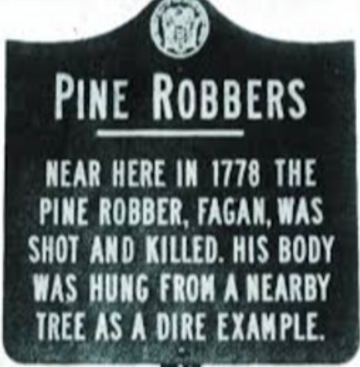
It is the 250th anniversary of the signing of the Declaration of Independence. When Richard Stockton, John Witherspoon, Francis Hopkinson, John Hart, and Abraham Clark signed for New Jersey, they knew they were committing treason.
Not all Americans were immediately supportive of joining them in protest against the King and England. The conflict left neighbors to decide for themselves which side they supported. In 1776, around 30% of the population supported the King. The loyal Governor of East Jersey, William Franklin, was taken prisoner by the Patriots.
Loyalists ratted out neighbors to the British authorities, reinforcing the resolve of the independence-minded. In New Jersey, this also led to the rise of the Pine Bandits.
The Monmouth Shore was generally left out of large military action except for battles off the coast. With no Navy, the US relied on New Jersey privateers to disrupt the British. The small boats would leave the bays and estuaries of the Shore to try to boost British supply ships. The men knew the shifting sands and eddies, which often allowed them to escape with their prizes.
Some even snuck into Brooklyn, rowing boats into the bay to steal right out from under the English noses.
The English raided the privateer's nest of Chestnut Neck in Little Egg Harbor in 1778. They did not catch any of the wanted privateers, but they did destroy the salt works and burn the largest homes in the area.
Captain Joseph Mount, who owned the Sea Girt land near Newberry’s pond (Stockton Lake), was caught at Egg Harbor, and he spent time in a Halifax, Nova Scotia, prison as an accused privateer, but he was released for lack of evidence.
The British sent regiments on missions to destroy Colonial salt works. Salt-cured meats were critical in an era without refrigeration, and a blockade prevented the importation of salt. The Continental Army needed protein, so salt became a flash point. Salt was also used in gunpowder production.
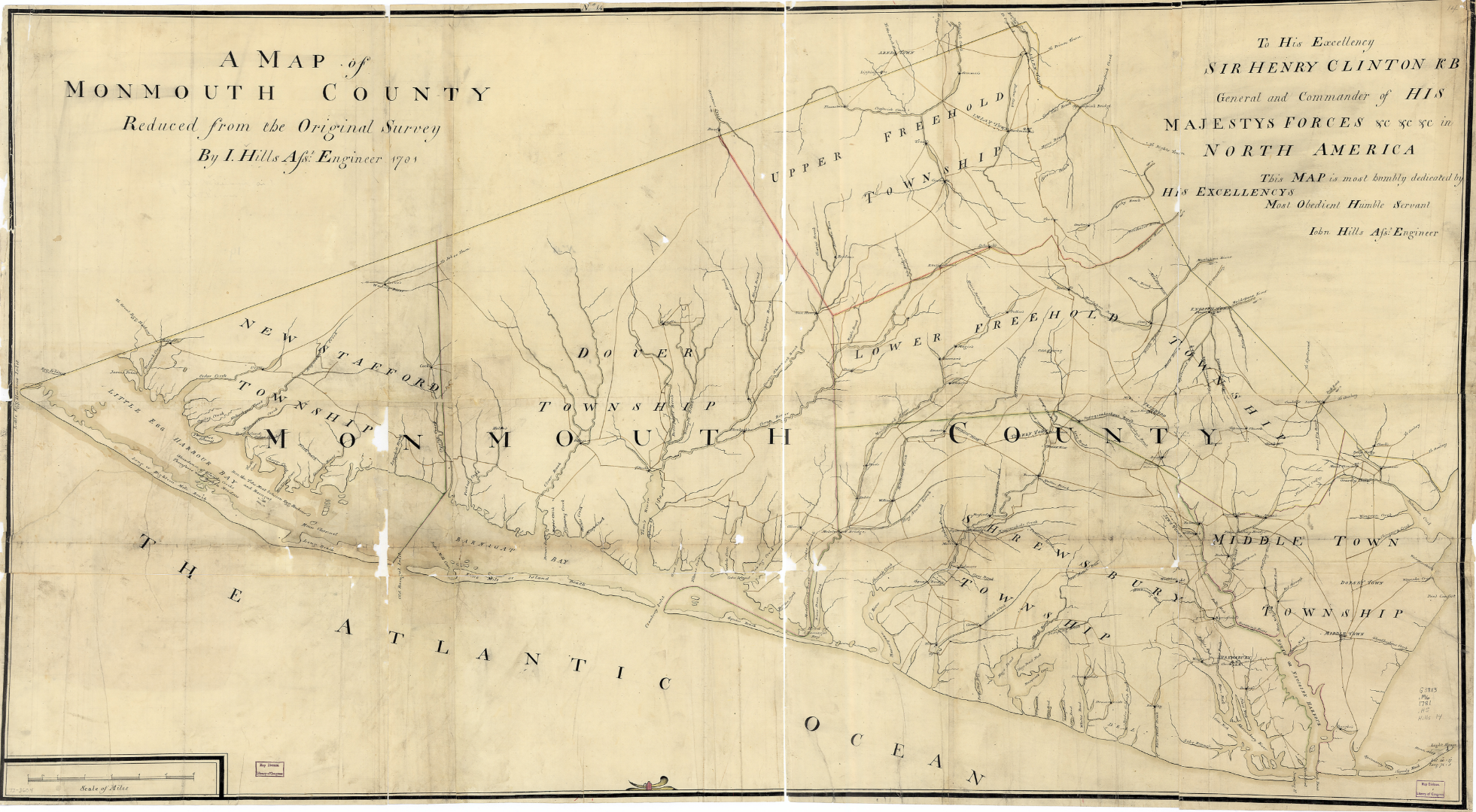
Monmouth included modern Ocean County. Rack Brook is noted where the Wreck Pond Inlet is today. The Manasquan inlet was further north than its current position.
A number of the Van Mater family members who farmed in what would become Sea Girt and Squan owned “salt meadows”; shallow areas of the bays that were used for salt harvesting via evaporation pans.
Frasier’s Highlanders 71st regiment, under Captain Boyd Porterfield, set fire to both the salt barns and docks on both sides of the Manasquan River, as well as torching the homes in Brielle up Union Lane. A few days later, the Shark River works met the same fate.
Gangs of vigilantes captured and turned in Patriots and their families. This was the fate of New Jersey Continental Congressman Richard Stockton, who fled his Princeton home and hid in the Glendola farm of John Covenhoven. He and his host were dragged from the home and marched in nightclothes to Perth Amboy, where they were shipped to a Manhattan prison. Stockton nearly died in the wretched conditions.
During this period of confusion and unrest, the most notorious outlaws were the Pine Robbers. These grifters terrorized common people much more than the Regular British Army.
These were Tory outlaws, some of whom were defectors from the British Navy, others just raw opportunists who used the war as an excuse to kill and steal. Their stolen goods found a market with the British Army.
Loyalist Gov. William Franklin, released in a prisoner swap, directed some of the raids from his refuge in Sandy Hook.
The robbers made their camps in the pines in southern Monmouth. A number of them had been beachcombers before the war. They used their skills against the farmers in the area around Crabtown (Manasquan), and some camped near the head of Wreck Pond, then called Rack Pond.
Jacob Fagan of Shrewsbury and his gang were the most notorious; Colonial Governor Livingston offered a reward for their capture in 1778.
Amelia Dennis, a 14-year-old girl at the time her family was attacked in Allenwood, gave her account of the situation that would eventually lead to Fagan’s death.
Her father, Captain Benjamin Dennis, was not home at the time, but he later tracked down and mortally wounded Fagan and shot two others at the Wreck Pond inlet, and he applied to collect on the reward. Amelia was aided by a Mr. Smith, who had infiltrated the Pine Robbers gang.
"On Monday, Fagan, Burke (Stephen Emmons), and Smith came to our house located south of the Manasquan River about four miles below what was then called the Howell Mills. Fagan was once a near neighbor, Smith a spy who had infiltrated the Robbers, and the other was a thief of the worst kind.
Smith, on the pretense of helping, bid them stay hidden while he entered the house. He quickly apprised mother of the danger. I hid a purse containing 80 dollars and ran with my little brother John to hide in a nearby swamp. The Robbers entered the house and after ascertaining that father wasn't to be found, they decided to kill her.
They hung her from a cedar tree with a bed cord but was distracted by me. I saw John Holmes coming in my father's wagon and ran to warn him. They fired at me but the bullet missed and hit the wagon instead. Holmes escaped and mother managed to free herself while they plundered the wagon, after which they left."
"The next day father moved us under armed guard to safety. That night Smith was able to get away from the Robbers long enough to warn father that they were going to plunder our house again on the next day (Wednesday) and they devised a signal."
"When the Robbers showed up they were attacked by father, and his Militia, who laid in wait and fired upon them. The Robbers disappeared but on Saturday the body of Fagan was found buried. On Sunday the location became known and Fagan was uncovered."
"So incensed were the inhabitants that they disinterred Fagan's remains and enveloped it in tar cloth and chains. The body hung from a chestnut tree on Colt's Neck near Monmouth Court House. Finally the birds picked the flesh from the skeleton and the bones fell to the ground."
(New Jersey Archives, Second Series, Vol. II, p.466).
Dennis moved his family to safety in Shrewsbury, and they led a raid on the remnants of the same group as they tried to take their stolen goods to the sea at Wreck Pond. Dennis' men killed the notorious Edmunds in what became known as the Rack Pond Ambush.
Sadly, the Pine robbers would get a new leader, Lewis Fenton of Freehold who was as ruthless as Fagan, and took his revenge on Captain Dennis, killing him as he traveled to Shrewsbury from Trenton.
After Fenton and his gang killed three more people, there was a $2,500 reward offered for his capture, and an early Sea Girt area resident would collect.
William Van Mater’s father, Ryck, had married Alice Osborne, and they made their farm in what would later become Sea Girt.
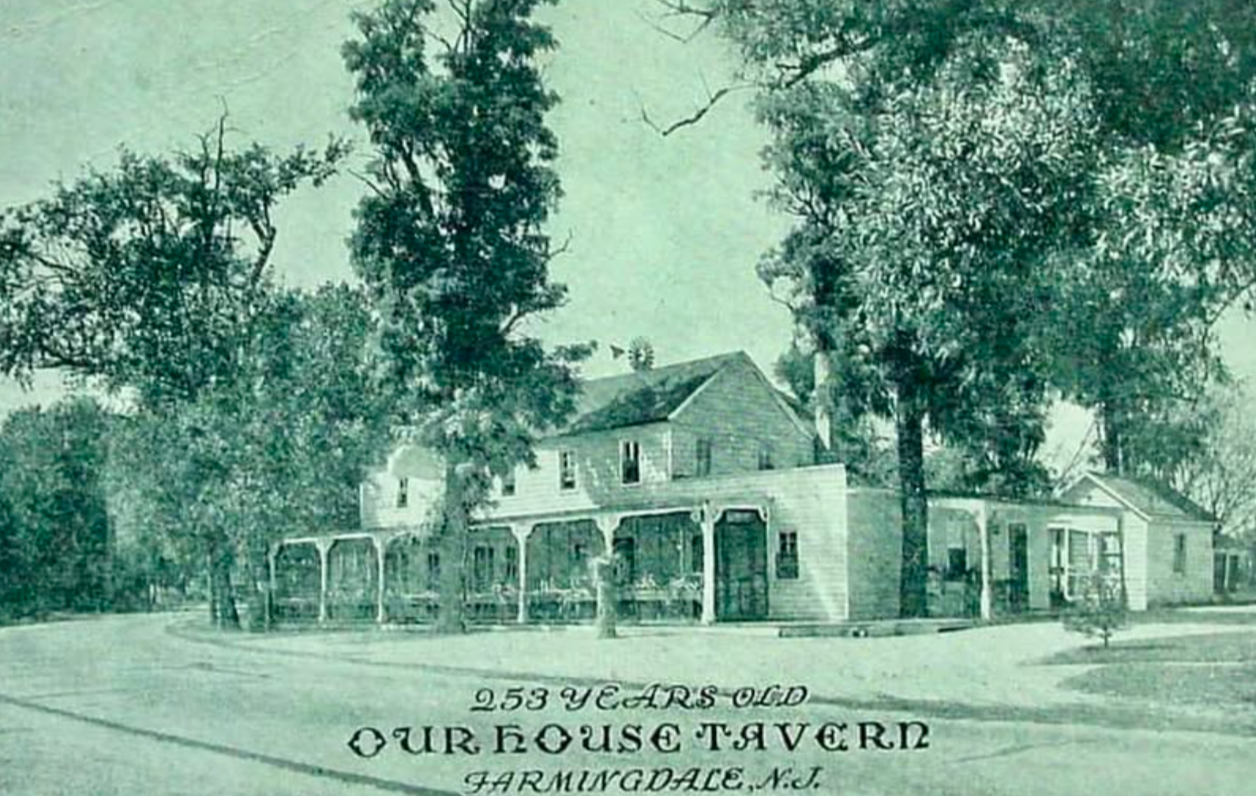
Our House is still there, not far from Farmingdale
Ryck sent his son from Squan Village to Howell near the location of Our House Tavern, and Will was robbed and attacked by men hiding behind the heavy pines along the road. Escaping after taking a bayonet through his arm after giving the robbers his saddle, William rode to Freehold to tell the authorities.
Major Lee permitted three soldiers to try to capture the criminals, while Van Mater allowed himself to take part as a target. Starting at the tavern, he drove a wagon eastward with a sergeant riding along dressed as a farmer. William sipped from a glass bottle.
They outfitted the wagon to look as if it were headed on a normal trip to the salt works near the Shark River to deliver alcohol and mercantile supplies.
Fenton and his gang appeared as expected and prepared to kill Van Mater, but they first demanded his liquor bottle. William tossed the bottle of applejack brandy at the killer. (Laird’s is a hard cider distilled since the 1680s in Colts Neck).
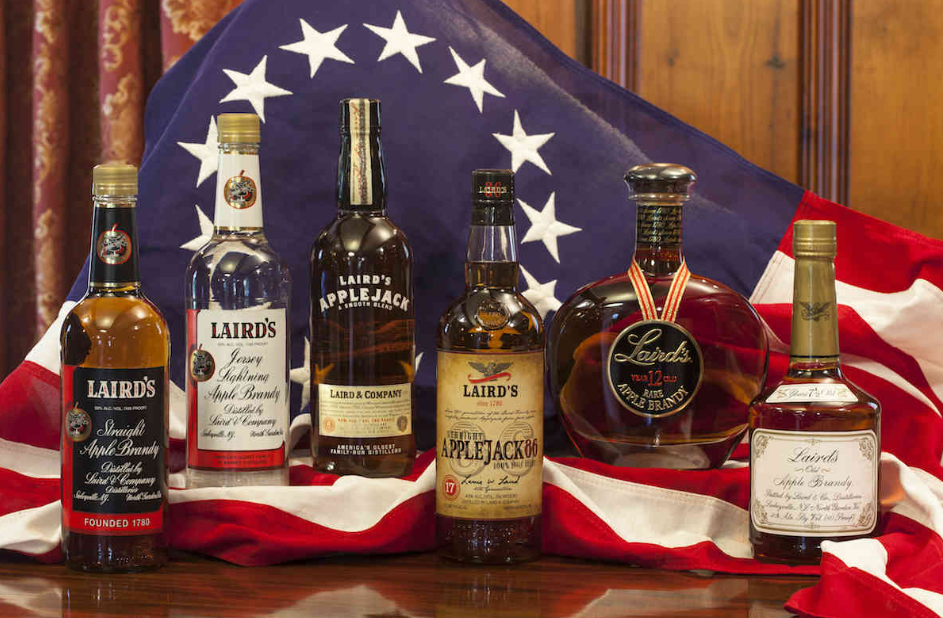
The sergeant signaled the other two men hiding in the wagon, and all three shot when the bottle went to Fenton's lips. At close range, they killed Fenton and brought his body to Freehold.
Fenton's death ended the worst of the civil unrest in Monmouth, although remnants of the Pine Banditti like John Bacon continued in the less populated areas to the south and west even after the end of the Revolution.
While avoiding the battles that took place in Freehold and West Jersey, the people of the coast were abused by the Redcoats, Hessians, and Pine Robbers. This solidified support for the United States, and by the late 1770s, Loyalists at the Shore were in a significant minority and fearful of retribution.
Many fled their farms and sought refuge with the British at Sandy Hook and Perth Amboy. Loyalist farms were auctioned off, and many were not welcomed back into their communities after the British surrendered at Yorktown in 1781. While they abandoned Perth Amboy and New York, the British held the lighthouse and fort at Sandy Hook until 1784. Loyalist East Jersey Governor William Franklin, son of Benjamin Franklin, fled the country. His father largely left him out of his estate, noting the troubles he caused during the war, and leaving William a token worthless piece of property in Nova Scotia.
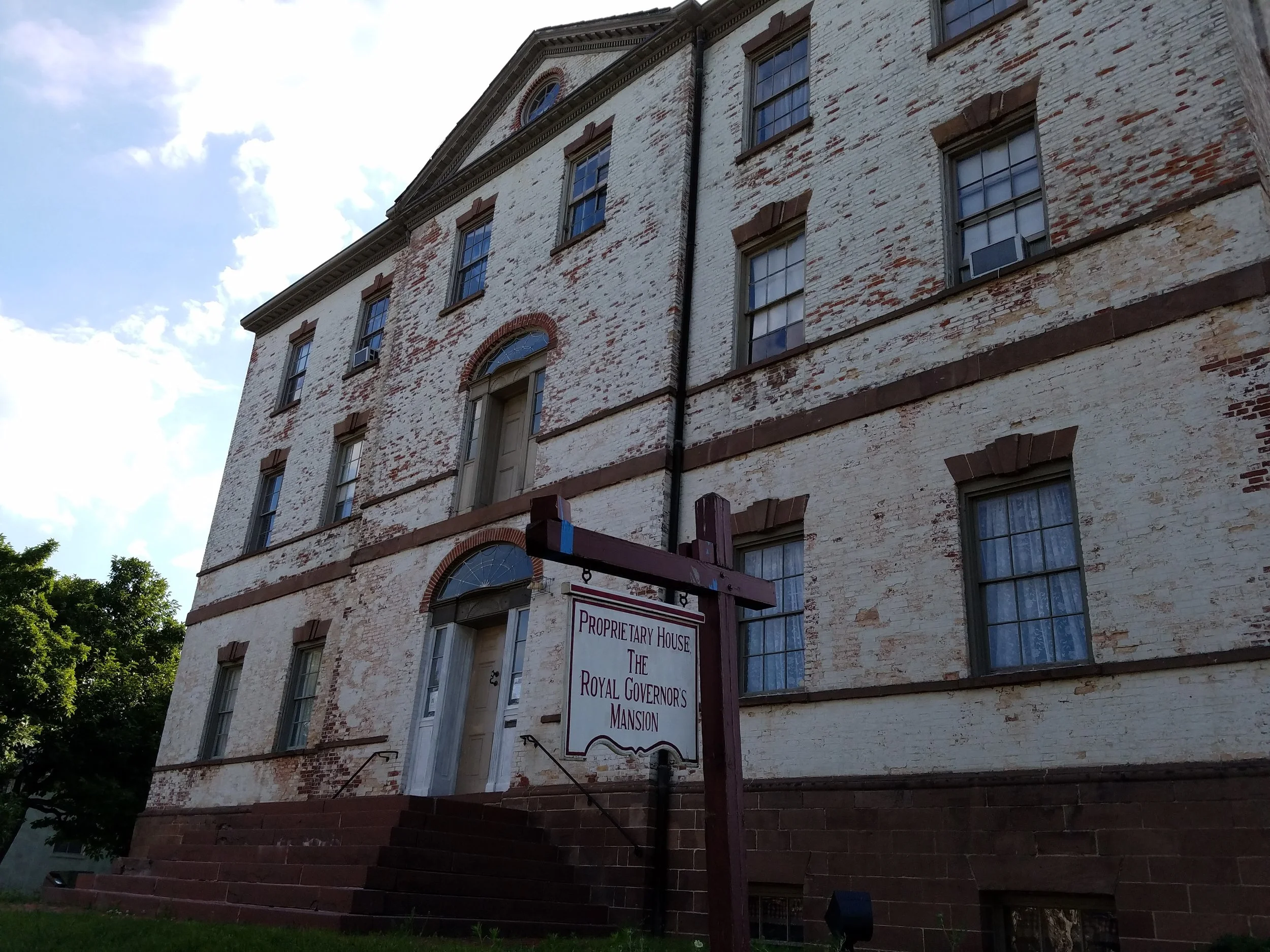
William Franklin was the last Royal Governor of East Jersey