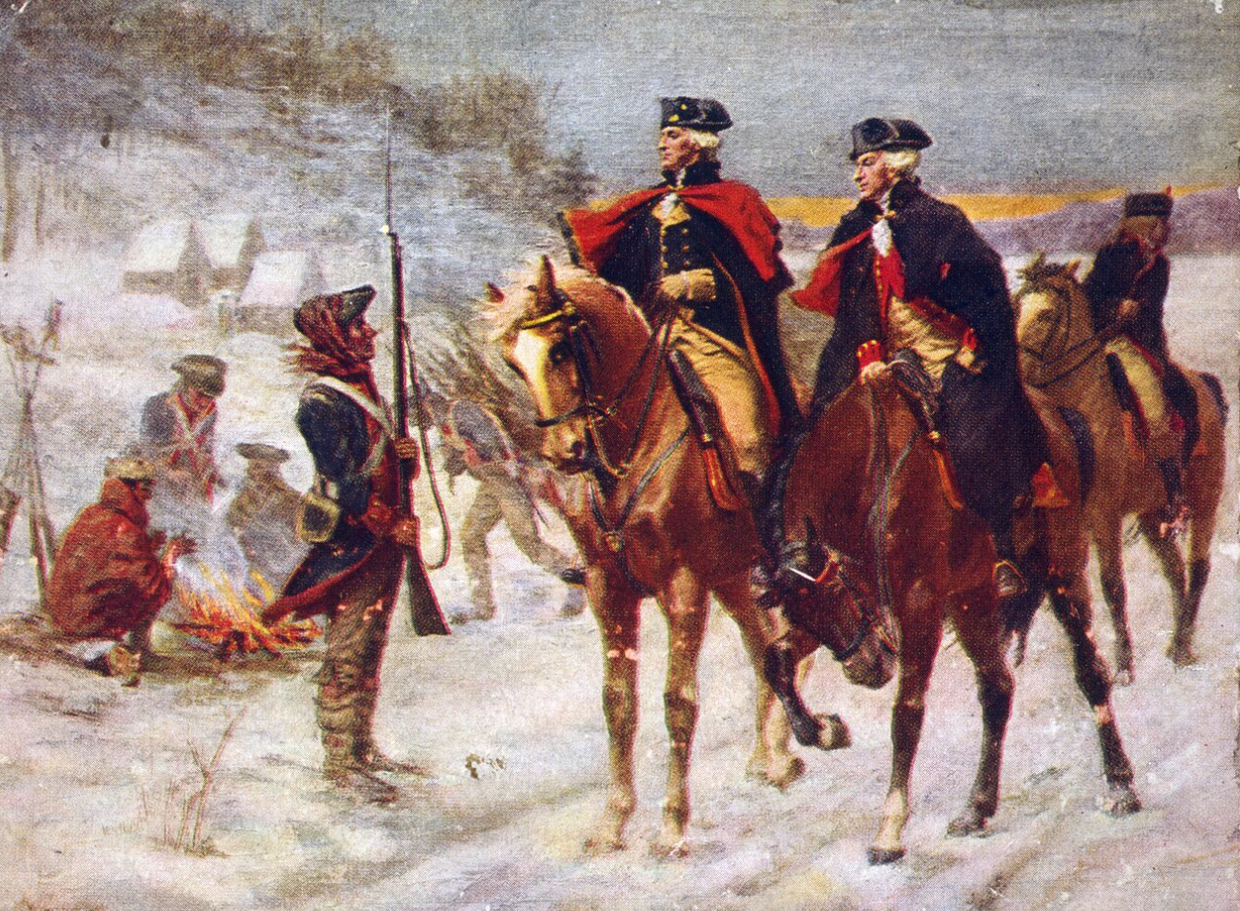
Before the American Revolution, Europe was far ahead of the colonies in specialized horse breeding. Grain-fed European mounts were larger, heavier, and built to scatter infantry. The supply of purebred English horses was cut off with the start of hostilities. Because Colonial-era muskets had a short effective range (50–100 yards) and a tedious reloading process, a well-timed cavalry charge with sabers could be devastating against broken lines. Furthermore, horses gave commanders a battlefield advantage, allowing leaders to move quickly among troops and maintain a better view of the shifting combat.
As the war wore on, the British were out-horsed by locally bred stock. The British supply was greatly constrained. Injured and killed horses were hard to replace. The long sea voyage and the difficulty of adjusting to a grass diet left the horses lacking energy. They were also trained over even roads, and wide flat fields. The American horses were hardier and more sure-footed, given their upbringing in the more wooded lands, swamps, rivers, and uneven dirt roads. Most colonial horses were personal mounts of the officers or purchased locally.
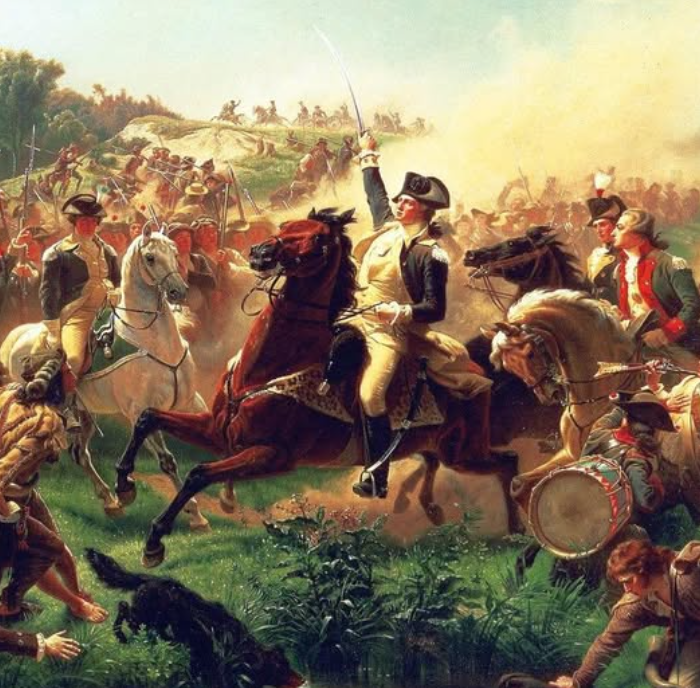
Washington depicted at the Battle of Princeton
The Colonies had developed a horse breeding tradition around Virginia and Maryland. As the latter part of the war moved to the South, the American horses proved superior, and the Patriots used the cavalry to win battles. The agile, hardy American-bred horses excelled in the fast-moving, flanking maneuvers suited to the Southern terrain.
At the Cowpens in South Carolina, Commander Daniel Morgan used his horses under Lt. Col. William Washington. When the British (under the aggressive Lt. Col. Banastre Tarleton) appeared to be winning, Lt. Washington’s Continental dragoons (American cavalry) executed a perfectly timed flank attack.
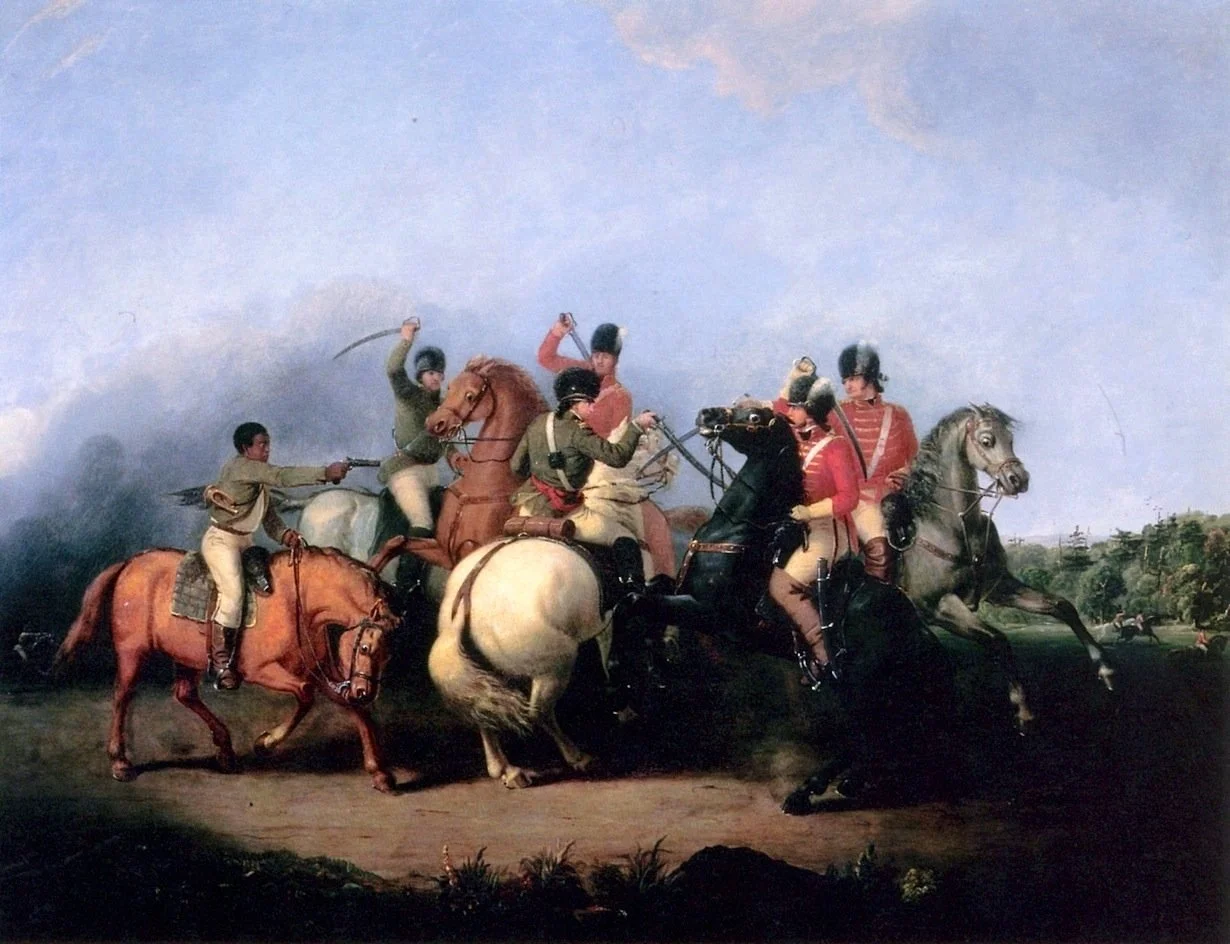
The Cowpens was a turning point for American Cavalry (Reedsy Painting)
The American horsemen hit the British right flank and rear, while the rallied militia struck from the other side, creating a classic double envelopment. This cavalry charge helped collapse the British line, leading to a resounding American victory: British losses were over 800 (killed, wounded, captured) vs. only about 130 for the Americans.
When the war was won, George Washington proudly rode the battle-hardened chestnut charger Nelson to the British surrender at Yorktown. When he returned to Mount Vernon after the war, breeding horses became a passion.
The young nation’s leaders understood the importance of breeding a good stock of horses for the nation, and the quality of the American horse accelerated into the 1800s. In 1802, the National Race Course opened north of the White House, and Presidents Jefferson, Madison, and Monroe were deeply involved in the Virginia horse-breeding and racing culture.
Andrew Jackson, the president from 1829-1837 was a passionate breeder, owner, and racer of Thoroughbreds long before and during his presidency. He co-owned the Clover Bottom Racetrack in Tennessee from 1805 and bred a champion, Thruxton, one of the first celebrity horses.
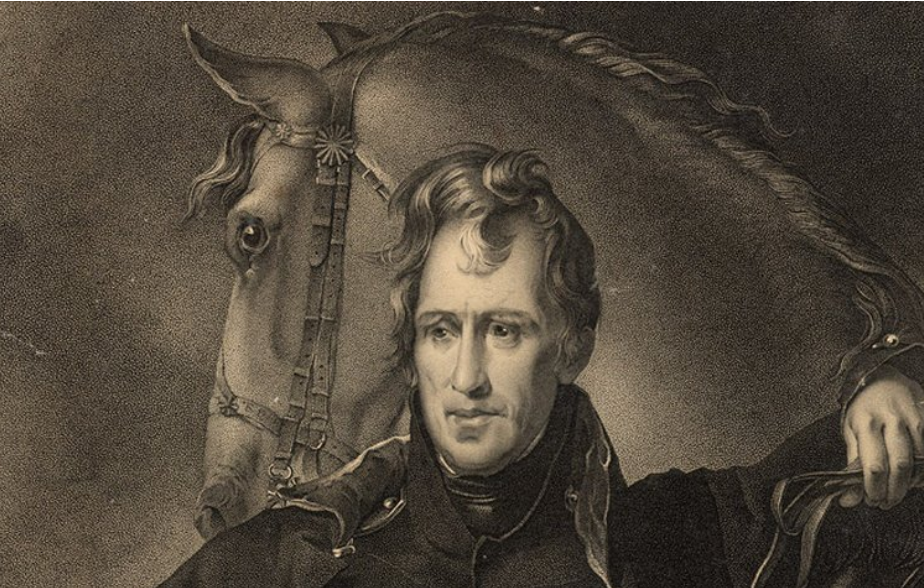
Andrew Jackson was a horseman (Tenn Historical Society)
As president, Jackson operated a racing stable from the White House and continued breeding at his Hermitage plantation. He was a member of the Maryland Jockey Club. He attended races in Washington, D.C., and was deeply embedded in the sport.
Wealthy Americans enhanced the stock by purchasing the Champions Diomed, Leviathan, Glencoe and Priam. These horses would seed the Golden era of American racing.
During this era, Captain Robert Field Stockton brought this passion to New Jersey. Having inherited Morven, his father’s estate in Princeton, and amassed a fortune investing in the Delaware and Raritan Canal, Stockton turned his attention to breeding horses in New Jersey, racing them in Washington, D.C., and at the Maryland Jockey Club.
Stockton bought a big boned, stellar racer named Dashall in Virginia and brought the horse to Shrewsbury, NJ, where the stallion stood stud for any willing mare. Stockton’s goal was to improve the breed stock of New Jersey horses:
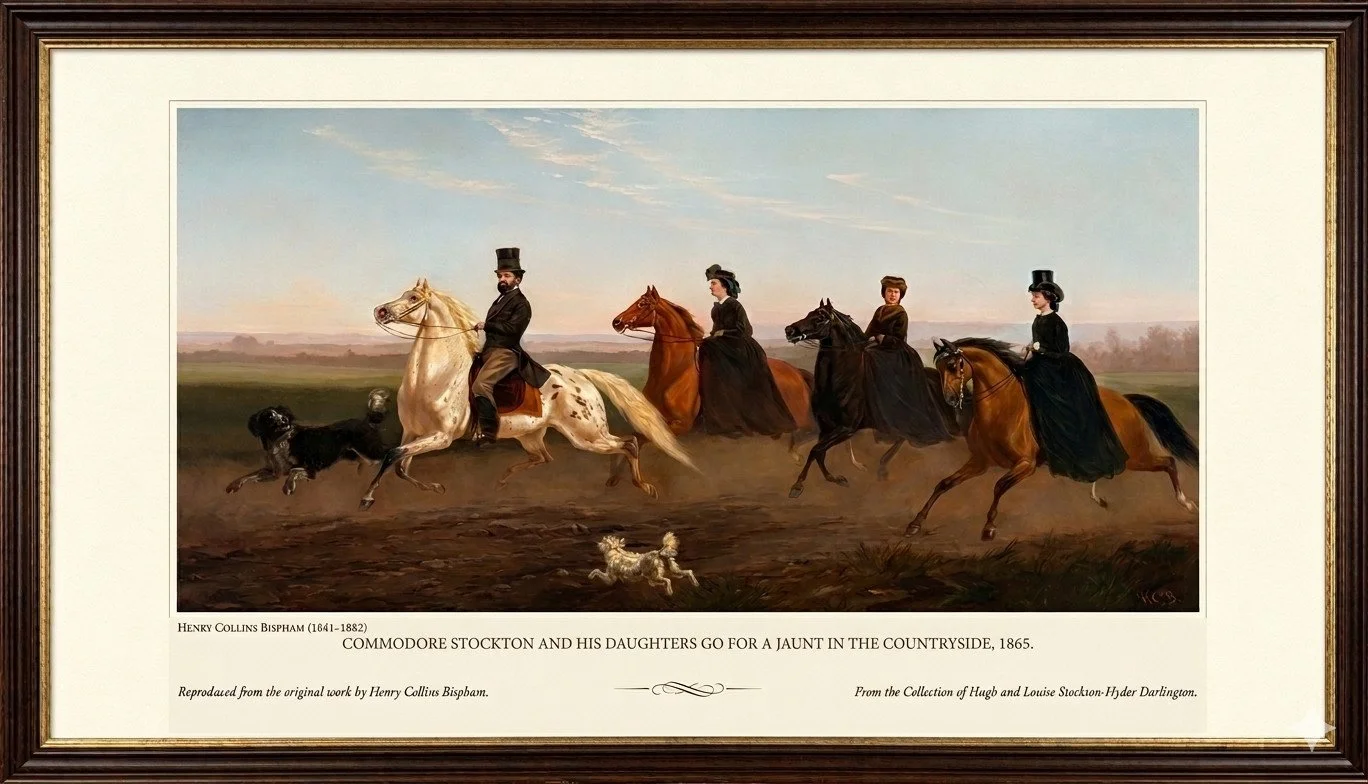
Stockton out for a jaunt with his daughters 1865 (Bisham)
In a Dec 1832, letter Stockton wrote to Breeder Francis P. Corbin , “Dear Sir, I am desirous of obtaining from Virginia a Horse, of the best stock which your State can boast, for the purpose of improving, as far as within my power the breed of that valuable animal in this State. As you have a very general acquaintance with the best blooded horses in Virginia, allow me to ask of you the favor to procure for me one that will answer to the description above given, and you will oblige…”.
Corbin replied, “…I’m glad that it is in my power to comply with your request and I send you Dashall, a thoroughbred horse standing 16 hands high, bred by my brother R.B. Corbin of the Reeds in Caroline County Va. and myself, and got by Sir Archy out of an own sister to Miss Marty of Isabella and Columbia.”
“Dashall’s performances, I refer you to the American Turf Register and Sporting Magazine. At Broad Rock, two mile heats, he beat in four heats, Col. Johnson’s Charlotte Temple, and four others, being of the number, afforded evidence of speed and undeniable game. It has been truly said of experienced Turfmen, that it is not enough for a Stallion to have been himself a runner. To secure him getting a running stock, he should be descended from a running family, and that constitutes the chief value of the Sire.”
Dashall came from, “The most fashionable blood” having been a “double Archie”, as well as being descended from Diomed and Oscar, two of the greatest imports.
In the Monmouth Democrat in the mid 1830s, Stockton advertised the stud for $25 for thoroughbred mares, and $12 for commonbred mares. The concentration of smaller farms in New Jersey was ideal for developing competitive racehorses, and over the next few decades, New Jersey horse racing exploded. Freehold Raceway was opened in 1850, and Long Branch in 1870. Stockton had a personal racetrack at his Sea Girt, with a crescent-shaped track, where the backstretch was along the beach. Crescent Park still outlines the old track along First Avenue.
The Civil War significantly damaged the Virginia breeders, making Kentucky the horse breeding capital of America, and New Jersey had a strong hand in making racing the most popular spectator sport in America for over 100 years. The American racehorse became the envy of the world.
Post Civil War, Monmouth County became home to legendary operations like Brookdale Farm in Lincroft. Owned by prominent titans like the Whitney and Thompson families, Brookdale was arguably the most powerful stable and breeding base in America at the time. It produced legendary champions, top-flight sires, and classic winners that dominated the national stage.
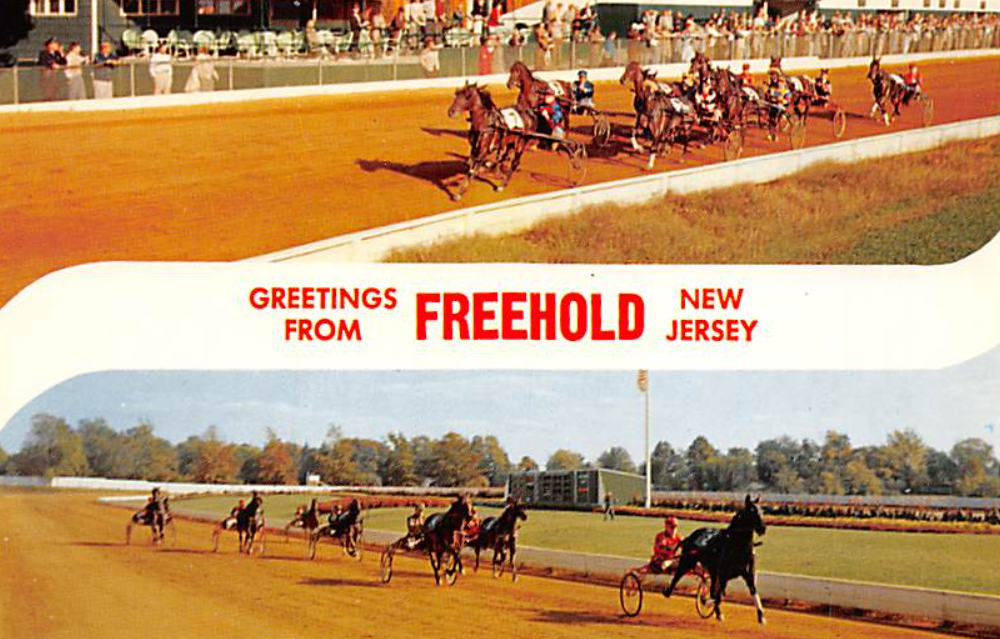
1960s post card for Freehold Raceway’s trotters
The local industry was nearly destroyed by a state ban on betting starting in 1897, and bounced back strongly after a 1939 revision in the law. The industry enjoyed great success until the establishment of casino gambling broke their gambling monopoly in 1978 in Atlantic City.
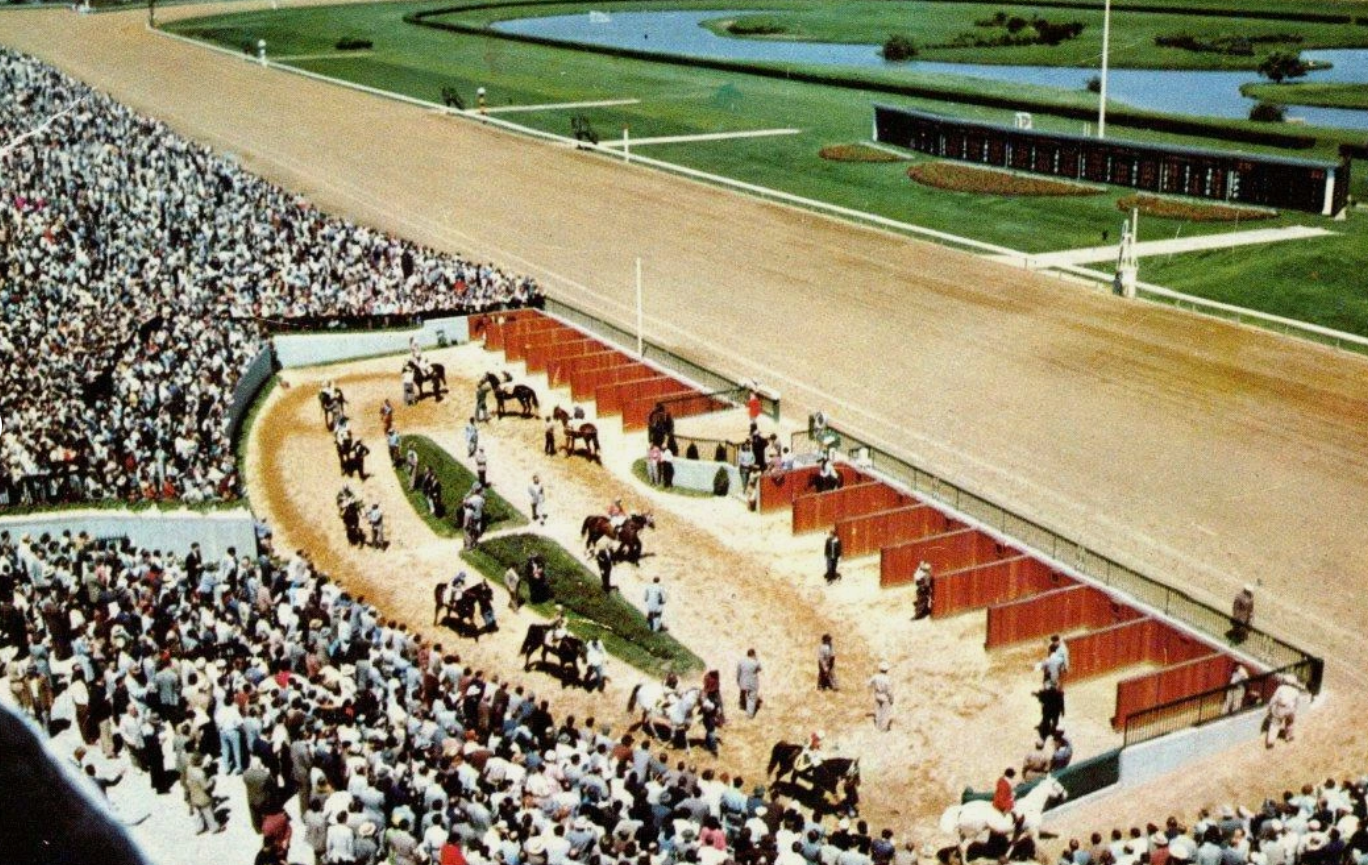
The Garden State Racetrack in Cherry Hill NJ packed in 40,000
A major fire at the Garden State Racetrack in 1977 closed the best venue in the state and broke the circuit of horses moving here in the warmer months from the south. While the grandstand was rebuilt, the track closed in 2002. Freehold Raceway closed in 2024, and Monmouth Park and Meadowlands Raceway are the only large venues left in the state.