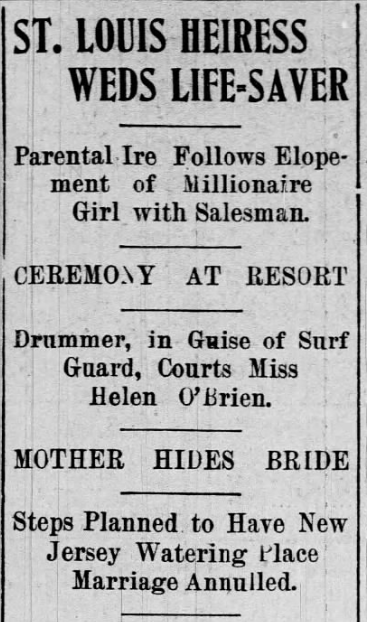
A 1910 Love Story
My previous post, The Captain and the Whale, told of the long pedigree of the Howlands, who owned the land in the northern section of Spring Lake before the resort was built out.
Captain Henry Howland and his second wife, Emma Shophall, had a son, John “Jack” Arthur Howland, born in 1888.
Jack grew up on his father’s bathing ground near Brighton Ave., Spring Lake, and by his teens, he served as a lifeguard. By 1910, he was a master lifesaver for the borough of Spring Lake and was paid $40/month. He had several rescues to his credit, and his fellow guards called him “Life Saver Jack.”
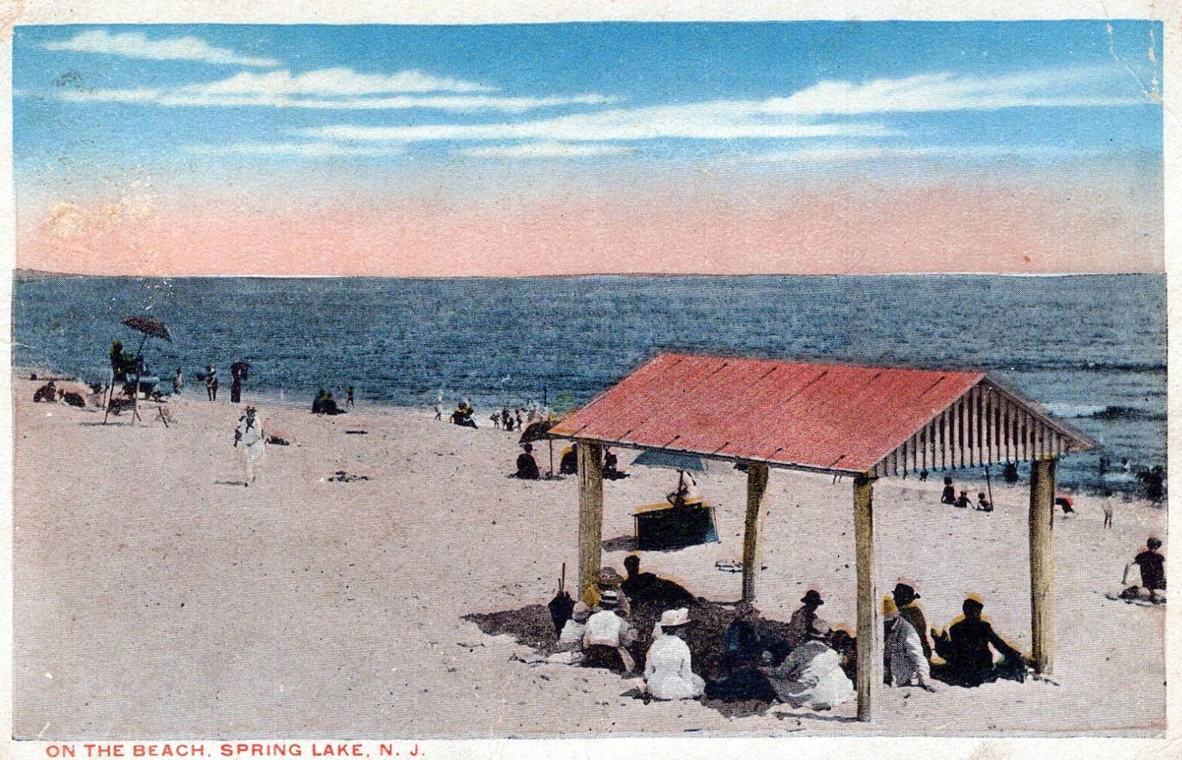
1910 Beach postcard for Spring Lake. Lifeguard chair in the distance
Jack’s first corporate job was as a traveling salesman. He likely started as a contract seller, hitting the road in hopes of gaining a full-time sales career. The gig allowed Jack to work summers at Spring Lake until he found a permanent territory. He worked out of Philadelphia, but traveled wherever extra hands were needed.
He worked for N.K. Fairbank, a soap manufacturer founded using the byproducts of the meatpacking industry. The company was best known for Gold Dust Washing Powder (famous for its “Gold Dust Twins” advertising mascots) and Fairy Soap (“Have you a little Fairy in your home?”). He sold to grocers, druggists, department store buyers, dry-goods merchants, and general store proprietors. At 6’2”, the 22-year-old’s broad chest and athletic frame made a good impression with his wool suit, bowler, and leather sample case.
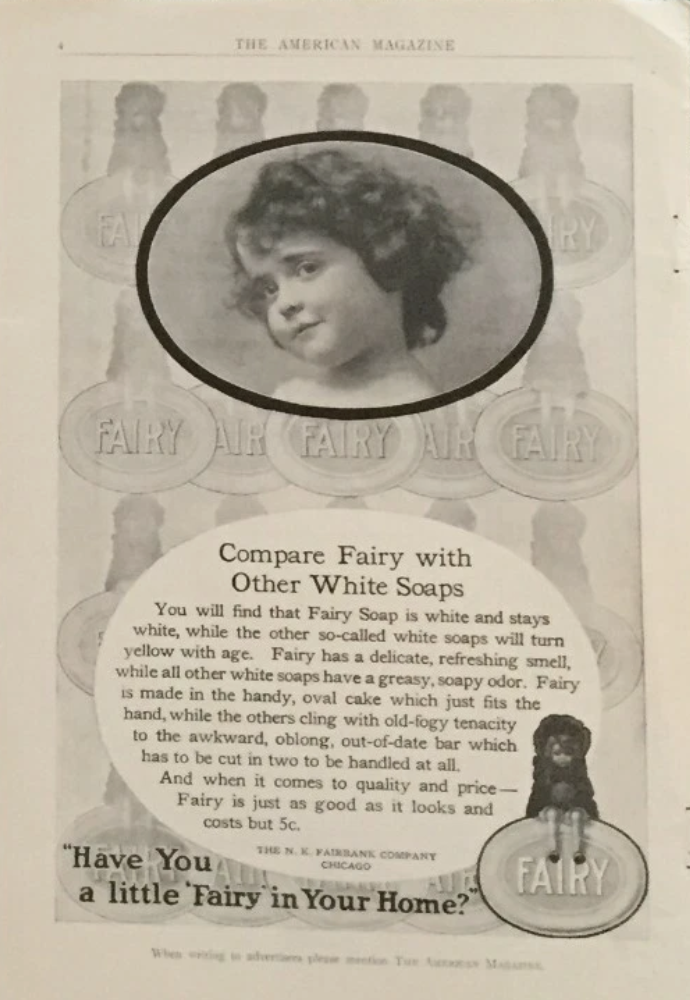
Fairy Soap was unique for stating white and its oval shape
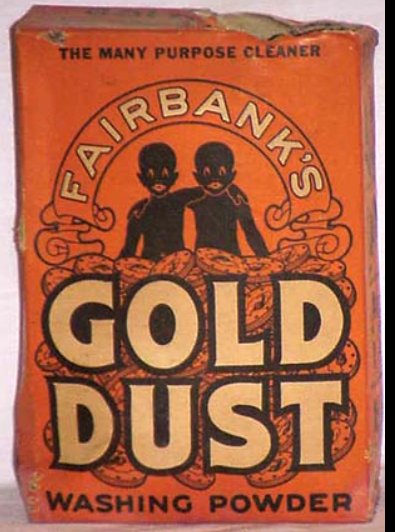
Gold Dust helped de-soil clothes, usually on a washboard
Cupid in Spring Lake
As Howland was drumming up business with the merchants of St.Louis, he met and intrigued a young girl. Seventeen-year-old Helen O’Brien was from one of the best families of St. Louis. She was a student at Visitation Convent, an elite Catholic finishing school for girls.
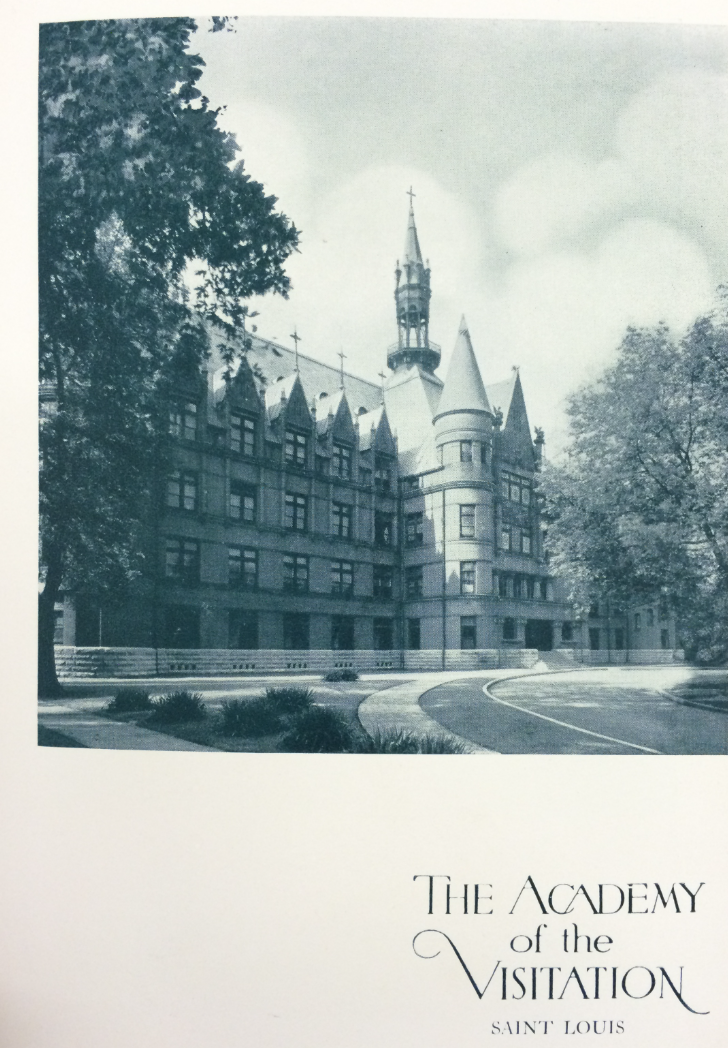
Helen’s school. The Visitation Convent building before it came down in the 1960s. The Academy still exists at a different location.
Helen’s father, John T. O’Brien, had made a small fortune. He owned the John O’Brien Boiler Works Company, one of the largest of its kind in the Midwest. He was on the St. Louis City Council and was President of the American Boiler Manufacturers. Upon his death five years earlier, his wife Rose and three daughters, Marie, Gertrude and Helen, inherited his large estate, which included holdings in railroad stocks. Helen’s individual share of her father’s estate was $110,000. Her mother's share was worth an additional $700,000.
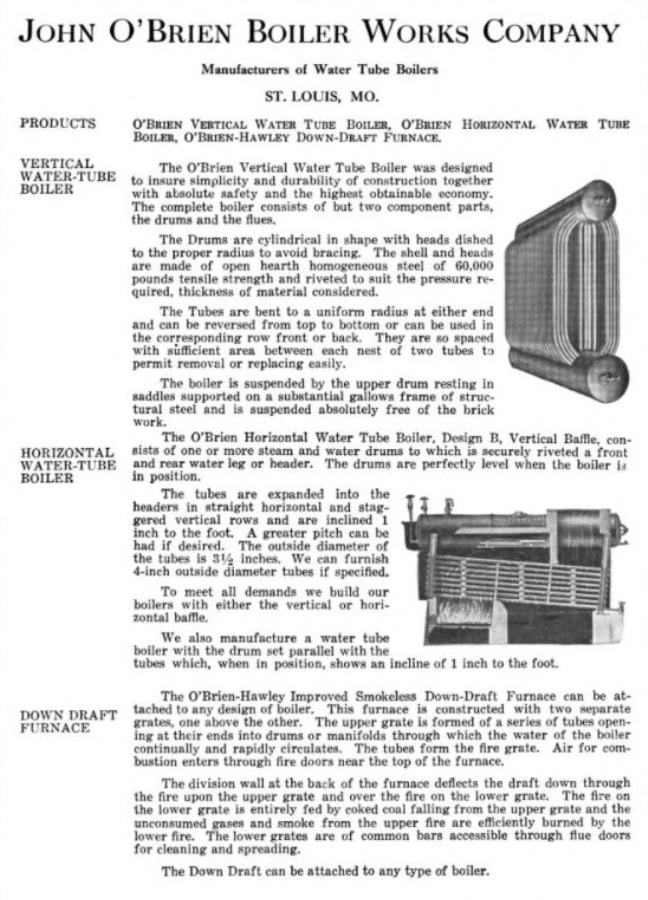
Helen’s father built the business from scratch as central heating became a standard for in city homes
Helen had a subject she could discuss with Jack. Her mother had booked the Audenreid House for the summer of 1910. Jack knew it well; he grew up in Spring Lake. The ornate Italianate cottage once sat closer to the beachfront at 104 Passaic and was built for the widow of William G. Audenreid. Audenreid’s source of wealth was the coal in Pennsylvania, where the mining town of Audenreid was founded.
When the Audenreid family sold the property in 1909, mayor and real estate investor O.H. Brown bought and moved the distinctive cottage to its current location on Tuttle. Brown expanded and modernized the house, adding neo-classical elements and building the wrap-around porch. Mrs. Johnson ran the cottage and the one next door. It was one of the most sought-after rental cottages, and appropriate for the stature of widow O’Brien and her three daughters.
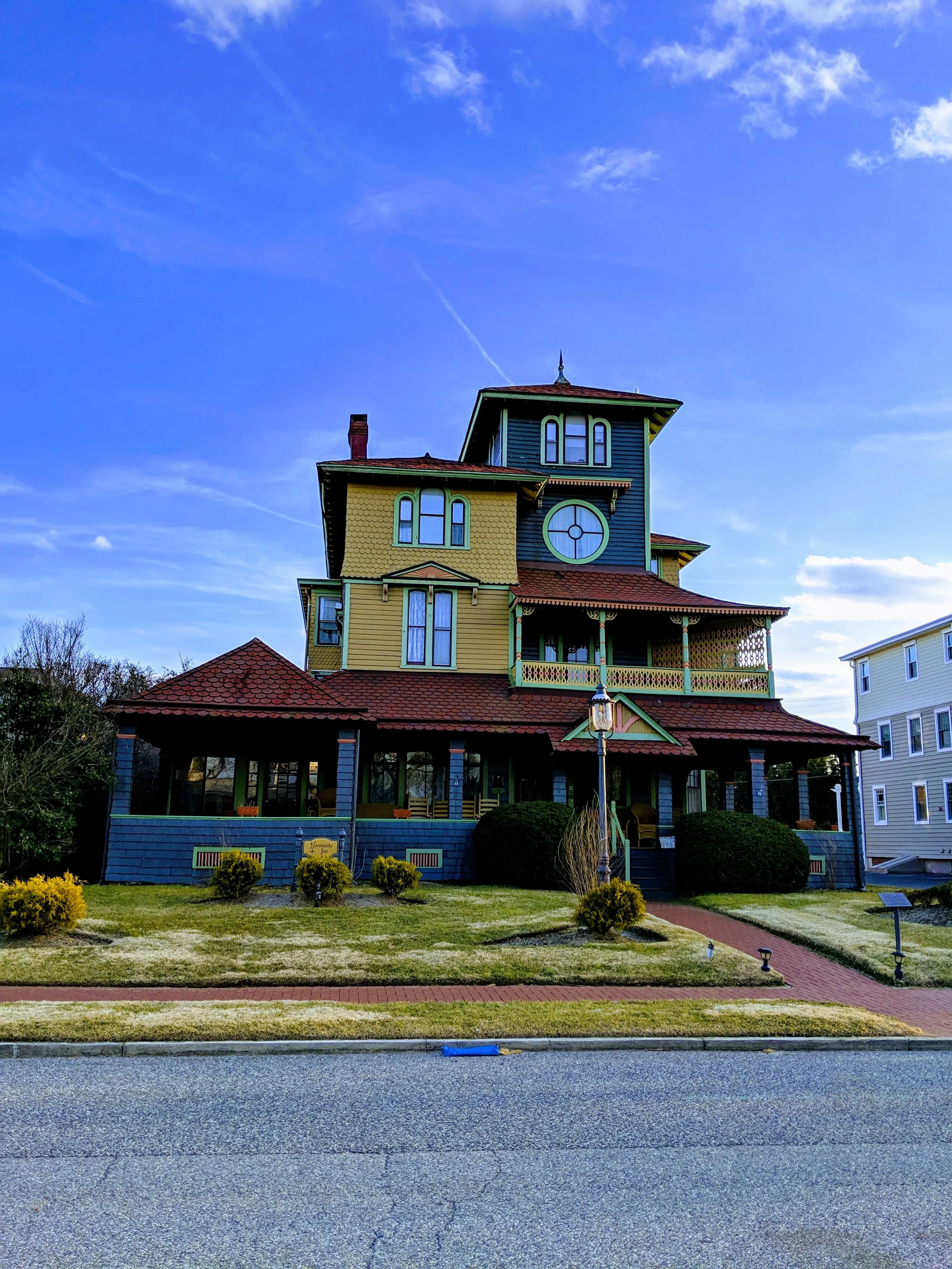
The Audenreid cottage has been preserved and is on the National Register of Historic Places
Chief counsel for the John O’Brien Boiler Company, John Leahy, had a cottage of his own nearby. He secured the Audenreid cottage for the family. The O’Briens arrived at the resort in mid-July.
The girls spent many days at the beach, swimming in the surf and frequenting Jack’s lifeguard stand. While Marie and Gertrude were closer in age to Jack, he fell for younger sister Helen, who had now turned 18. The couple swam together with Jack holding her in the surf, and Helen fell in love. He noted politely, “I protected her in my professional capacity as she swam.”
She later stated, “He was my hero”.
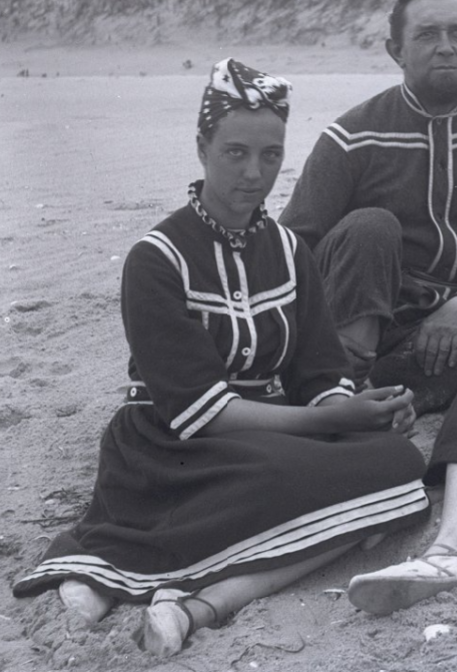
The typical navy wool sailor suit with swim shoes of the late 1800s was still standard fare for conservative Spring Lake in the 1910s, although navy stockings were also common.
MC Morris Library Company of Philadelphia
The Elopement
August was nearly spent. Helen had asked Jack to marry her a number of times. He finally relented to wed without telling her family. Mother Rose was a devout Catholic. Jack was not, and they both knew Mother Rose would not approve.
On August 26, Helen declined a family motor drive up the coast to the Rumson Neck. Jack picked her up at the cottage, and they went to the rectory at Saint Catharines.

Maloney named St. Catharine after his daughter Kitty and donated the land and building
Father Lyons, the pastor, refused the request, as Jack was a Protestant. While a mixed marriage was not forbidden, new rules had been in force after the very public scandal of Spring Lake’s most famous Catholic family. Martin Maloney’s patron, Pope Pius X, had issued several decrees that went into effect in 1908. His Ne Temere stated:
Any marriage involving a Catholic was declared canonically invalid unless performed before an authorized Catholic priest and two witnesses.
If a Catholic eloped and married before a Protestant minister or a civil magistrate (justice of the peace), the Church considered the union completely null and void in the eyes of God, and the Catholic party was viewed as living in public sin.
In 1907, Martin’s daughter, Helen Maloney, rocked Spring Lake and Rome with two elopements. One to Arthur “Rag” Osborne in jest, which the Church ruled official, and a second to an English playboy. The family needed to resolve the issue cleanly so she was free to re-marry Osborne at St. Catharine’s in 1909, after worldwide drama. That story is told in my book The Women Who Saved Spring Lake
No one could blame Fr. Lyons for sending the couple away from a church that Maloney had built just a few years earlier.
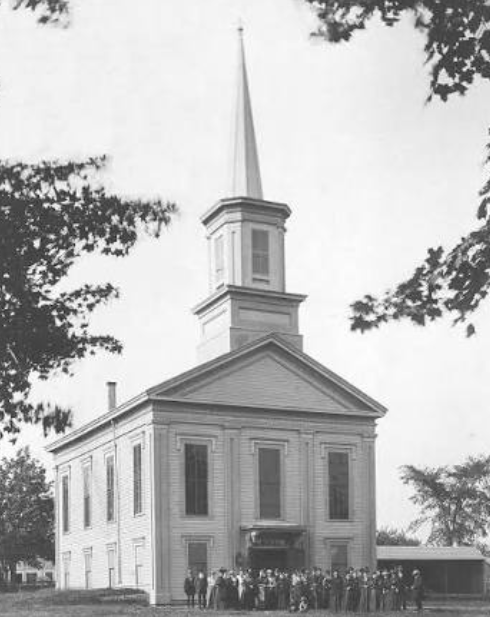
The Taylor Baptist Church on 5th in Avon-by-the-Sea 1900 post card
Jack and Helen were undaunted. They filed for a licence in Belmar, and were married at the parish house of the Baptist Church at Avon-By-the-Sea, by Rev. Thomas Taylor. Helen saw her mother and sisters drive past in their motor car along Main Street on their way north.
Jack dropped Helen at the cottage before her Mother returned from the trip. When he next came calling to the house, he found it closed to him. According to Rose, Helen was “unavailable,” and Jack shut off from his new wife.
First Trouble
Helen acted suspiciously when the family returned. She gave several confused answers to what she had been up to. Continued badgering by Leahy got her to admit to the wedding. Mother Rose was stunned and angry.
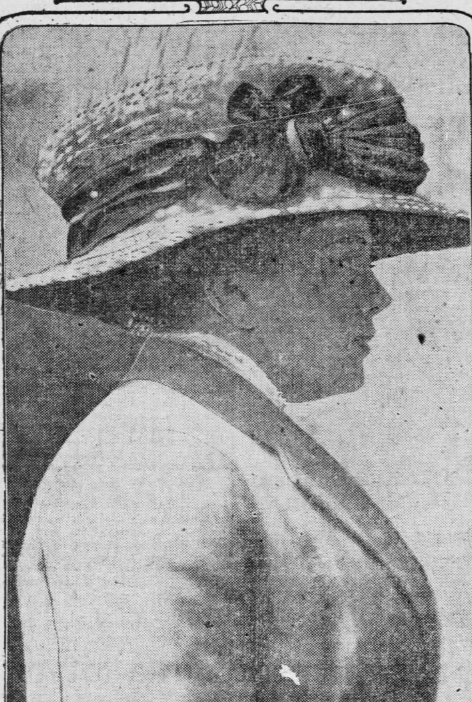
Newspaper shot of Helen O’Brien 1910
The stories diverge from there. The O’Briens seem to have copied the Maloney playbook. Cut off the couple by hiding the girl, influence the press, and lawyer up. Jack was persistent and begged to see Helen. He was refused access to the cottage.
In early September, Rose and Gertrude abandoned the Audenreid house, which was leased until Oct. 1, and returned to St. Louis. When Mrs. O’Brien arrived, she declared herself ill and would receive no visitors.
Mrs. Helen Howland was not immediately with them. She and Marie were taken to New York by attorney Leahy to avoid the press. The family’s response to the situation was being orchestrated by James McKeown, the President of the John O’Brien Boiler Works.
The Press Gets Hold of the Story
Jack penned a letter to Helen. He declared his love, and committed to converting to Catholicism. The letter was held from her. Both parties went to the papers. Jack went to the Asbury Park Press first. The wire services and the Missouri papers were right behind them.
“Spring Lake is agog with the story”
“Heiress Marries Surfman”
“Irate Mama Sprits Bride Away from Husband”
“Lifesaver Jack Elopes with Wealthy Girl”
By mid-month, it was clear that Helen had returned to Missouri with Marie. Attorney Leahy stayed behind to interview most of the parties in the East, including meeting with Mayor Brown. He moved on to Philadelphia to tend to some business. Conflicting news reports noted that either Helen would seek an annulment, or that the couple was to meet to affirm the marriage in a Catholic church.
Storming the Castle
Jack was determined to see Helen. He came to St. Louis on September 20th.
New Jersey papers said he was taking catechism classes with Fr. Lyons in Spring Lake, and was a few weeks from converting. He gave an exclusive to the St. Louis Post Dispatch:
"I came to this city in response to a telegram from Miss Gertrude O'Brien, sister of my wife, although the summons was countermanded an hour later by Miss O'Brien," said Howland.
"Mrs. Howland saw a letter from me Tuesday, which had been withheld from her for three weeks, and suffered a nervous attack. As a means of restoring her, Miss O'Brien telegraphed for me, but retracted the invitation as soon as Mrs. Howland became better”.
"I am determined to reclaim my wife, as I believe she loves me and has endured for my sake a vigorous struggle with her relatives. I wish to settle matters with her family by peaceable methods, such as will cause no embarrassment or public conflict. I am willing to yield to their wishes at every point, save the one of surrendering my wife.”
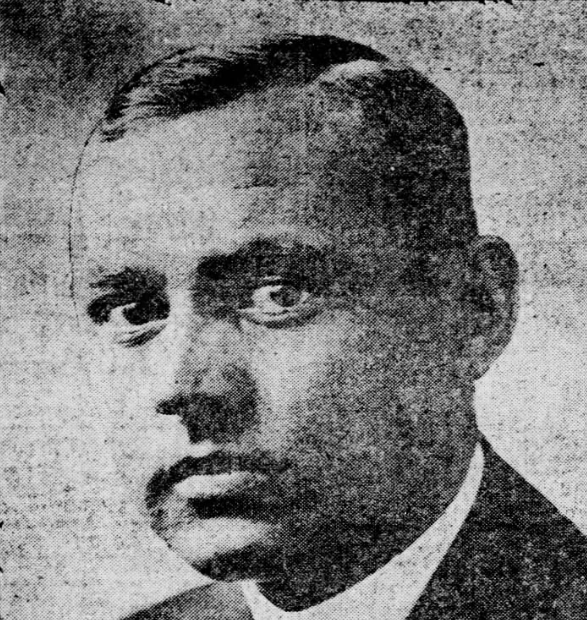
Lifesaver Jack Howland in a 1910 photo he gave to newspaper men
Rumors that Jack had been married and fathered a child had leaked to the press. What they did not report was that Jack was married at eighteen to Genevieve Osborne, and she had died in childbirth nine months later. He had a three-year-old daughter, Dorothy, who lived with him and his parents in Como. His marriage was a secret to no one in Spring Lake.
Jack claimed Helen had smuggled him out a letter. He paraphrased, “It said, she loved me and was being taken to her St. Louis home against her will.”
"My wife's relatives have seen me only in bathing costume. I wish to present myself to them in street attire, with the hope of making a better impression than I did in scantier dress. Above all, I am determined to recover my wife. I love her and I believe she loves me, and our marriage observed all the legal forms. I don't care whether she has money or not-I want her only for herself.”
The Philadelphia Letter
Jack seemed to be moving toward victory. A St. Louis friend agreed to host a meeting. The couple planned to ask Father O’Rourke for his blessing. Jack’s father, Captain Henry Howland came to St. Louis to vouch for his son. The couple would meet again and go to St. Mark’s together. But when Jack arrived at the second meeting, Helen’s sister Gertrude met him.
A letter had arrived at St. Mark’s rectory and at the Archbishop’s residence. An anonymous letter from Philadelphia, attributed to a 19-year-old stenographer, noted that she had met Jack in Philadelphia in February 1908, and she visited Spring Lake around Christmas and Easter.
The letter noted the girl was still in love with him, and she considered Jack to be committed to marry her. Jack had asked her to come to Asbury Park for Labor Day. When she got to Asbury with her sister, she learned he was recently married. She was heartbroken, and her mother was infuriated.
When presented with this letter by her pastor, Helen fell to the ground prostrate. Fr. O’Rourke dropped all support for the blessing of the union. Mrs. O’Brien’s mind, never truly open, was closed for good.
There was some truth to the story. Jack knew the woman, a pretty blonde he knew as Miss Sarah Hayes. Jack immediately called the letter a black lie, and swore if he could not convince Helen of the truth, he would return to Philadelphia to get Hayes to recant any suggestion they were betrothed.
He met with Helen and admitted seeing Sara in the past, but denied leading her on. He clearly did not make his bride feel comfortable. The press descended on Sara at her home and office. Sara and her family would not talk to the press, but that didn’t matter.
The Door Shuts
One paper noted that Jack had caught the crest of the wave, and just as he had hoped to ride down its face and recapture his bride, the wave crashed, and Jack was wrecked.
Two days later, a pow-wow was held at the O’Brien home with Helen, her mother, Father O’Rourke, and McKeown. Her mood shifted; Helen capitulated. Her penance started with a letter to the St. Louis Republic, which claimed to have exclusive access to the O’Brien family. In the language of a lawyer, it laid out the facts from her camp’s perspective and carefully preserved any questions about her virginity. She swore the relationship was irrevocably over, that Howland had not told her about his prior marriage and child.
“Yesterday afternoon I met Mr. Howland at Page and Academy avenues. I asked him about certain charges against him that had been brought to my notice unsolicited. I asked him about the Hayes girl in Philadelphia. He did not reply to my questions in a manner that was satisfactory to me”.
“I returned to my home and he to the hotel where he is stopping. I never expect to see him again. I am now absolutely satisfied that I made a mistake when I married Mr. Howland, and am willing to do everything in my power to have the mistake rectified. I now have an insight into the man's character that was hidden to me at the time of the marriage.”
“I am satisfied that he is not a proper person for me to associate with. I shall have annulment proceedings brought at once, and will follow these up with divorce proceedings if necessary. I am determined to get a complete separation from John A. Howland. I have not as yet retained a lawyer. Mr. Leahy is not my family’s attorney.”
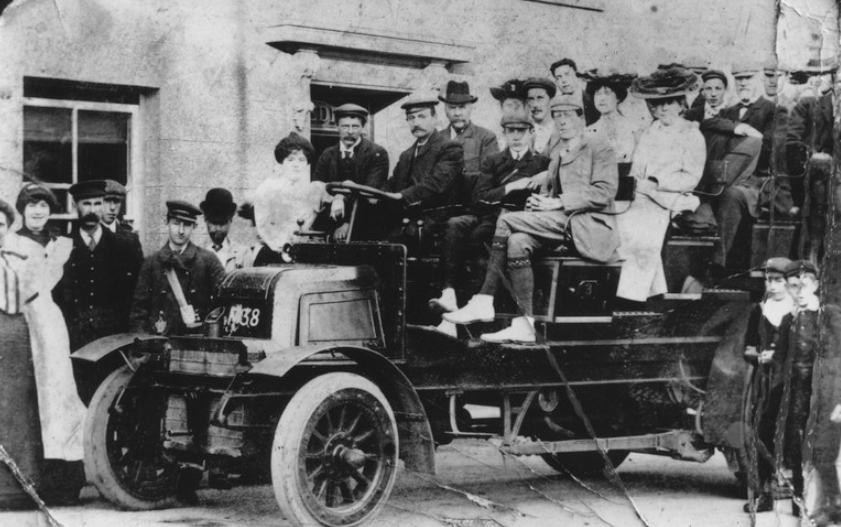
A Charabanc sightseeing car 1910. Tourists often had the thrill of riding in their first auto, and seeing how the wealthy lived (Morrab Library photo)
Jack returned fire. Two days later, he filed a $100,000 lawsuit claiming McKeown, Rose, and Marie conspired to deny access to his wife and alienate her affections. The O’Brien house was shut tight, giving nothing to reporters or the sightseeing autos stopping by to “rubberneck”. Fr. O’Rourke noted the suit was an “outrage on decency”, and called Jack an “adventurer”, revealing his true intentions of money all along.
Public Confession
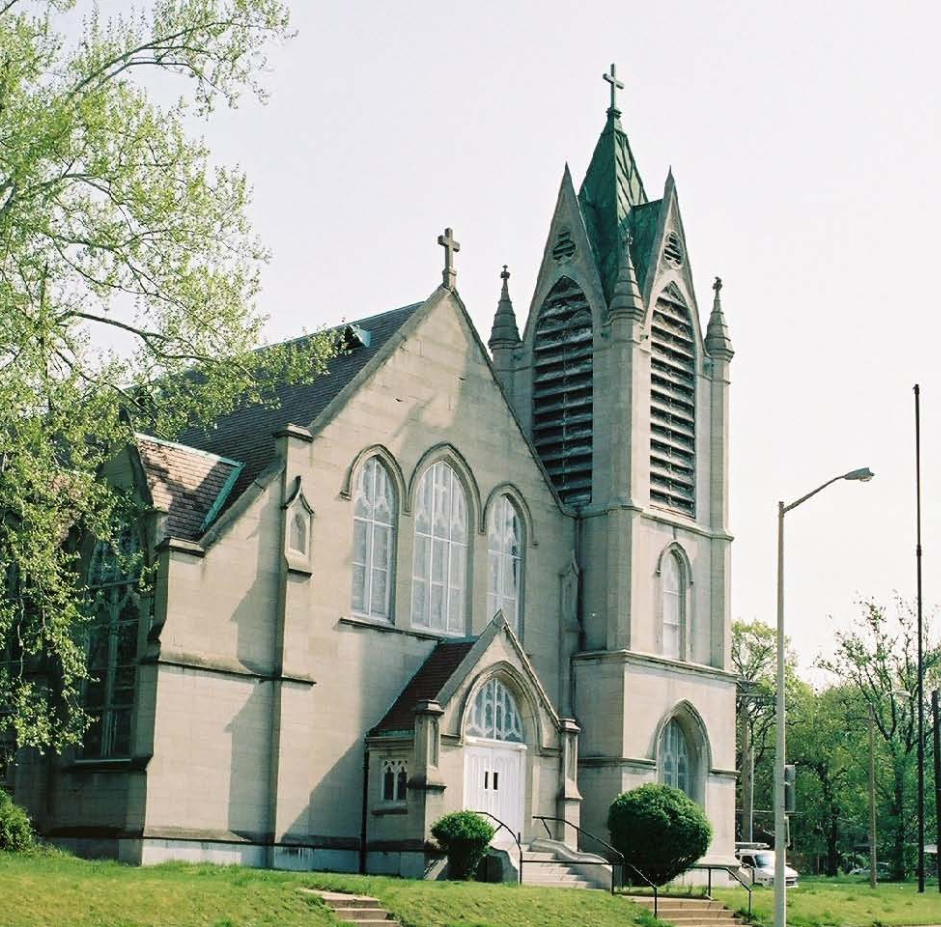
Abandoned Saint Marks in St. Louis before its demolition 2012
Helen was forced to make a public confession to the St. Mark’s congregation on All Souls’ Day. Her letter was produced on the insistence of Archbishop Glennon, who demanded a public reading to put the scandal behind her. He required Helen to sit silently while her family and friends were witnesses at mass.
The letter was signed “Helen O’Brien” (her maiden name), and addressed to Father P. J. O' Rourke, Pastor, St. Mark's Church. Read by Father Sessens, it was paraphrased by the reporters present:
"Dear Father, In submission to the obligation laid on me by his grace, the most reverend archbishop, in publicly repairing the scandal I have given, I confess to the world, as a Catholic, I was married by a Baptist minister. I ask pardon of God for my sin and the grace of sincere repentance.“
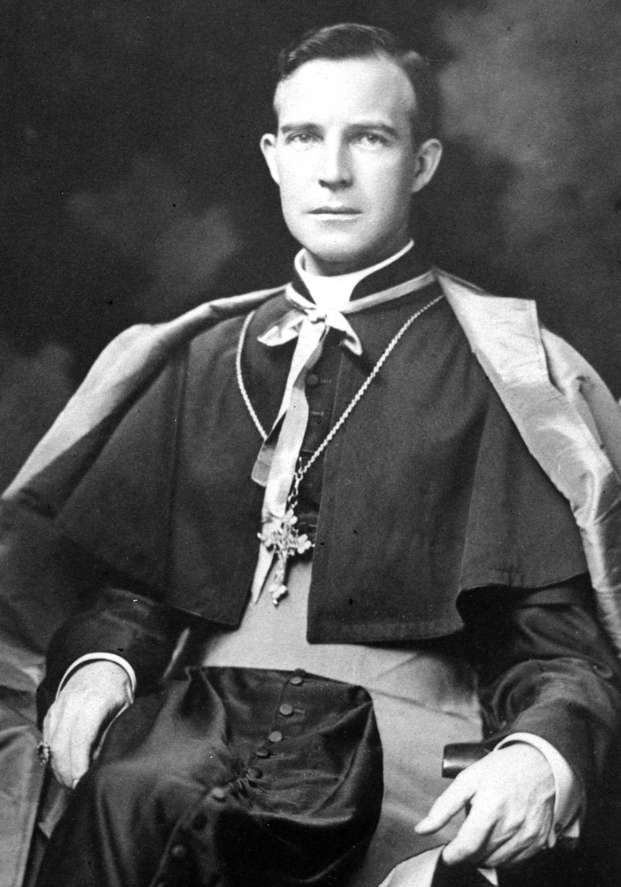
Archbishop, soon to be Cardinal Glennon, 1910
Interest in the case did not die. Depositions were leaked as soon as they were gathered. Most of the defense case was predicated on destroying Jack's reputation.
The Clerk in Belmar noted that he raised the issue of Jack’s first marriage with the couple, and many people in Spring Lake wrote letters about Jack’s good character.
Sarah Hayes’s mother testified that she had written the anonymous Philadelphia letter to the archbishop and pastor on her daughter’s behalf. As a “good Catholic,” she felt it was her duty to spoil the efforts of Howland.
Defense witnesses testified that Jack visited bars in St. Louis and one night had 23 highballs. He had checked into hotels under assumed names, which the defense suggested was because he was dishonest. Jack noted he only wanted to keep away from the press.
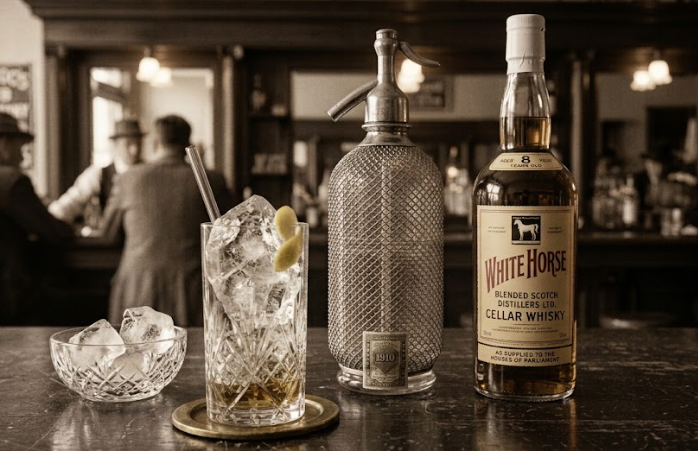
A highball was typically whiskey with soda water
Sara Hayes testified that when Jack visited her after her mother sent the letter, she expressed surprise at his conversion. He responded, “I would take any religion for a million”. She also noted he got physical with her on a walk in Fairmont Park in 1909.
While the O’Birens had witnesses testify that they were perfectly willing to let Helen leave St. Louis with Jack, Helen implied that her mother subtly threatened her with a deadline to decide between her family and Howland.
The case was eventually settled for $1,000 paid to Howland. Helen filed for divorce, which was granted in 1912, just before her sister Marie married John O’Brien Boiler Works President James McKeown. Helen married St. Louis Republic Newspaper reporter Dick Collins in 1916.
Jack Howland never returned to lifeguarding. He moved to North Jersey and worked for Colgate, wholesaling their toothpaste, talcum, perfume, and toiletries. He married Florence Muller in 1916, and they had two additional children before he passed away in 1926 at the age of 37 after a year-long illness.