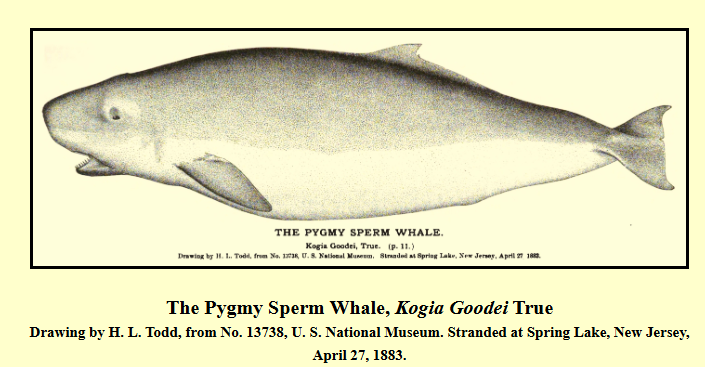
A Spring Lake Sea Creature
In 1883, Henry Stewart Howland, a sea captain, lifesaver, and beach pavilion owner made a major scientific discovery at Spring Lake. In the surf, he had found an animal none of them had seen before. Henry’s family was one of the oldest in America and had been instrumental in the American whaling business. He came from a long line of people grown accustomed to the taste of salt water on their lips.
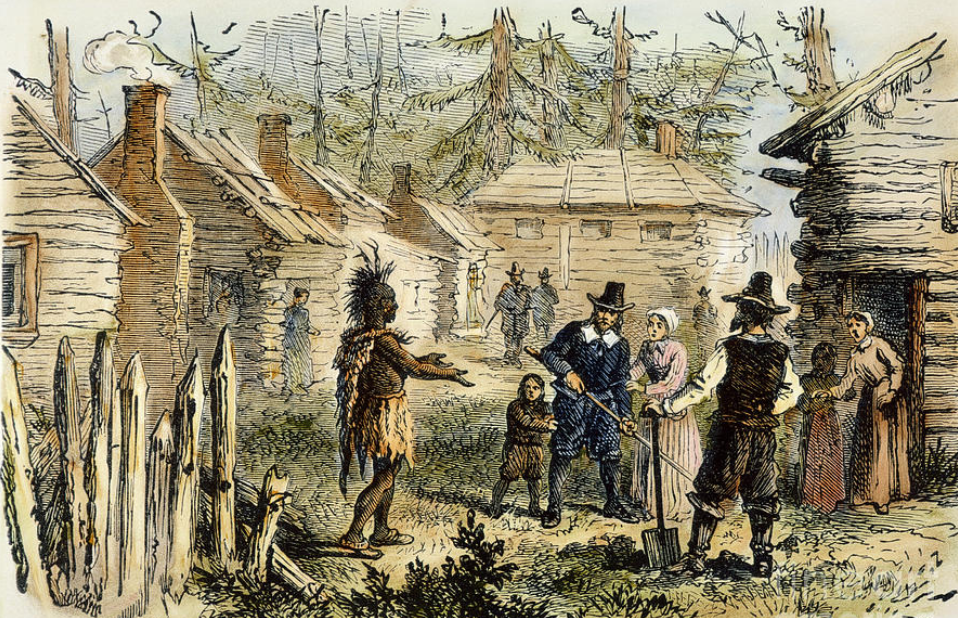
Image of the Plymouth Colony "Welcome, Englishmen" Library of Congress
From the Pilgrims
His relative John Howland had come to Massachusetts on the Mayflower as an indentured servant in 1620. Tossed overboard in a storm, John was saved only by getting tangled in the topsail rigging, which had blown off the ship. He survived the passage and the first year in America, which killed half of the original Pilgrims, including his master. John Howland was freed and became head of his household. In 1623, John sent for his brother, Henry Howland Jr. Together with their wives, they had 18 children.
As the Society of Friends came to the New World, some of the Howland sons embraced the religion’s teachings and became Quakers. This made them unwelcome in the Plymouth Colony, but allowed them to thrive elsewhere.
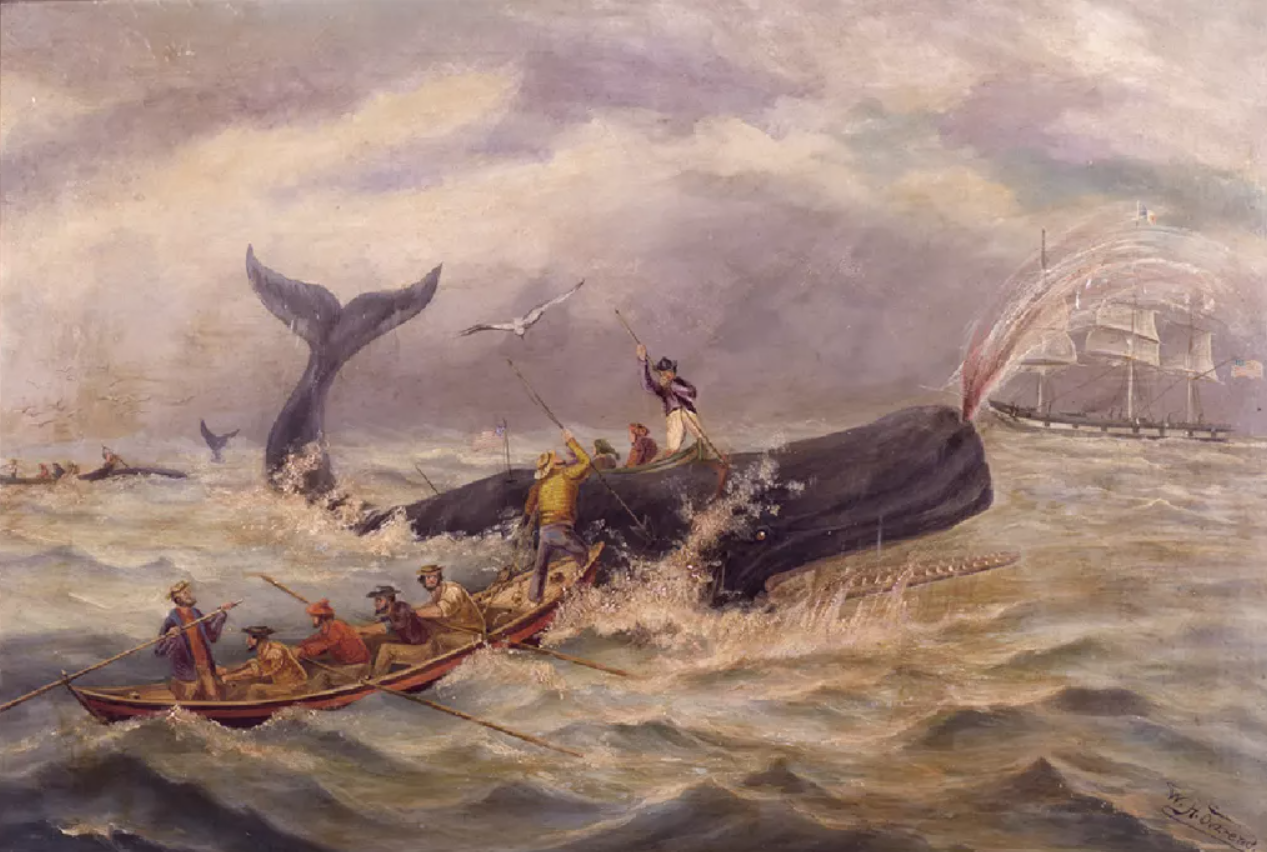
New Bedford Whaling Museum painting of 1800s whaling
Whalers
The Howlands were key investors and captains in the formation of the New England whaling community at New Bedford. At its peak in the mid 1800s, the fleet had 447 vessels, accounting for over 60% of US whaling tonnage. For a short time, whale oil profits made New Bedford the richest city, per capita, in the world, and made a string of “Captain Howlands”.
To the New Jersey Shore
Freedom of worship to the south in Long Island and New Jersey attracted Captain James Howland, a great-grandson of Henry of England. He came to Shrewsbury in the early 1700s, where the family carved out a living by farming, fishing, and shipping. One of the original hotels at the beach in Long Branch was the Howland Hotel.
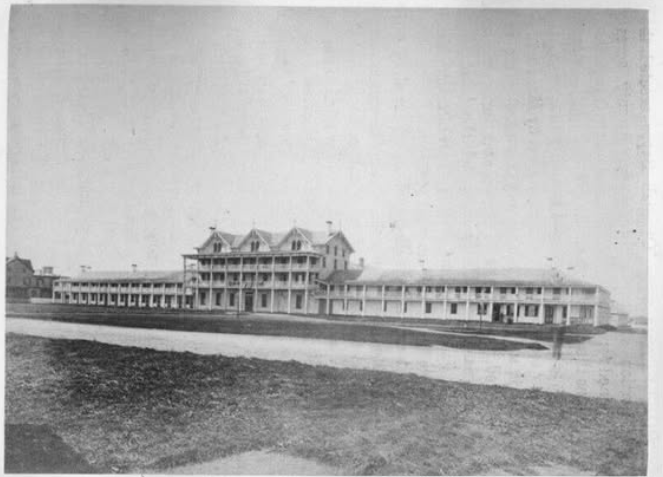
The Howland Hotel was run by Howland cousins from 1827-1913 (Long Branch Historical Society)
Henry Stewart Howland, son of Asher and born in 1842, was the first Howland to live on the Southern Monmouth County coast. FamilySearch shows eight generations in a direct line from Henry Howland Jr. and his 1624 arrival in America. Many of them made their livelihood on the sea.
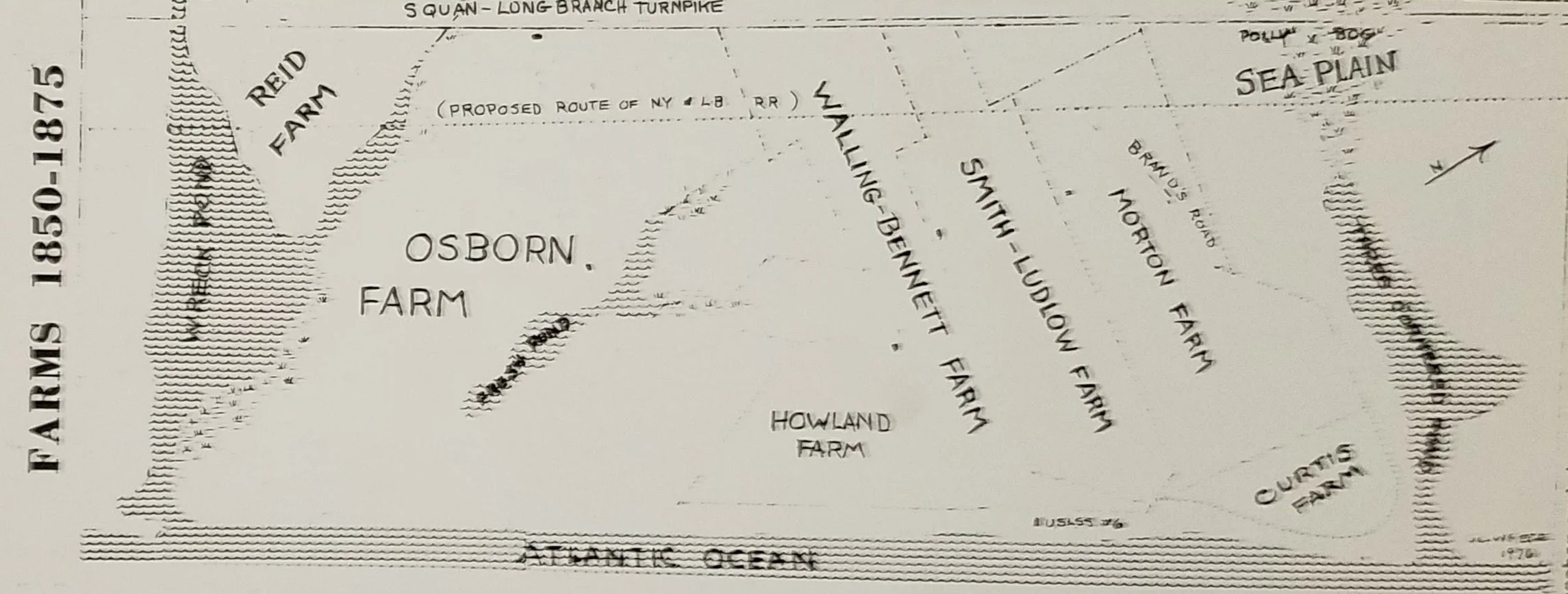
Henry’s farm along the sea, where Brighton Ave is today. (Spring Lake Historical Society Map of Early Farms)
Asher gave a coastal plot to Henry. The farm in Wall Township was just to the north of Forman Osborne’s farm, which became the resort of Spring Lake Beach. Henry lived in a cottage on the property, with a small farm on what would become Brighton Ave. in modern Spring Lake. He ran a pound fishery with his own boats.
Captain Henry
In 1861, Captain Henry S. Howland volunteered for the Civil War as a contracted captain for the Union cause. He sailed ships down the James River moving men and supplies. When he returned home from the war, he was hired by the U.S . Life-Saving Service. His first assignment was Keeper of the Ocean Beach (Belmar) Station, and then he commanded the Station at Spring Lake on the north side of the Wreck Pond inlet.
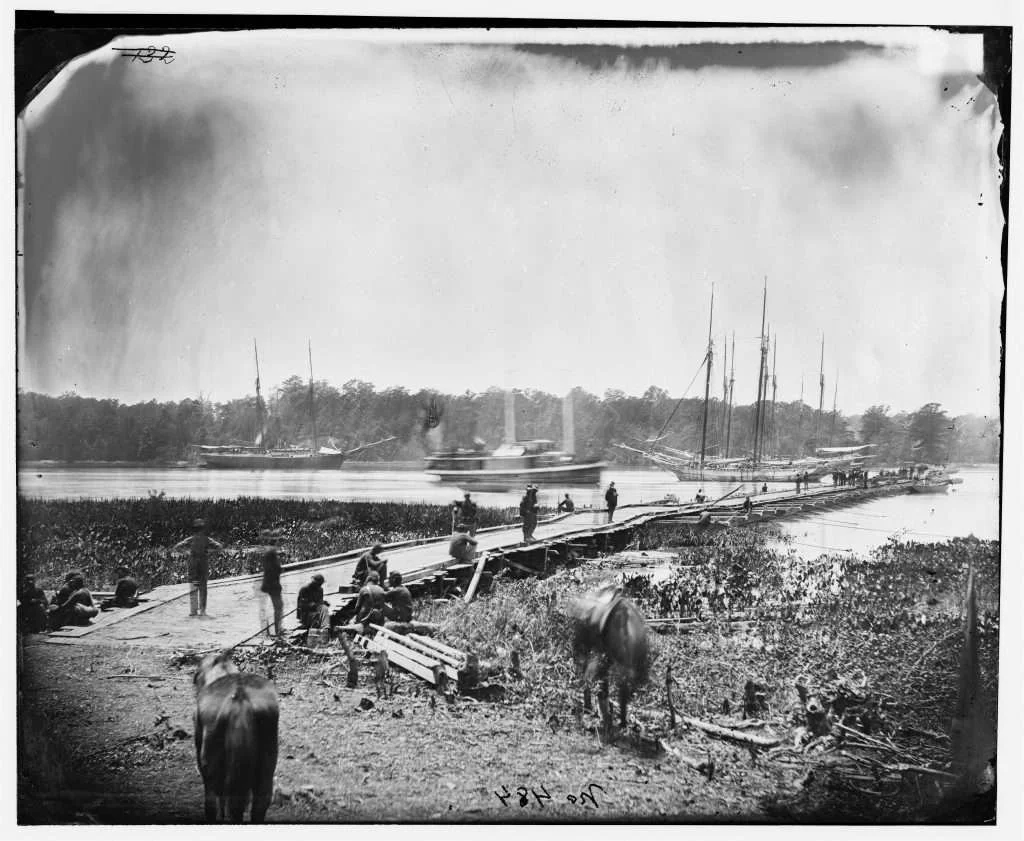
The James River in VA was a hotly contested Civil War supply route (Pubic Domain Image)
The lifesaving service patrolled the beaches looking for ships in distress. When a ship foundered, often hitting sandbars, teams performed rescues by shooting lines from a cannon to the sinking ships. They used surf boats to pick up passengers tossed into the sea.
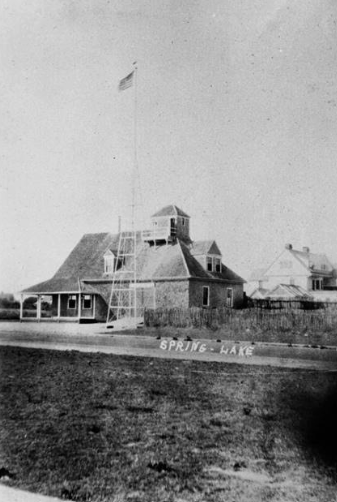
USLSS Station at Wreck Pond (Spring Lake Station)
In addition to lifesaving, his obituary notes that Henry ran the first bathing pavilion in North Spring Lake for twenty-one summers on his land, where the Breakers Hotel stands today. The business thrived after Forman Osborne sold his land to the Spring Lake Land Improvement Company.
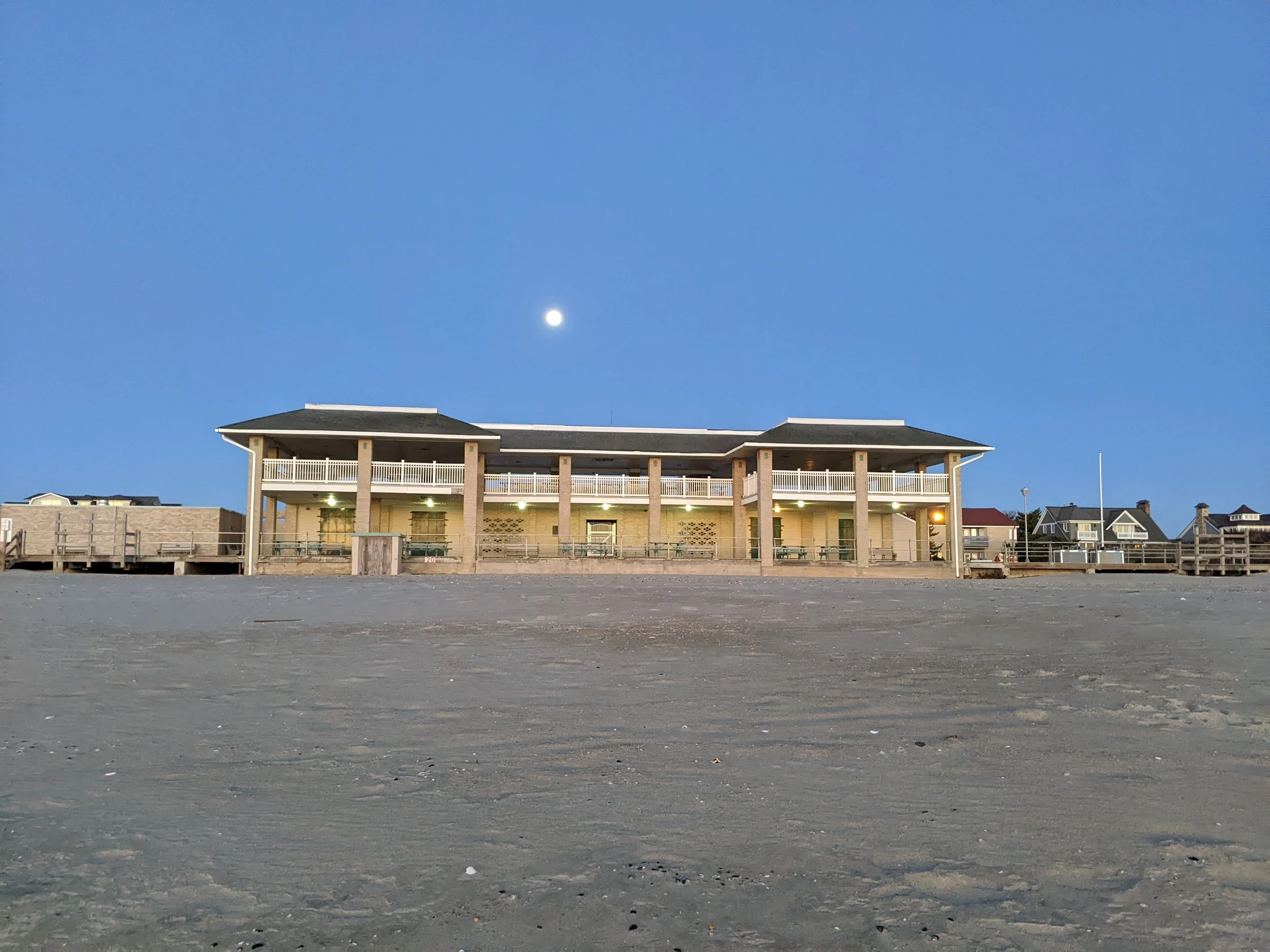
Henry ran a beach pavilion & changing rooms before the municipal pavilions
The Whale
On April 27, 1883, Henry was alerted to what appeared to be a dead porpoise floating in the surf. As an experienced fisherman, Henry knew it was no porpoise.
The lifesavers carried it onto the sand. Upon closer examination, the creature was some kind of tiny female whale, just under nine feet in length, something that he had never seen. It was like a miniature sperm whale, with teeth on its lower jaw and a very flat back. A tiny dorsal fin sat close to the tail, and its head had false gill marks.
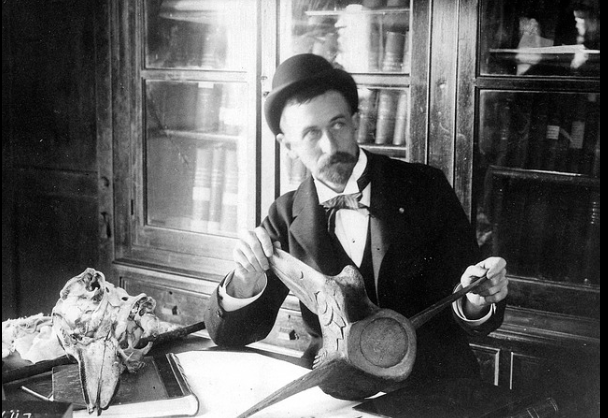
FW True, the marine mammal curator at the National Museum (Smithsonian photo)
When they cut into the animal, they discovered a fetus, about three feet in length. It was likely the first ever encountered.
As Station Keeper, Captain Howland was required to capture and preserve any unique species.
The study of ecology was in its infancy. They wrapped the carcass, boxed it, and sent it to Professor Baird at the National Museum (Smithsonian Institution) in Washington, DC, aboard a train.
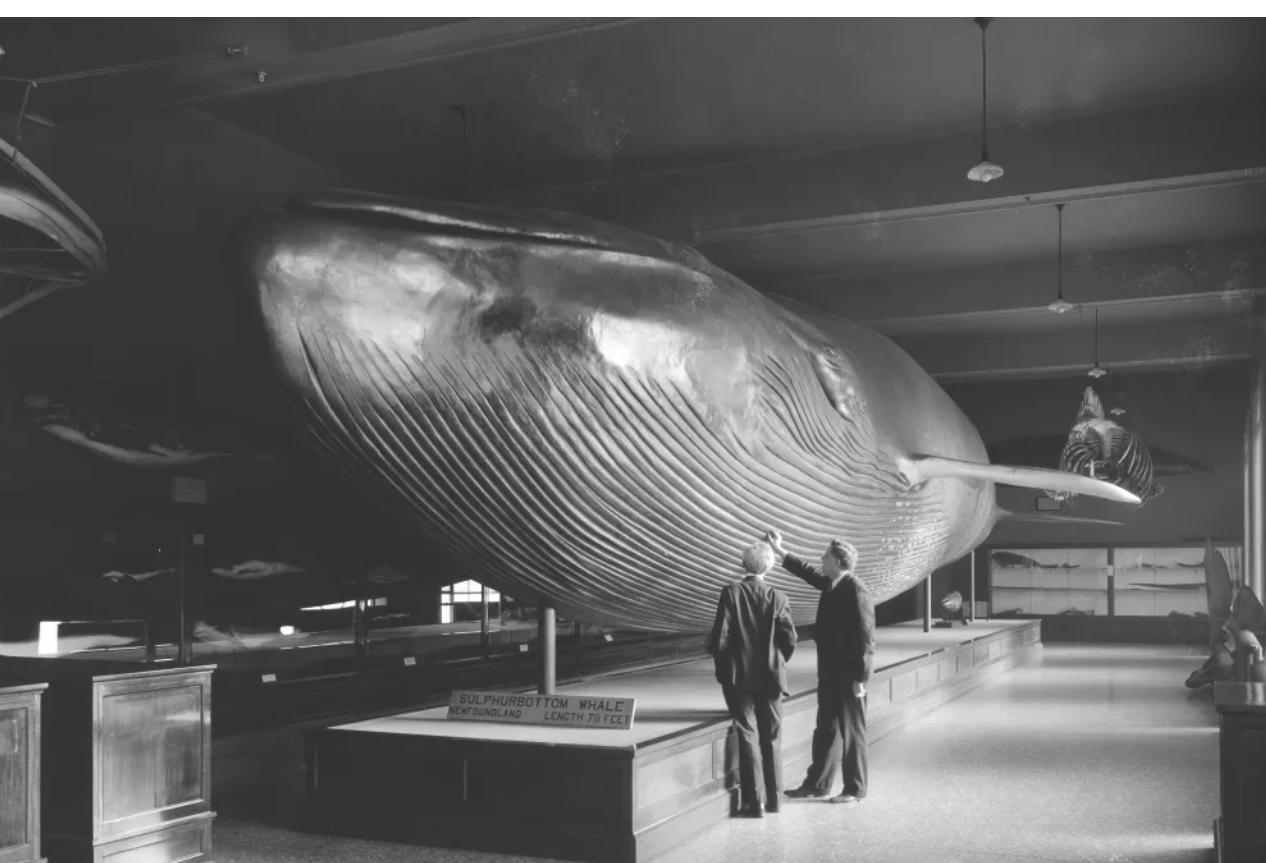
As science took hold over hunting, whales fascinated the public, and helped spur conservation (Smithsonian 1904)
Frederick W. True, curator of marine mammals, took photographs, had lithographs printed, and preserved tissue and skeletal samples. It was a period of scientific awakening to the unintended consequences of wholesale destruction of species. The American Bison had dwindled from millions to an estimated 325 in the wild in 1884. Wholesale killing of predators in Pennsylvania led to an explosion of rodents. Bird plumage was all the rage for women’s hats, but it was emptying the sky.
The work of the scientists to catalogue and count species, along with the public outrage over permanent losses, led to the Lacey Act in 1894. This was the first real wildlife protection by the federal government, initially applied within Yellowstone National Park, and then to the nation in 1900.
Henry was correct; it was a species that no one in New Jersey had ever encountered. The pygmy sperm whale was previously undocumented in Atlantic waters. F.W. True initially thought this was a unique species and named it Kogia goodei.
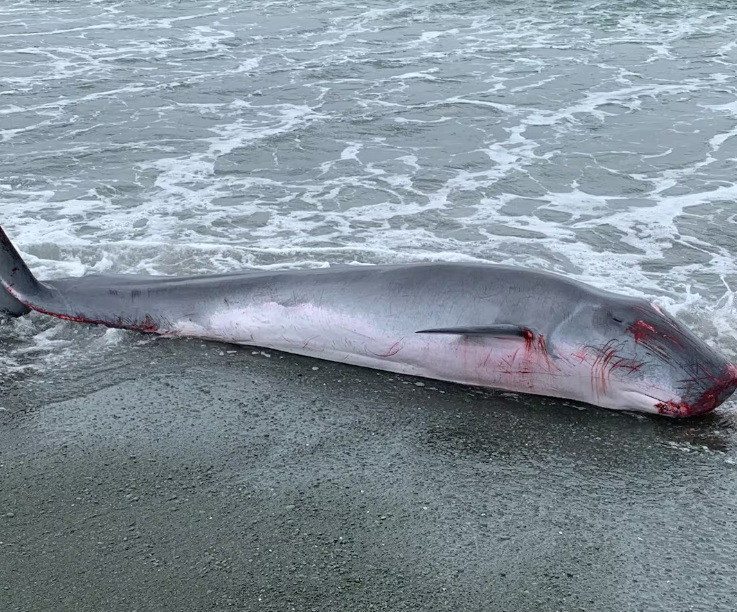
Stranded Pygmy Sperm Whale in Newfoundland (CBC image Julie Huntington/Lukas Ward)
Additional strandings in 1884 in southern New Jersey and along the North Carolina coast confirmed an Atlantic population of pygmy sperm whales, Kogia breviceps, previously confirmed only in South Pacific waters.
Even today, the whale is very hard to spot. Its low dorsal fin does not often protrude out of the water; it dives deeply, and it expels water to the side when it breathes. There is no telltale spout from a blowhole, which made the right, sperm, and humpbacks so easy to hunt.
The pygmy also has a defense mechanism. When it is frightened or threatened, it releases up to three gallons of dark reddish-brown pungent liquid from an ink sac to escape like an octopus. It avoids ships and is hard to distinguish from the air. For this reason, to this day, there is no accurate global population count of the pygmy or its close relative, the dwarf sperm whale.
These small whales seem to thrive off deep continental shelves all over the world. They have been successfully hiding for thousands of years, and while rare, the species is not considered endangered or threatened.
It took a seaman with a long pedigree on the ocean to demystify this whale. The Howlands remained at the beach and lived off of the proceeds of their land sales. They were well respected by the year-round residents in the borough. One of his daughters, Elise, married O.H. Brown II, the son of the longtime Spring Lake mayor, State Senator, and bank president. Captain Henry lived in Como until he died in 1922, leaving his second wife and seven of his ten children.
There are still surprises to be found at the ocean right here in our neighborhood.
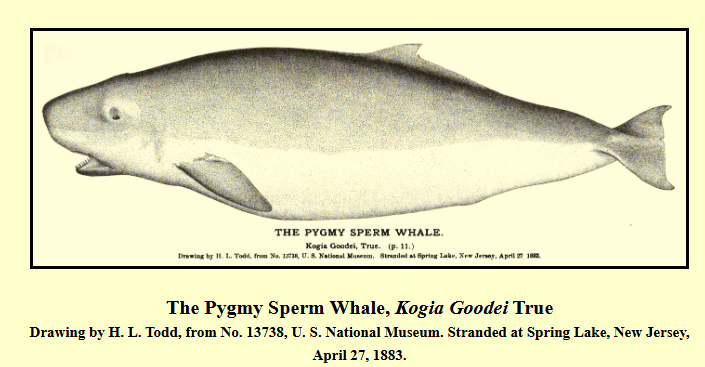
H.L Todd’s illustration of Howland’s pregnant female