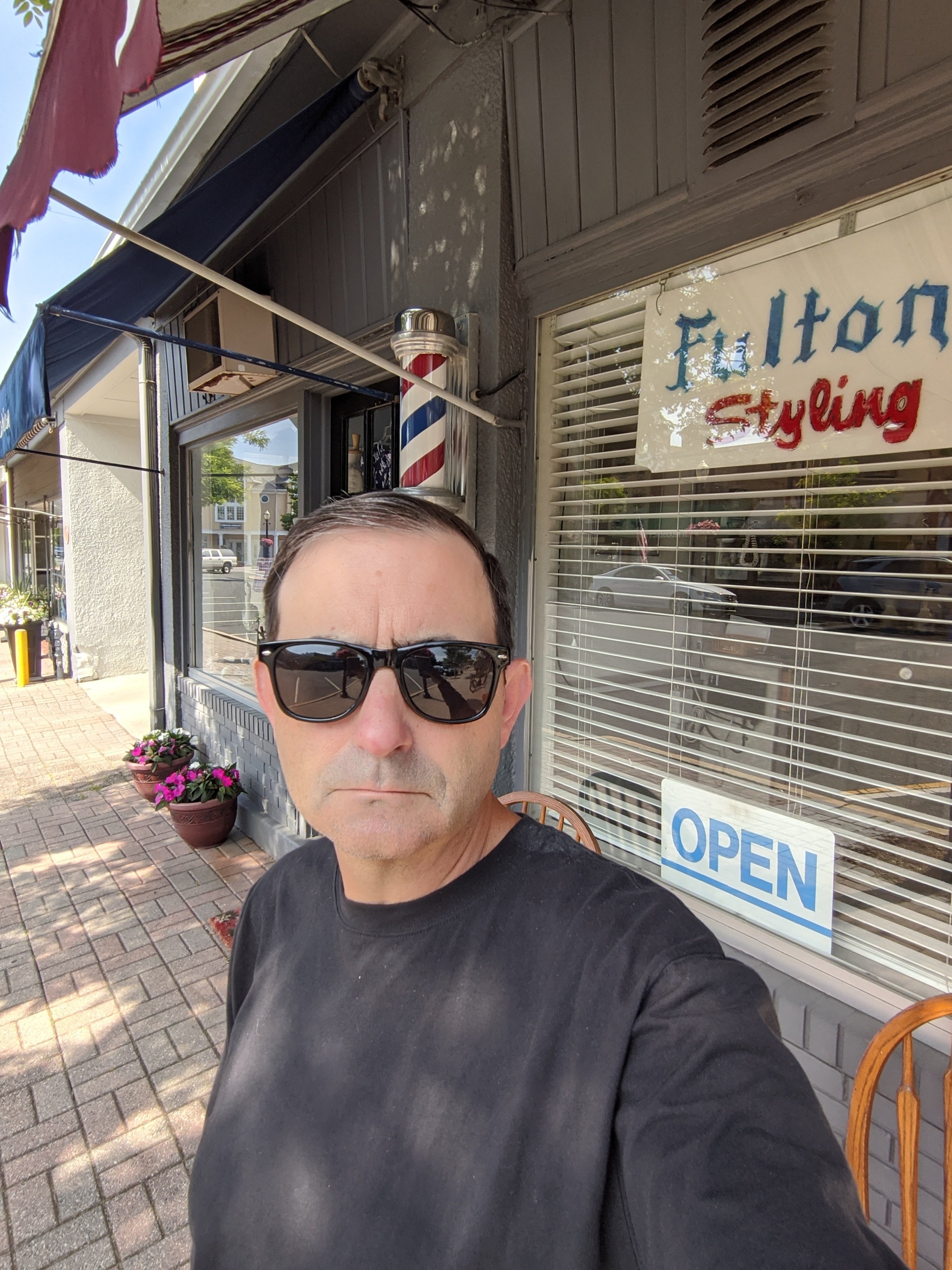
I get my haircut every six weeks or so at Fulton’s Barbershop at 1309 Third Avenue in Spring Lake. It’s an old shop, unchanged from the storefronts of my youth: a spinning striped barber pole outside, jars of combs submerged in blue Barbicide inside. Sal Zocchi of Manasquan has run the shop since Tom Fulton died in 1992. Sal is remarkably energetic at 91, having also operated The Clipper Shop on Route 34 in Colts Neck since 1971. Sal gave my 30-year-old son his first haircut when he was already celebrating 25 years in business.
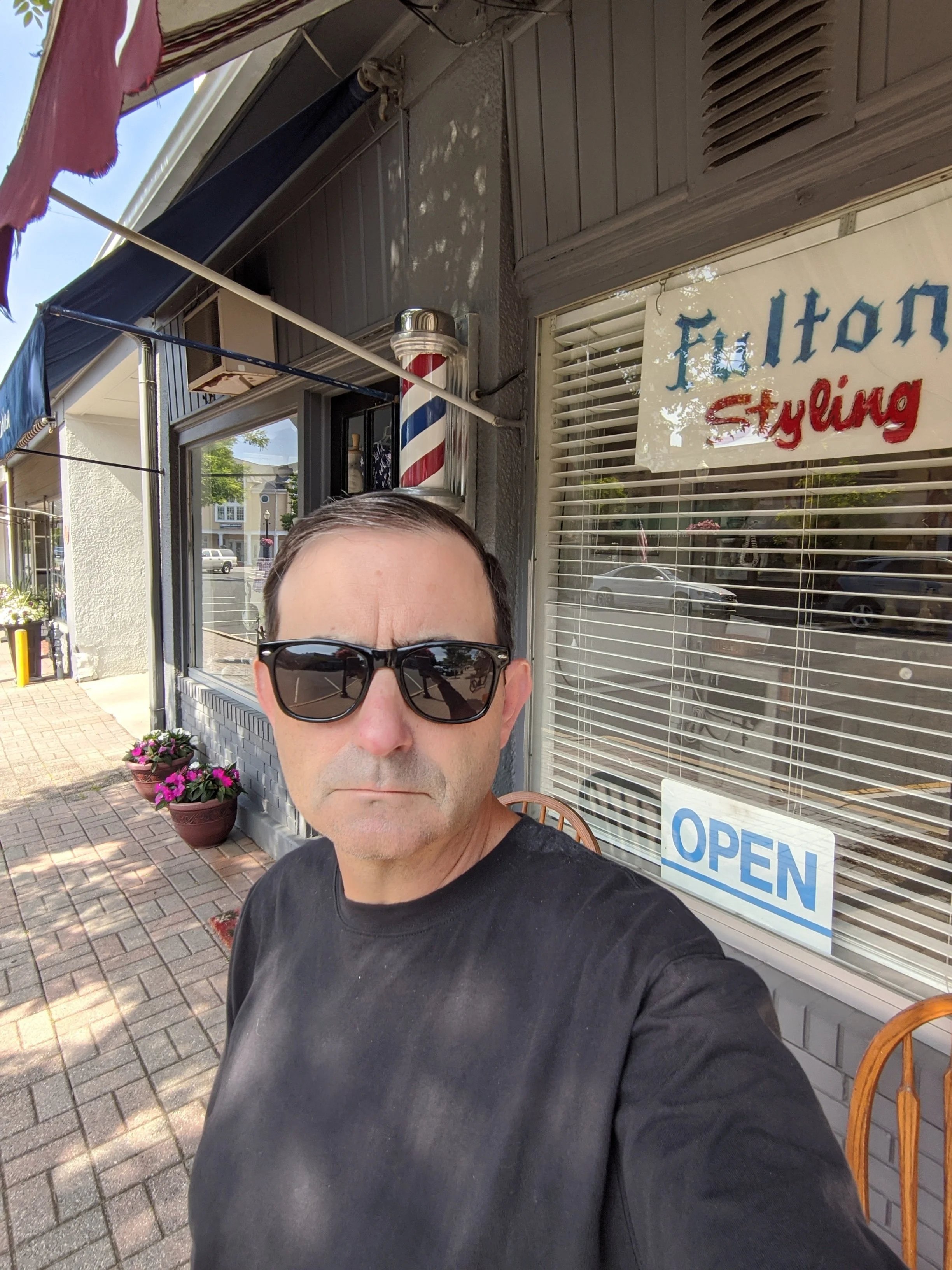
Fresh cut at Fulton’s
I’m not picky; my selection of barber depends entirely on the next open chair. The feeling of a brush on the neck, the old smock to cover my clothes, and the broom along the floor are unchanged in my 60 years. The chairs are vintage, as are most of the craftsmen working them. While I'm unsure of the exact age of the current pole out front, one has marked the spot since the Third Avenue business district took shape around 1900.
The namesake of the shop, Tom Fulton, was an avid fisherman who, before passing away at 53, spearheaded the annual kids' fishing tournament on Spring Lake. The tournament's vintage trophy still sits in the shop Tom took over in the late 1950s.
Before Fulton, Frank Lane owned the location as the Spring Lake Barber and Beauty Shop, alongside F.A. Lane’s in Sea Girt during the 1930s. His top barber in Spring Lake was Ernest Costello.
Born Castellucci, Costello adopted the stage name during a prior career. He had studied opera at the Naples Conservatory of Music, immigrated to America in 1913 to perform, and eventually won a singing contest at Carnegie Hall, awarded with one of Enrico Caruso’s tie pins. After touring in vaudeville, tight finances led him to trade the stage for shears—a reliable livelihood for many Italian immigrants of the era. He arrived in Spring Lake in 1930 and styled women, as well as men. The Bob had captured fashion in the late 1920s, and many women went with the look.
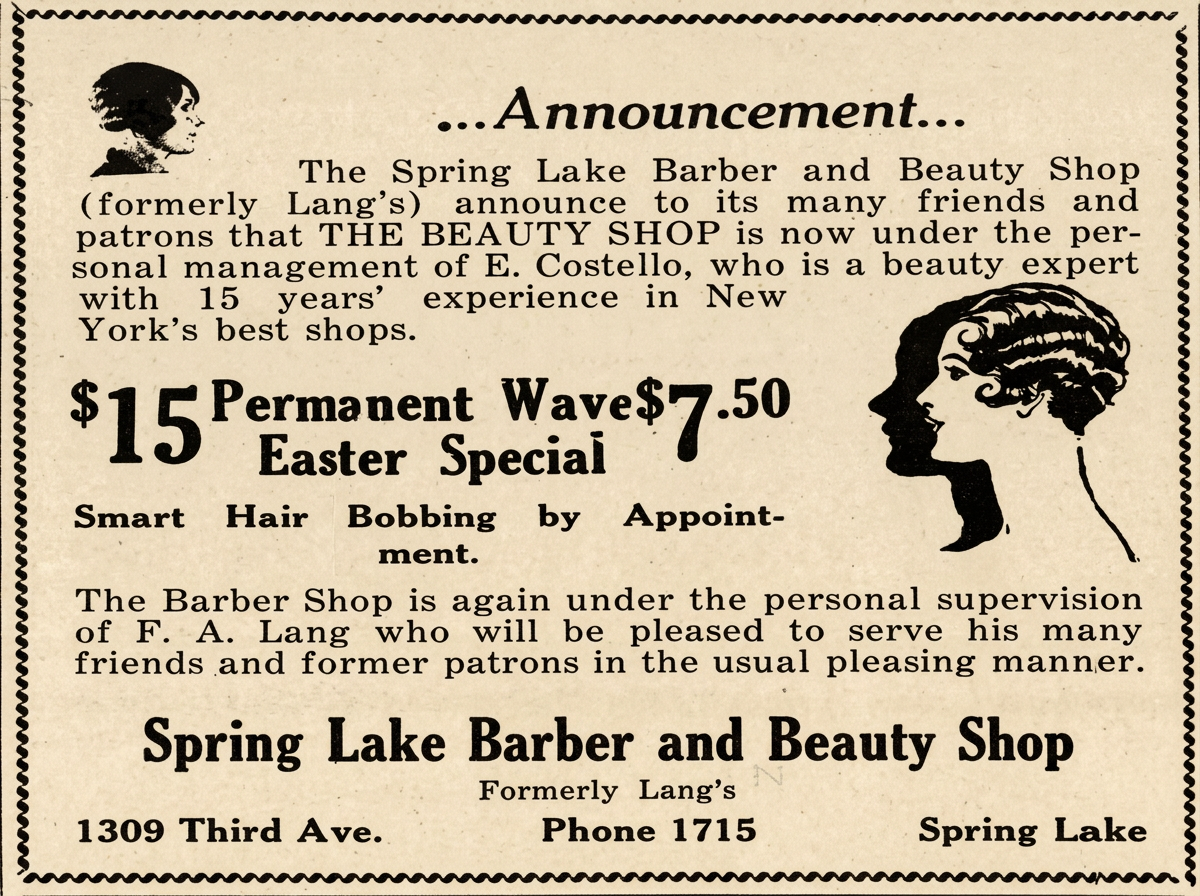
Spring Lake Gazette advertisement from 96 years ago
Lane originally acquired the shop from Bennett & Height, who ran the earliest barbershop in the Third Avenue district. Prior to the Great Fire of 1900, the commercial center sat along Atlantic Avenue near the present Sundae Times, with a block of stores catering to the grand hotels and boarding houses of the original Spring Lake Beach. Oliver Huff Brown encouraged the business district to move north along Third, near his furniture store and his First National Bank of Spring Lake.
Bennett & Height set up shop next to Clayton’s Garage. Before cars, it had been indoor carriage storage and a horse barn. Around the time the barbershop opened, Tim Hurley sold his horse stables in the south end of town and went into partnership with Clayton to transition into motor car parking and sales. Early open autos needed protection from the elements. Hurley’s building was repurposed into the Spring Lake Inn.
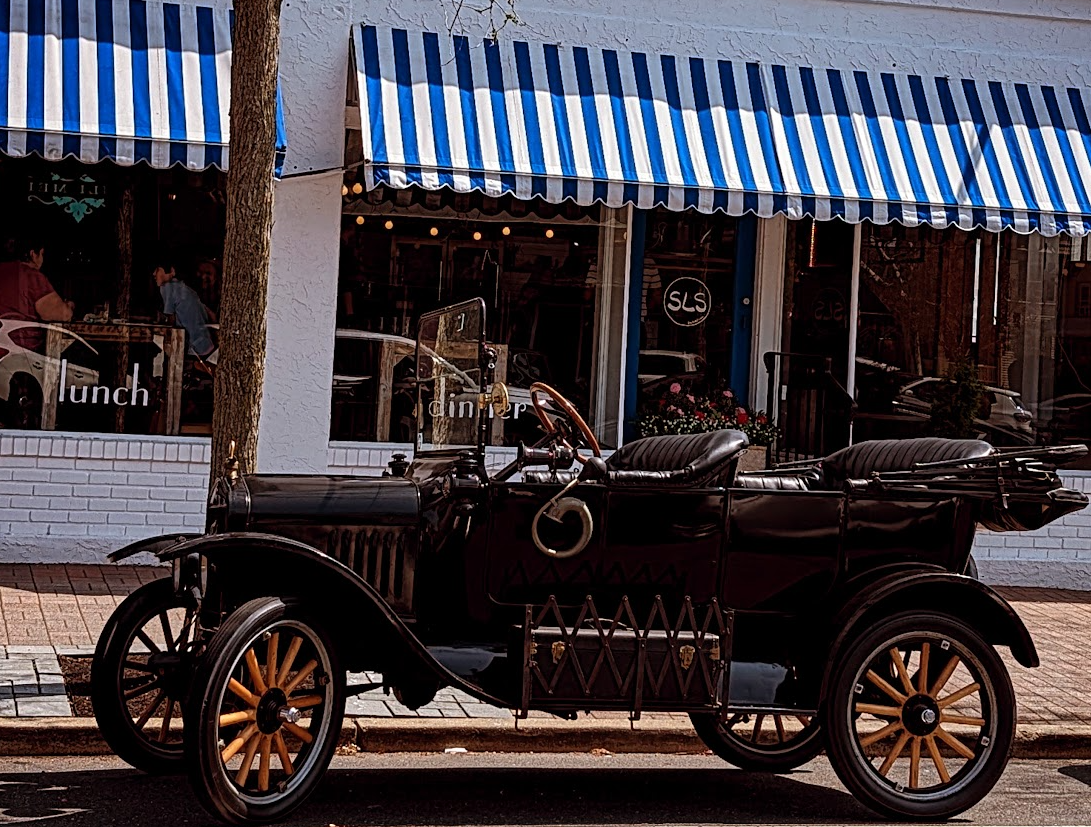
The leather seats and wood dashes benefitted from Clayton’s Garage. Men hung out next door at the Barbershop.
Men gathered to get a cut and shave, and the barbershop became a place to congregate and chat. In 1909, partner Joseph Height and his cousins shot a massive grey fox near Farmingdale; preserved by a taxidermist, it spent decades on display in the barbershop alongside a stuffed raccoon.
Spring Lake has had two clipper shops on and off since the early 1900s. Otto Morris founded the other in the 1910s at 304 Morris Ave. It also served as a kids’ store and hobby shop in the 1980s. For the last 15 years, it has been Jim McAnney’s Father’s Mustache.
When Morris ran the shop during World War I, it was called the ‘Little Armory’, as Otto made it the local Red Cross Headquarters and an outlet to sell Liberty Bonds. Eligio Valente of Asbury Park ran the shop in the 1920s and 30s.
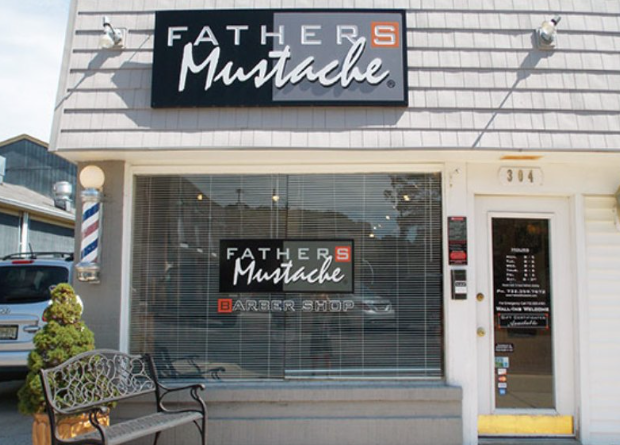
Father’s Mustache even has a website. (fathersmustache.com/)
As the Depression took hold, many Italian immigrants resorted to a trade many had taken up as young boys, something they could fall back on in small-town America. They largely displaced African-Americans and Germans who had dominated the trade after the Civil War.
The profession traces a direct line back to Italy and classical antiquity.
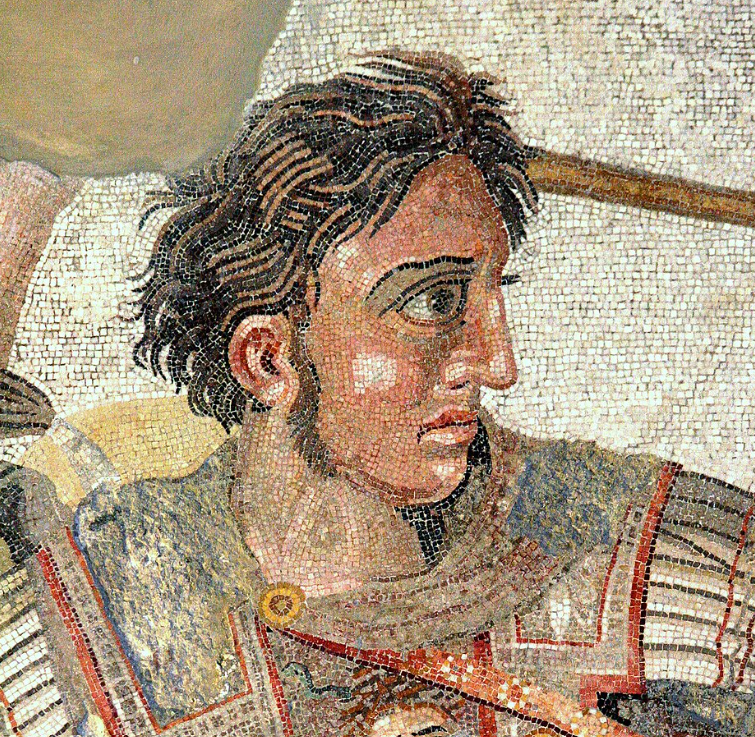
Alexander Mosaic depicts the beardless conqueror
When Alexander the Great campaigned across the Persian Empire, he ordered his Macedonian troops to shave their beards. As Plutarch recorded, Alexander warned that facial hair gave enemy infantry an easy handhold in hand-to-hand combat. By staying clean-shaven himself, Alexander established a standard across the Hellenistic world. Men turned to professional barbers (koureis) to hone crude iron blades that were notoriously dangerous to handle at home. Other cultures (like the Egyptians) used shaving as part of religion, costume, and status.
The custom spread west around 300 BC when magistrate Publius Titinius Mena brought professional barbers from Greek colonies in Sicily to Rome. Shaving became common with elites. Wealthy Romans kept enslaved barbers at home, while working citizens frequented open-air street stalls where a tonsor offered two-coin shaves alongside the morning gossip.
Eventually, the shave spread over the vast empire as a way to distinguish good citizens from ‘Barbarians’, who ultimately brought down Rome, and were distinguished by their facial hair.
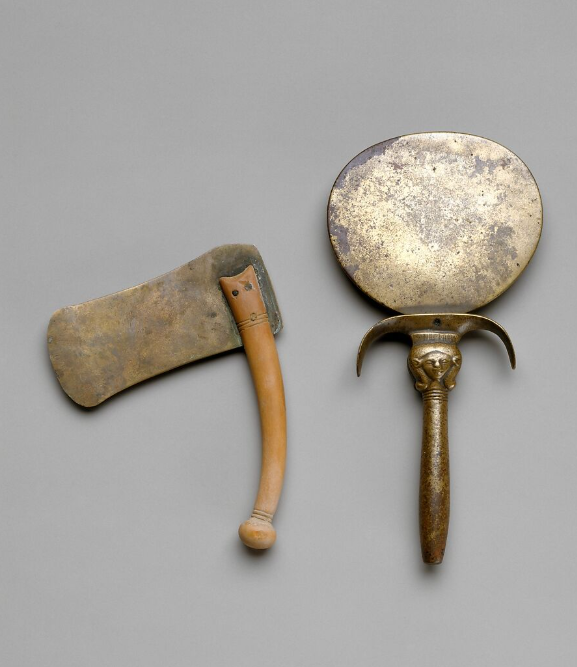
Egyptian Shaving set with Bronze mirror
Following the fall of Rome, barbers expanded into minor surgery. Because they possessed the sharpest blades, they routinely handled tooth extractions, wound treatment, and bloodletting.
To advertise these procedures, barber-surgeons displayed a spiral-striped pole: the wooden staff represented the rod patients squeezed to raise their veins, red and white stripes signaled bandages and blood, and the brass basin below caught the flow. The dual practice lasted until the 18th century, when physicians split off to form a separate medical profession, leaving barbers to focus strictly on grooming.
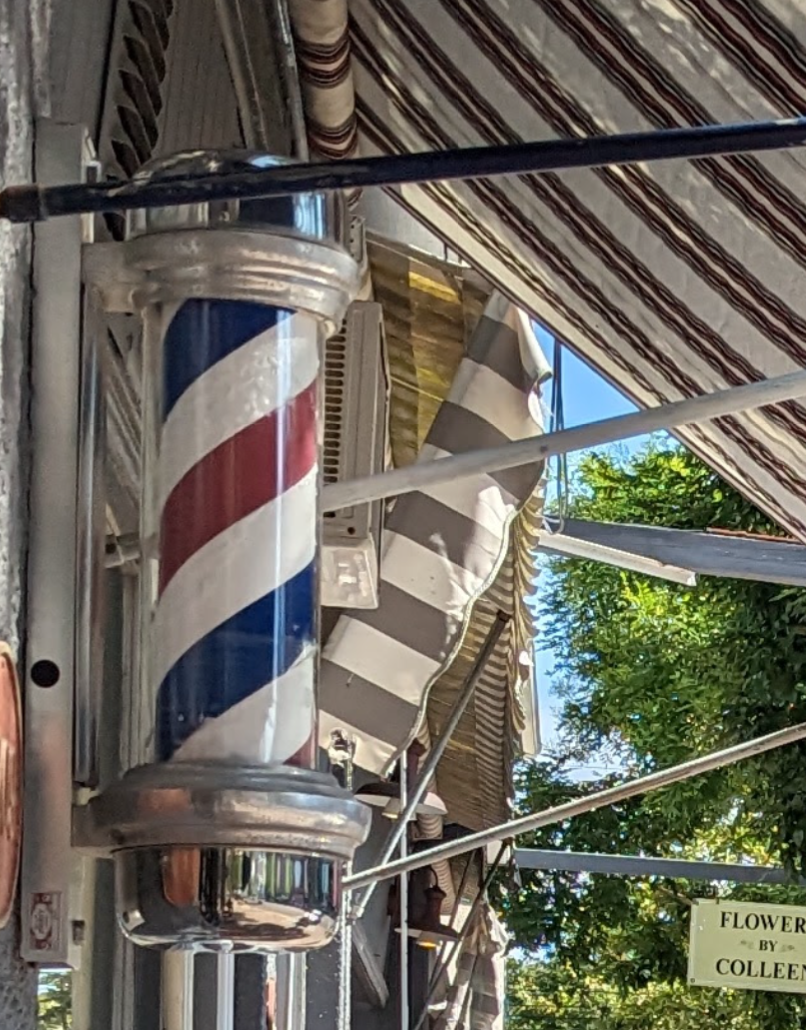
The Blue was added to the pole in modern America
Even without surgical duties, barbers remained indispensable. By the late 19th century, germ theory reinforced clean-shaven hygiene, but daily home maintenance remained difficult until King Camp Gillette patented the double-edge safety razor in 1903. By substituting cheap, stamped disposable blades for high-maintenance straight razors, Gillette permanently changed shaving habits. When World War I later mandated smooth chins to ensure an airtight seal on gas masks, the daily barbershop shave largely disappeared.
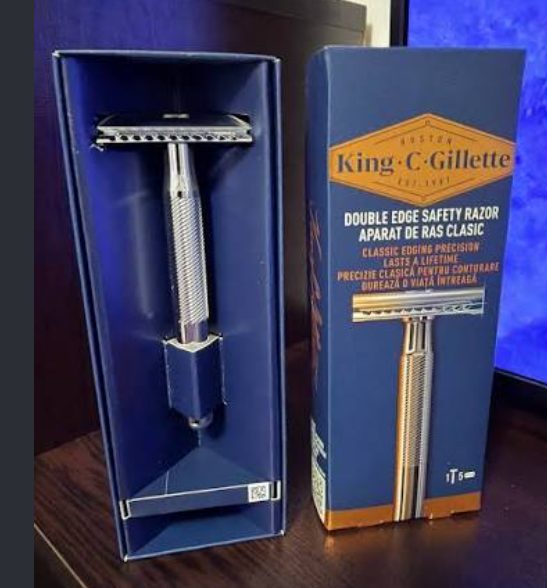
Early Gillette safety razor (Procter & Gamble)
As more people have made the area a permanent home, John Huhn has opened a third barbershop on Jersey Ave., just off Third, the aptly named Jersey Ave Barbers. Women have mostly migrated to dedicated color, cut, and blowout shops. Spring Lake has four beauty salons in addition to the barber poles.

John Huhn’s shop even has an Instagram page @jerseyavebarber
Fulton’s remains, patiently waiting for my now thinner hair to grow out again with its out-of-date magazines and a newish newspaper—ready for another turn in an antique chair, trimmed by hands that have practiced the craft for over half a century.