
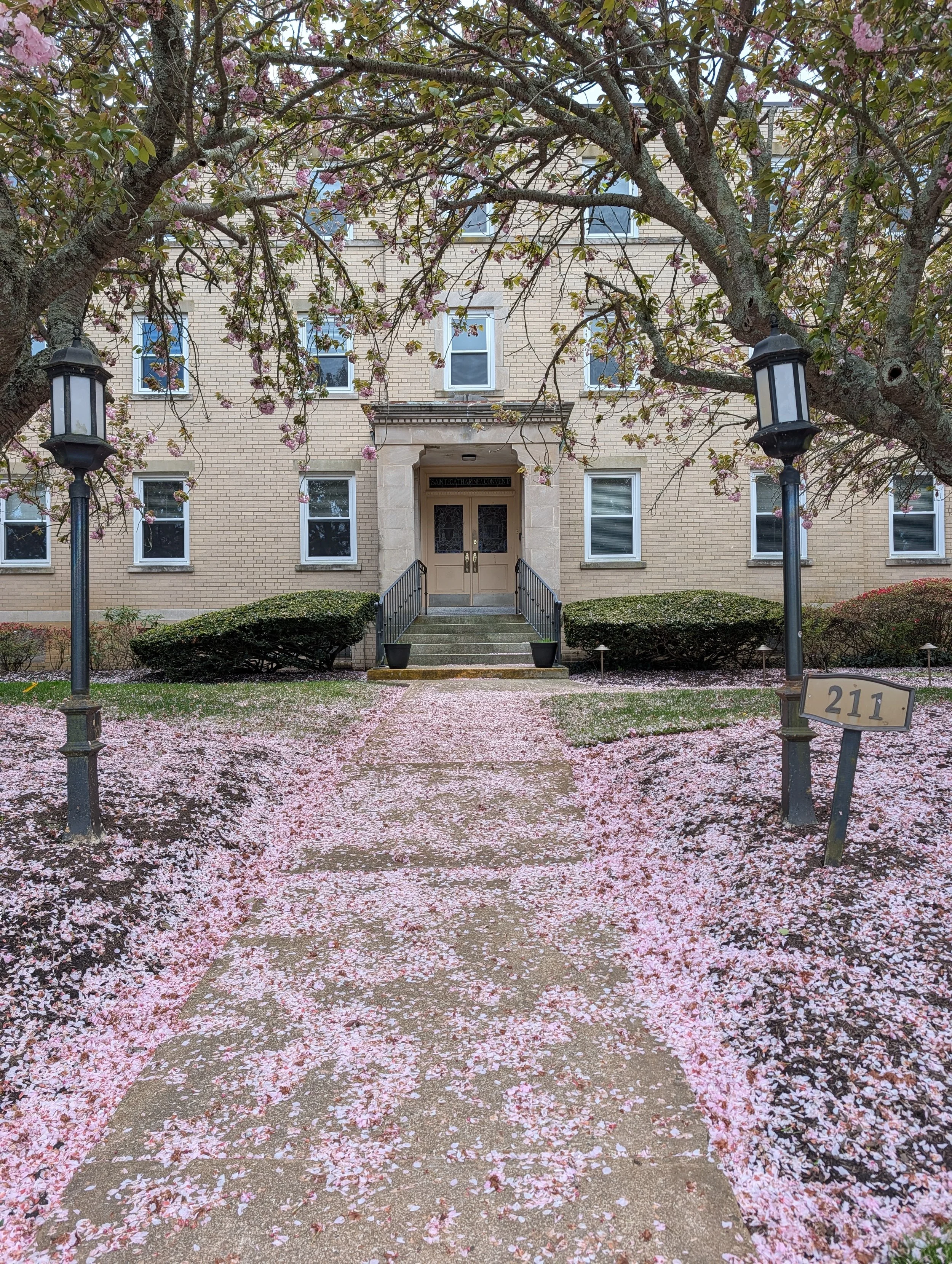
The Saint Catharine Convent in Spring Lake
Many people have fond memories of being taught by nuns. When the Saint Catharine Spring Lake Convent on Essex Ave. was built in 1961, it was the golden age of the American Catholic nun. In 1962, the sisters moved into their new residence from a private house behind Saint Margaret's church. The three-story residence had room for 18 nuns. They were members of the Sisters of St. Joseph of Chestnut Hill, Philadelphia, and had been teaching at Saint Rose in Belmar since 1921.
In 1931, after the construction of St. Margaret’s church on 3rd Avenue, 25 students were taught by two St. Joseph sisters in the church basement.
With enrollment soaring, in 1951, Saint Catharine’s Spring Lake School was built with 10 classrooms between Second and Third Avenues, from Pennsylvania to Salem Avenues, for its 400 students. By 1960, the capacity was doubled for the 1,000 students under the tutelage of the sisters.
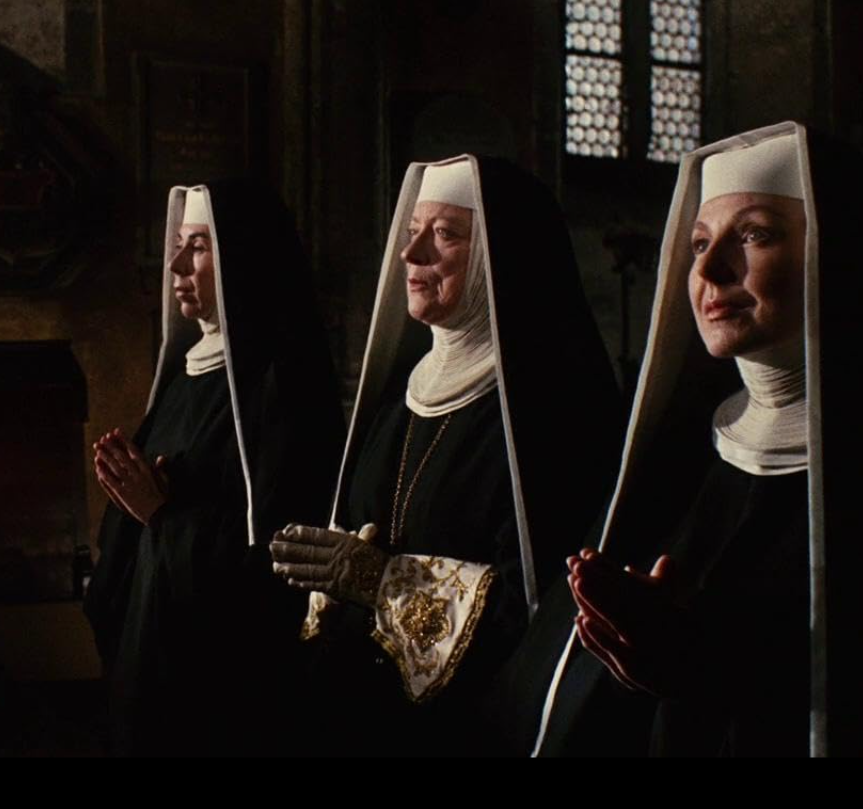
The Sound of Music invited people into the Abbey -20th Century Fox
It was a 50-year trend of increasing numbers of young women giving their lives in service and devotion to the church. American nuns numbered 50,000 around 1900. The great depression, two world wars, and the post-war baby boom swelled the ranks of religious women to a peak of 185,000. Lack of public safety nets saw widespread poverty and people in need, and the sisters filled in many gaps.
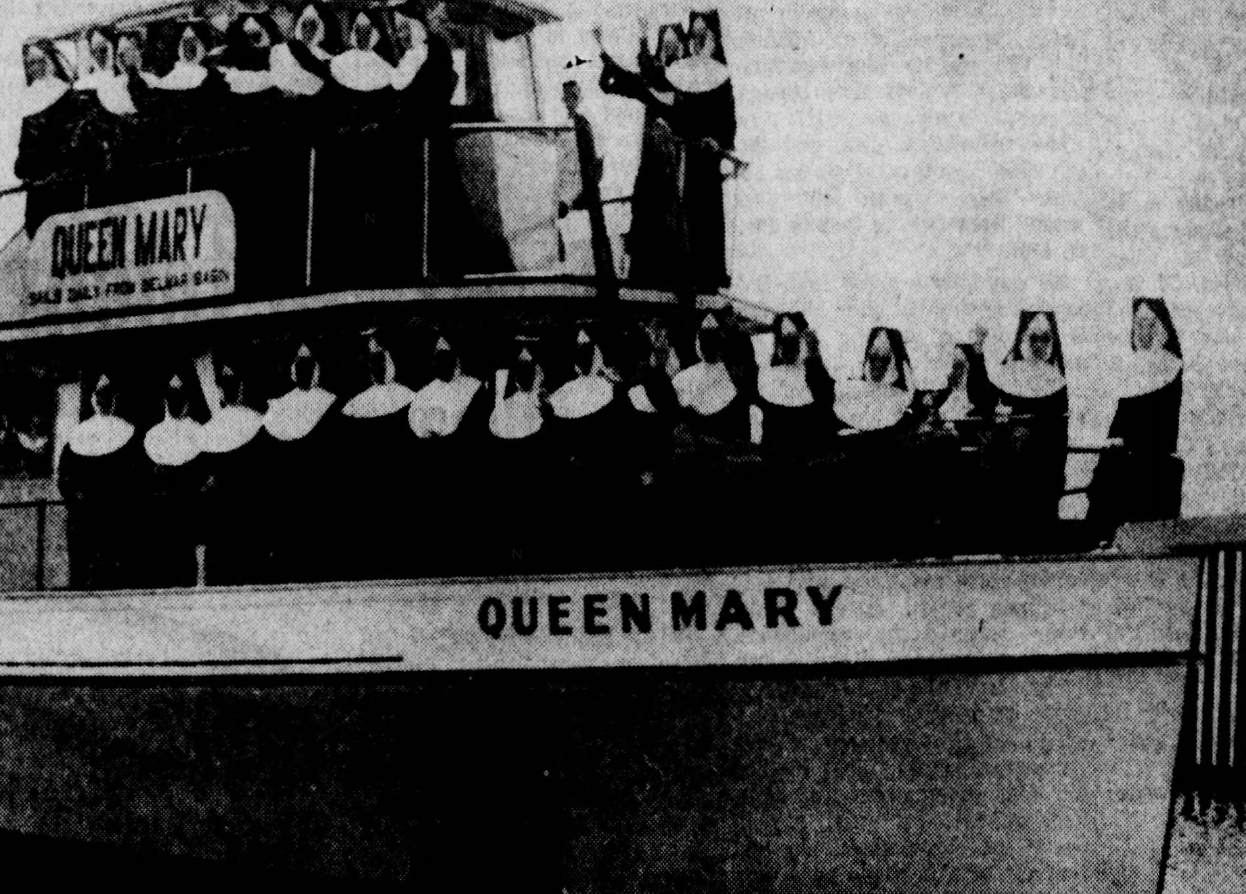
St Joseph sisters out for a three hour sailing tour in 1962 Asbury Park Press
Catholics rose from 15% of the US population to 25%. While about 15% of nuns were cloistered, most American women of religious orders worked in Catholic schools, hospitals, orphanages, sanatoriums, and nursing homes doing apostolic work.
Nuns were distinguished by the garb of their orders, or habits: generally modest costumes that included floor-length dresses, scapular coverings around the neck, and veils of various styles to cover the hair.
Locally, sisters were very visible, and the concentration of Irish Catholics at the Shore brought many religious women to the area. The Asbury Park Press featured an outing of Sisters from St. Rose in Belmar, hosting Spring Lake and Manasquan Nuns on a charter boat cruise aboard the local Queen Mary.
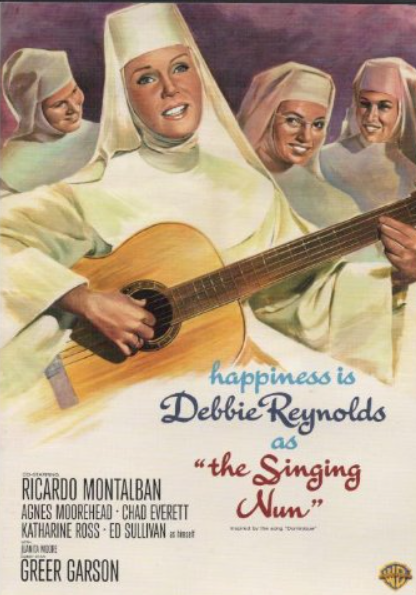
The Signing Nun fit the spirit of the mid 60s Warner Brothers
The nun found broader appeal in pop culture. The Nun's Story, released in 1959, starred Audrey Hepburn as a nun struggling with her vocation. In 1963, “Dominique” was a hit song by Sister Luc Gabriel. Her story was told in the 1966 Debbie Reynolds movie, “The Singing Nun.”
The Sound of Music won Best Picture and 10 Oscars in 1966. Julie Andrews starred as novice Maria Reiner, being sent from her abbey to care for the Von Trapp children. The film featured a sympathetic Mother Superior and the sisters who helped Maria and her new family escape the Nazis.
On its heels, The Flying Nun had a three-year run from 1967-1970 on ABC. Sally Field played Sister Bertrille, whose cornet would lift her up to fly in a heavy wind.

Sally Fields as a flying nun in Puerto Rico ABC TV
But despite the record numbers, many orders were facing friction. They had not changed their practices from the 1800s in a world that had changed significantly.
Pope John XXIII tried to modernize the church and its religious orders in the form of the Vatican II Council in 1966.
The guidelines impacted the faithful in the pews, by asking for their active participation in mass. The English language replaced Latin in services. No longer did people have to read from a translation book. Lay people were asked to be lectors, lead choirs, and give out Communion. Gregorian chants gave way to folk hymns, and church members were called to embrace fellow man and help everyone. The changes shifted from performance to active participation. Lay people were encouraged to understand church texts for themselves, rather than wait for interpretation from priests, nuns, and brothers.
The Catholic Church opened the gates of the fortress, ending the defensive posture taken by Rome since the Reformation. It encouraged less condemnation of actions in the world at large and pledged to help solve problems for people of all faiths.
Vatican II also asked religious women and men to integrate themselves more into their communities. It urged them to limit focus on traditions that had nothing to do with the message of the Gospels or the founders of their orders, and it called for a renewal.
The response was handled awkwardly in America. The lines were blurred between ‘people of faith’ and ‘people of the cloth’. Many orders rapidly took off the habit, or modified their dress.
Some relaxed the strict rules that governed group prayer and silent periods. Others lost their sense of community by instilling a democratic organization process. Many sisters were left to pray when they wanted and to choose their own manner to serve their community. The confusion led to disharmony within the vocation.
While some derided the change, others celebrated it. America in the 1960s was in the midst of unprecedented social revolution and experimentation.
In a September 1967 Tulsa World article, sisters came together to discuss the issues. Their dissonance is obvious:
“Sister Judith, who said she spent 20 years working for changes in the Benedictine Community. Rules criticized the multiplicity of what she called ‘needless’ rules was one of the factors about her original order to which she objected most strenuously, she explained. ‘It is ridiculous to have some man in Rome decree how many inches from the floor is appropriate for the skirts of a woman in the United States,’ she asserted.
‘We don't need rules to say whether we can go out after dark or go to a ball game or drink in people's homes. I recall going to a home for a Christmas occasion to discover that they offered eggnog for priests, brothers, and lay people and pink punch for the sisters.’
‘In our community, we have no superior, but it seems to me that we have more generosity and maturity than I have found in a larger order.’
Sister Petra emphasized the sentiment of Sister Jean Michael, ‘We're proud of our men who wear military uniforms; what's wrong with a Christian uniform?’ She explained that ‘The fruitfulness which comes from my life should be recognized in the same manner as that which comes from a Christian marriage. Mine is a sign of the union of Christ and church,’ she said. ‘If my life is not an example of love, then I don't belong in a habit either.’
‘The nun who removes her habit comes down off an artificial pedestal’, Sister Nativity said. ‘People can - and should - be poor, chaste and obedient in a family situation as well as a religious one, but there are certain privileges reserved for the religious.’
This confusion led to unintended consequences.
Orders supported humanistic psychology group sessions, which encouraged nuns to listen to the authority within themselves and the suggestions of their peers rather than their traditions. It was devastating. The IHM sisters based in Southern California ran 60 schools and a college. Within a few years, almost all the nuns had left the vocation, and the college was sold. But the methods used in California spread.
Across the country, thousands more asked for dispensation from their vows (estimates of 32,000–39,000 between 1966 and 1981 in the US). Women claimed disillusionment, the desire for personal freedom, and elements of the cultural upheaval of the 1960s (sexual revolution, feminism, questioning authority). For some, there was a sense that religious life had lost its distinctiveness ("Why be a nun if it's like being a layperson?").
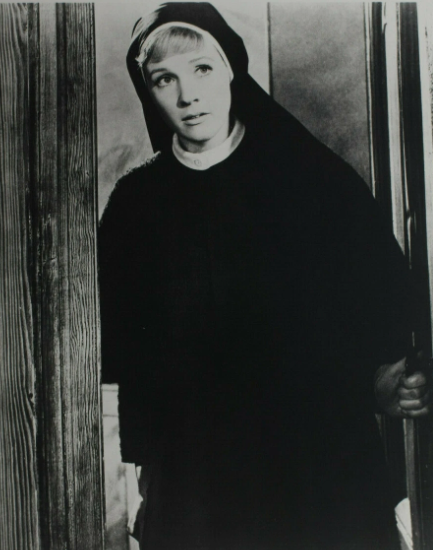
Julie Andrews in publicity still for The Sound of Music
With a declining number of nuns, Catholic schools lost a significant labor cost advantage, as did Catholic healthcare. As children saw less influence from younger nuns in everyday life, new entrants into the vocation plummeted from over 7,000 per year when Julie Andrews was wearing a habit to near zero in many places by the late 1970s. With no new nuns, the exodus of younger nuns, and the passing of many pre-war nuns, orders were strained to care for their older sisters, and many communities slowly dissolved.
The decline was studied best by author Ann Carey in her book, Sisters in Crisis: The Tragic Unraveling of Women’s Religious Communities.
During this period, representation of nuns in popular culture devolved, mostly into comedic or evil; Cheech and Chong’s Sister Mary Elephant comedy recording (1971), the movie Agnes of God (1985): Jane Fonda, Anne Bancroft in a mystery/drama about a young nun accused of murdering her baby. Nuns on the Run (Eric Idle) and Sister Act (Whoopi Goldberg) in the early 1990s featured comic actors hiding out in habits.
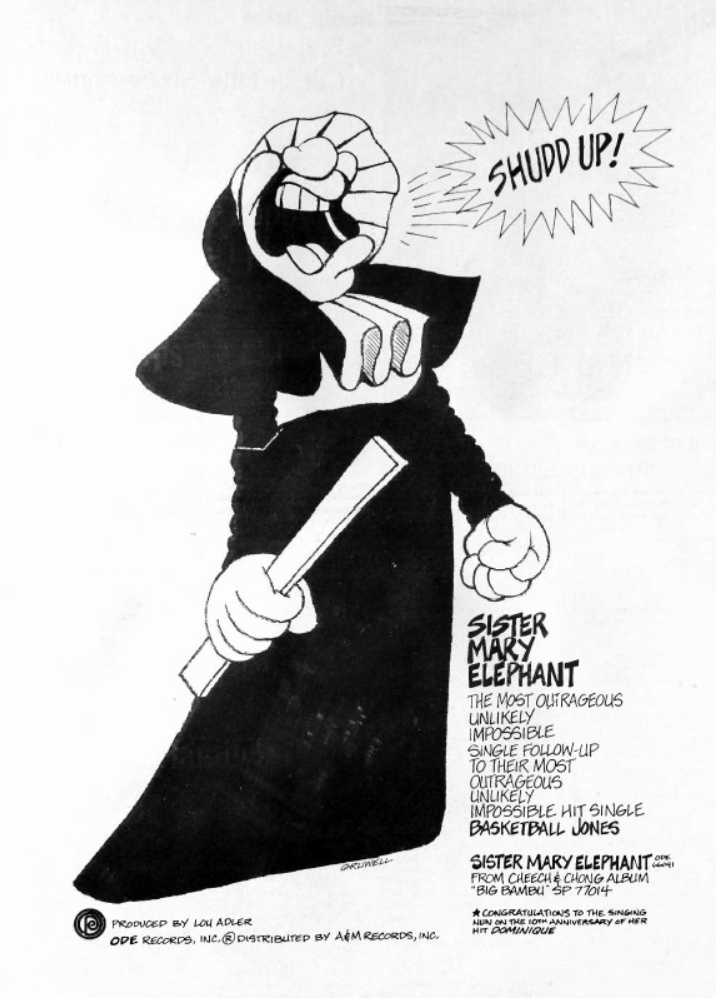
The changes opened the floodgates for comedians to make fun of nuns. 1971 Cheech and Chong recording
The Sisters of St. Joseph went from 2,500 to 500 nuns and withdrew from Saint Catharine’s in 1987, and the Sisters of St. Dominic of Caldwell took over, slowly replacing their retirees with lay teachers over the years.

The Saint Joseph Nuns are still hanging in there with over 500 sisters.
The school has prevailed. The pre-school through eighth grade still has almost 300 students and one remaining nun, Chaplain Sister Carole MacKenthun. The school community is enjoying a growing enthusiasm for the Catholic faith and a rise in parental interest in alternatives to public education.
The number of sisters in the United States sits between 30,000 and 40,000, 75% off of the 1960s peak. The remaining women religious are often highly educated, professionally skilled, and creatively engaged with modern challenges. The median age is over 70, but the Church is growing rapidly in Asia and Africa, and many there are attracted to religious life. Domestically, there is a revival with more young people entering the faith.
Many younger entrants in thriving communities bring fresh energy, while veteran sisters offer invaluable experience and mentorship. Their adaptability and joy in vocation are truly admirable. Most are dedicated to service for social justice. They are radically available to God and neighbor, most especially the vulnerable. Their work often fills gaps where government or other organizations fall short, embodying the Gospel call to care for the "least of these."