Elon Musk is the embodiment of risk and reward. Taking the biggest risks, he has achieved, in economic terms, one of the most successful portfolios on the face of the earth.
He credits his breakout success to first principles.
The concept dates to Aristotle, who urged his students to understand "common knowledge" surrounding their problem and recognize that the status quo likely leaves room for flaws or suboptimization.
Identify and define current assumptions: List the "common knowledge" or industry standards surrounding your problem.
Break the Problem Down: Strip away the assumptions until you reach the fundamental facts. These are truths that cannot be deduced from any other proposition. Avoid anecdotes.
Rebuild your idea using only those fundamental truths.
Iterate using lessons from negative feedback. Be prepared to be a target for challenging the entrenched.
First-principles thinking tends to galvanize people into strong belief in unshakable truths. Unshakable truth fosters a risk appetite that overcomes natural caution.
Founders
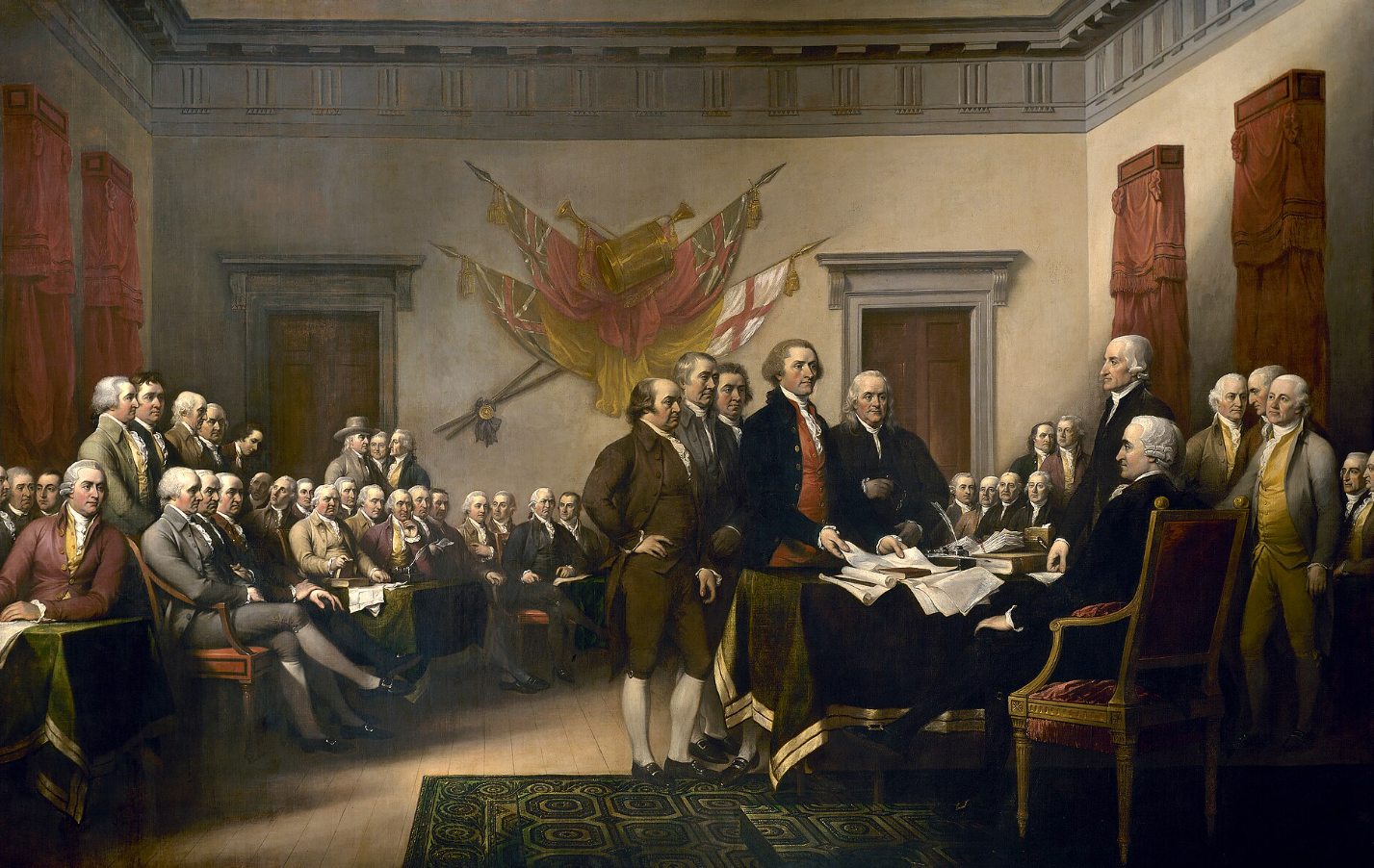
There is another group that was based in first principles. The American Founders. 250 years ago, the signers of the Declaration of Independence, including the first four presidents, immersed themselves in the classic ideas of the Greeks and Romans. Pulitzer winner Thomas Ricks dove into their learning and letters in First Principles: What America’s Founders Learned from the Greeks and Romans and How That Shaped Our Country.
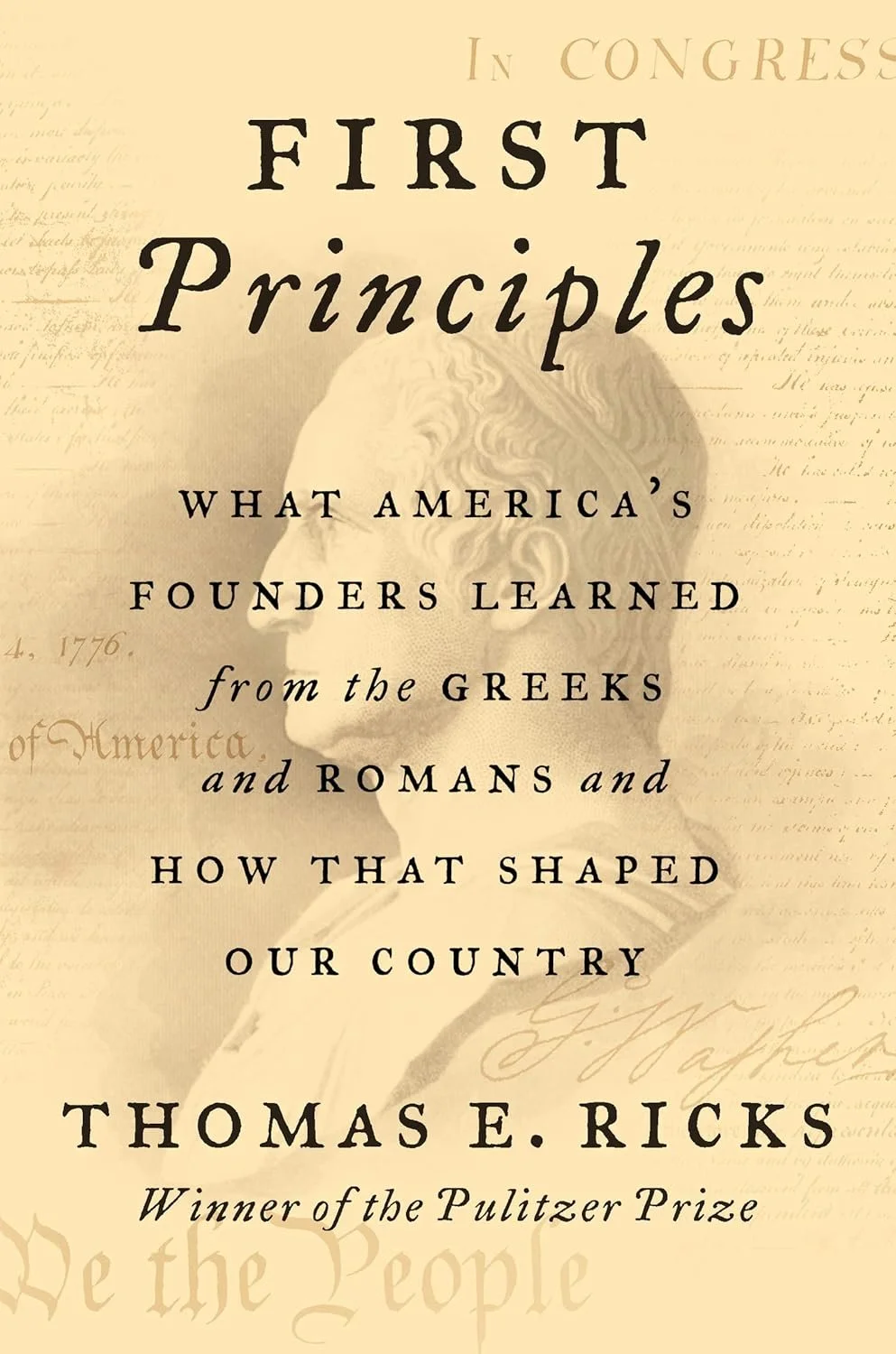
Musk’s physics-based reasoning parallels the Founders' efforts to document the observable truths of human nature. The principles that founded the country helped the world rise from poverty and fostered unbridled innovation.
The self-evident truths of natural rights, limited government, property rights, and contract law was a significant trigger in what historians call "The Great Enrichment”, where ordinary people were given the legal equality, social respect, and freedom to innovate. Europe’s fuel of the Enlightenment and dignity in fair dealing found its best kindling in America, where the relatively permissionless environment fostered a culture of rapid, market-tested innovation that continued for 250 years.
Limited Government
Their first principles included Montesquieu’s Enlightenment theories, which presumed flawed individuals; the Founders engineered a strict separation of powers and a system of checks and balances. Instead of relying on the virtue of rulers, they built a machine where "ambition must be made to counteract ambition," as James Madison wrote in Federalist No. 51. The Constitution has held longer than any other current government, in part due to its amendability.
Property rights, as argued by John Locke, and codified in America, led to a patent explosion: In 1790, the U.S. granted just 3 patents. By 1900, that number surpassed 650,000 total patents, fueling the Industrial Revolution and launching the U.S. past the European economies that started the innovations
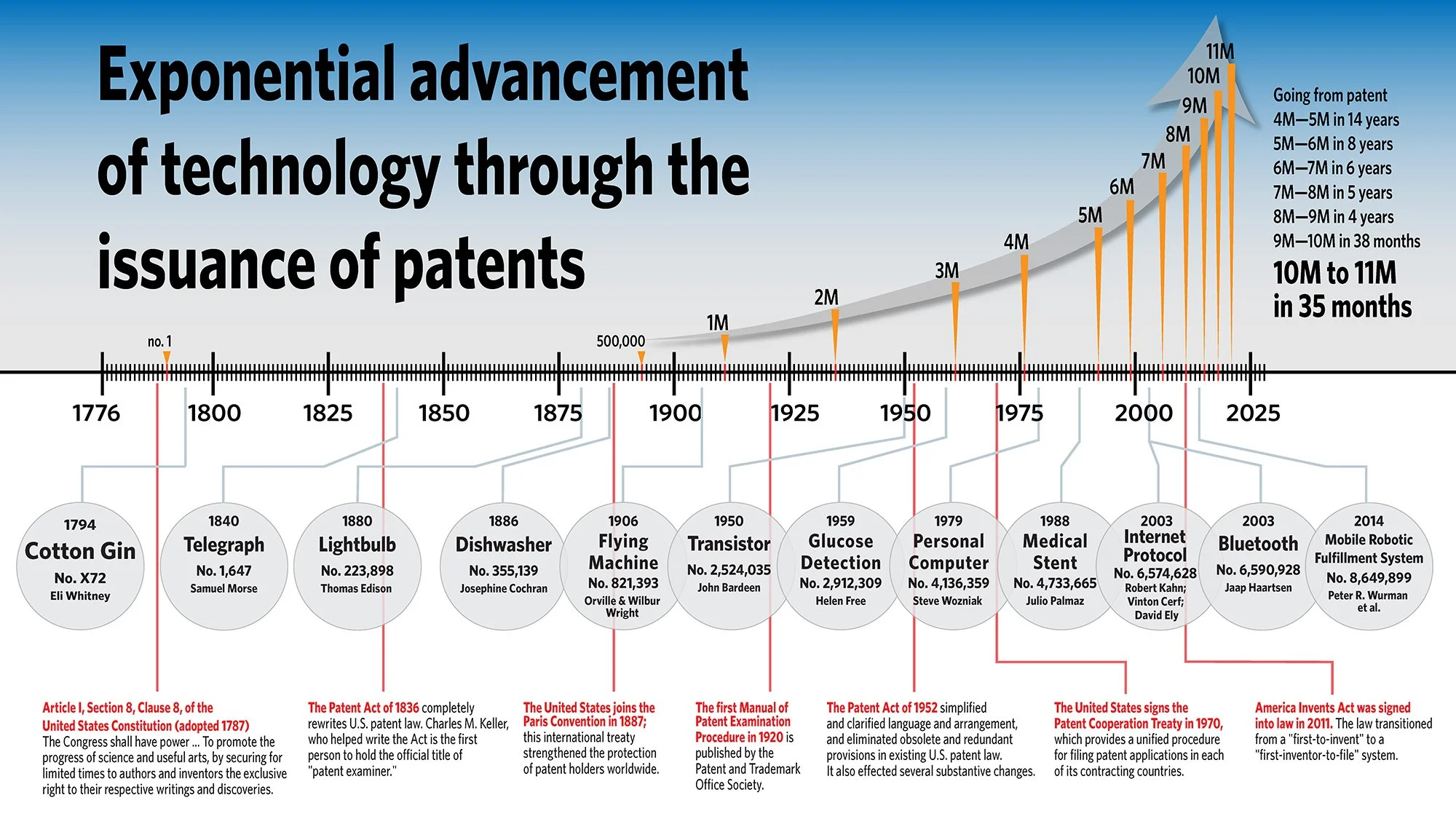
Govinfo.gov
In 1790, the U.S. economy was a negligible fraction of global wealth. By the mid-20th century, the U.S. accounted for a share of global GDP outsized relative to its population (peaking at nearly 40% immediately after the destruction of WWII). This was an unprecedented accumulation of wealth for a relatively young nation. The dollar-based world trading order of the late 20th century extended US influence.
The liberties enshrined and the economic opportunity made the US the magnet for talent from around the world. Over 40% of the founders of Fortune 500 companies were immigrants or their descendants.
Immigration attracted intellectuals, and the US produced more Nobel Prizes than the next five nations put together. Global trade spread the concepts into cultures around the world, and poverty plummeted.
Self-evident
The signing of the Declaration of Independence was the leap. The Signers were giving their personal guarantee. If they lost, charges of treason, financial ruin, and death awaited them. But the self-evident truths needed to be defended. Natural rights usurped the power of the King and required a new morality of governance.
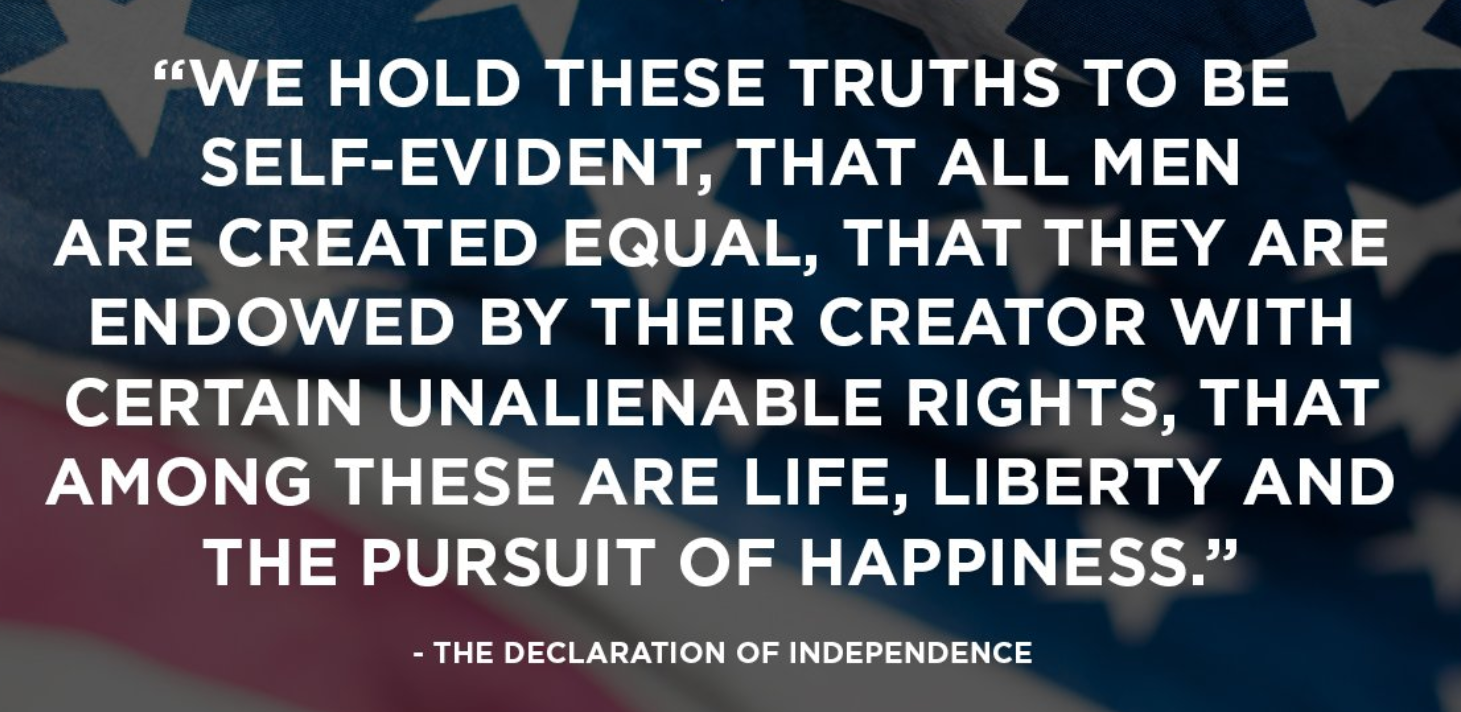
These were not utopian ideals arrived at casually. New England was already at war. But the leaders of the new nation still focused on delivering universal concepts, not just applicable to their situation.
All Together Now: Dr. Benjamin Rush
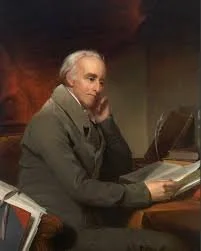
Dr. Benjamin Rush
First principles success is also dependent on the unity of vision of the team. Implementation often drifts off course.
One unifier for the colonies was Dr. Benjamin Rush. A protégé of Benjamin Franklin and son-in-law of Richard Stockton, Rush touched all corners of the colonies and often found common ground.
Rush was with Richard Stockton on a mission to reason with the English. While Stockton’s mission to have the English recognize the equality of the American pedigree failed, Rush helped Stockton recruit John Witherspoon for the College at Princeton. Witherspoon would have an outsized impact on the younger founders.
Witherspoon taught Madison and others his Common Sense Scottish Enlightenment, which emphasized the fundamental rights of man.
Rush also edited and suggested the title for “Common Sense” with Thomas Paine. This pamphlet was credited with bringing the first principles to the American people. Paine later reinforced the principles in the Rights of Man, and in it noted, "My country is the world, and my religion is to do good."
Dr. Rush established a relationship with his patient, the outspoken Patrick Henry, who helped the Virginians embrace the mindset. Henry’s “Give me Liberty or give me death” predicted the stakes of sticking to those principles.
Rush was extremely close with John Adams and supported the Puritan work ethic and moral education of New England. He argued that Boston’s open war stance was justified.
He carried water for Franklin, serving on many committees to advance the 13 virtues that Franklin espoused. Ben was dressed down by the British in his efforts to save the relationship, and he pushed the Declaration to challenge European traditions of inherited aristocracy and religion. He advocated for building a new government on the fundamental, observable truths of human nature and civic equality.
Rush was not always in synch. He challenged Washington’s command, and some of his medical techniques, like bloodletting, would prove themselves not to be based in first principles.
He saved many lives in the Continental Army, advocated for good hygiene, clean camps, the abolition of slavery, and penal reform. He lobbied heavily for free public education, funded the nation's oldest Black church, and passionately championed higher education for women.
Rush also continued the legacy of Franklin, who accepted the South’s insistence on slavery begrudgingly, as the best they could do at the time.
"For when you assemble a number of men to have the advantage of their joint wisdom, you inevitably assemble with those men, all their prejudices, their passions, their errors of opinion, their local interests, and their selfish views... Thus I consent, Sir, to this Constitution because I expect no better, and because I am not sure, that it is not the best."
Rush warned prophetically, “Remember that national crimes require national punishments, and… it cannot pass with impunity, unless God shall cease to be just or merciful."
Together, the Patriots laid the foundation for the next 250 years. It's not all principles. America has had other advantages. Geography, resource luck, the decline of the British Empire, and the conquest of the continent. It survived civil war and struggled to end slavery and fully embrace its own self-evident statement that “all men are created equal”.
Governing messy human societies involves trade-offs, compromises, and evolved traditions. These pollute the fundamentals.
We succeeded in part because of the strong belief in the principles. The signers pledged their lives, fortunes, and honor. They convinced a significant majority to join their treason and raised the stakes beyond the British resolve to take back the colonies. The first four Presidents respected the fundamental principles they fought for, establishing the tradition of freedoms needed to dominate as the Industrial Revolution and classic liberalism afforded the common man an opportunity to succeed like never before.
Life, liberty, and the pursuit of happiness are not a physics problem, and over the years, we have strapped layers of complication onto America. It may pay to periodically look back to the first principles of our founders to re-energize the American Experiment.

Looking for a good read for America 250? Sea Girt Soul is the story of Robert Field Stockton and a young America. Find it on Amazon https://www.amazon.com/Sea-Girt-Soul-Commodore-Stockton/dp/B0GTD9STXG