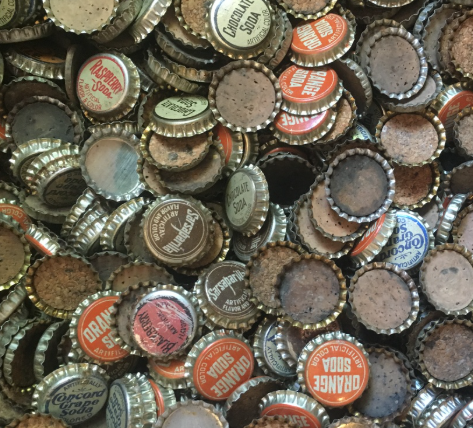
During World War II, a Spring Lake and Baltimore millionaire convinced millions of children to plant acorns, in a nationwide cooperative effort.
Charles McManus summered at one of the largest estates in Spring Lake. He owned the Green Gables on the oceanfront and Washington.
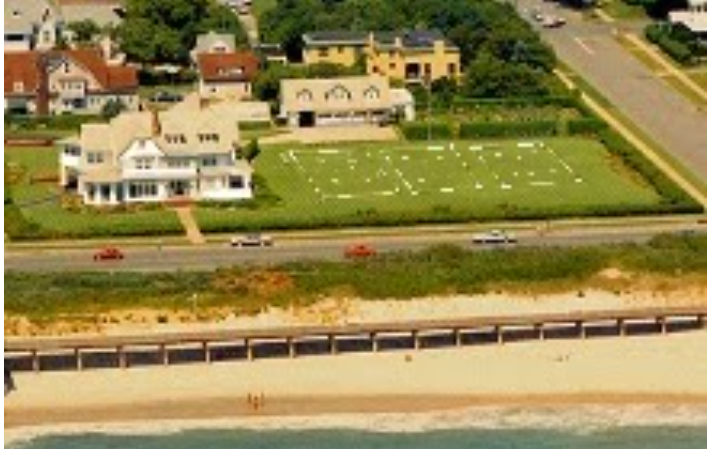
Green Gables in Spring Lake
Cork has been used to seal bottles for centuries. Cork is harvested from a number of trees, but the Cork Oak, originally from southern Europe and Africa is considered one of the best sources.
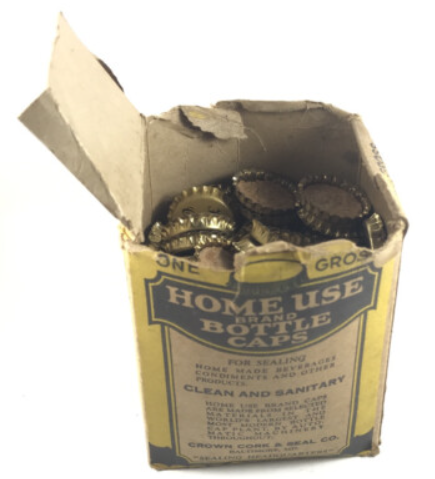
Cork crowns for bottle tops
Benedictine monk Dom Pierre Pérignon, of Champagne, France was the first to popularize its use as a wine bottle stopper in 1680. In the late 1800s William Painter developed the Crown Cork Seal for soft drinks and beer, as industrialized food production took off.
Charles McManus invented a composite cork, “Nepro Cork”, made of ground cork and a binder which found many new industrial uses for cork of any shape. He, like all manufacturers, imported cork from Portugal and Spain, and the USA used over half the world's supply of cork. His company, New Process Cork Company, dominated the innovative uses for Cork starting in 1912.
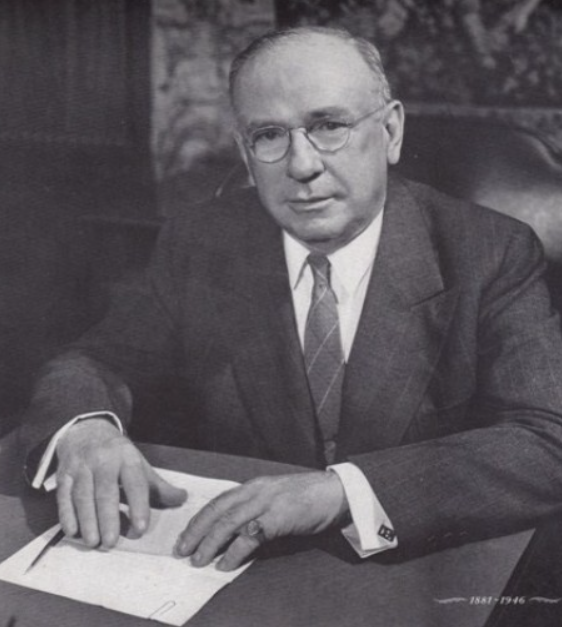
Charles McManus Sr. 1881-1946 (Crown Cork & Seal press photo)
McManus used his success to take over the struggling Crown Cork and Seal in 1927. Crown Cork’s dependence on bottle top manufacturing had fallen on hard times after its founder, William Painter, died in 1906, its patent expired in 1909, and the elimination of the beer business via Prohibition in 1920.
The company thrived under McManus, and cork was used as an electrical insulator, a sealant, and for life preservers for its buoyancy. It was critical to auto and truck manufacturing, and weapons systems. Refrigerators and freezers were lined with nepro cork. McManus became a millionaire.
War with Germany and a submarine blockade of trade with southern Europe commenced after Pearl Harbor was attacked on Dec. 7, 1941. A fire in Maryland destroyed a year’s supply. This caused an immediate shortage of cork.
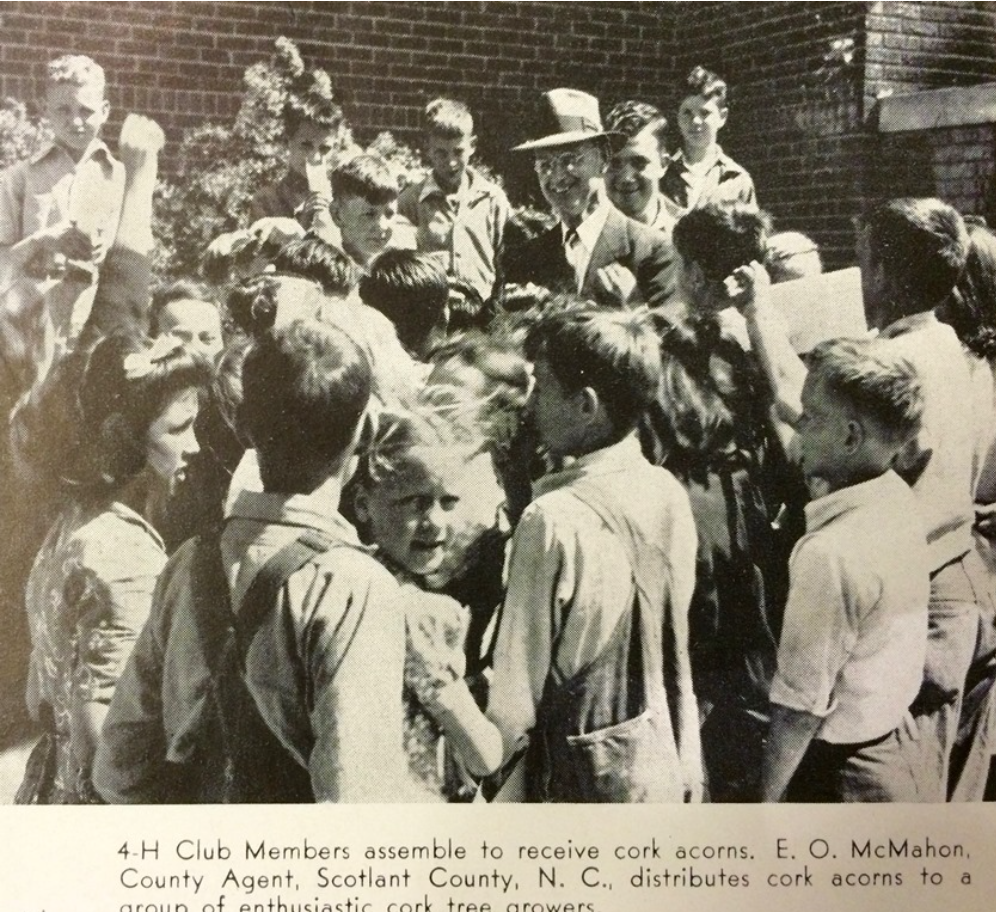
4H Club kids get their acorns in North Carolina. Swem Library photo
Critical for all aspects of the war industry, the federal government rationed cork and diverted supplies away from soda pop and beer. They also limited metal can production, which McManus’s company supplied.
McManus started a project. He looked to the 4H Clubs of America and women’s clubs to try to provide a domestic supply of cork. There was a groundswell of support for everyone of all ages doing their share for the war effort. McManus purchased over 5 million acorns of Cork Oak, and gave them to clubs in the west and the south, and over 1 million children participated in planting acorns. It would be 25-30 years before any of these trees would be productive, but McManus, near 70 years old, wanted a domestic supply of cork for future generations..
Fortunately, the war ended, and the supply chain recovered. McManus’s company did not wait for the domestic supply to mature. They developed a plastic seal for bottle caps and substitutes for most of cork’s other critical functions. Cork usage waned, and without care, most of the saplings died. The only place a large number of trees survived was in California.
McManus died in 1946. The family sold Green Gables, ironically to Suzy Oakes, (later Linden). Suzie established the Green Gables Croquet Club on the lawn of the estate in 1957. The club still plays out of the Sea Girt National Guard camp, on the finest lawn at the Jersey Shore.