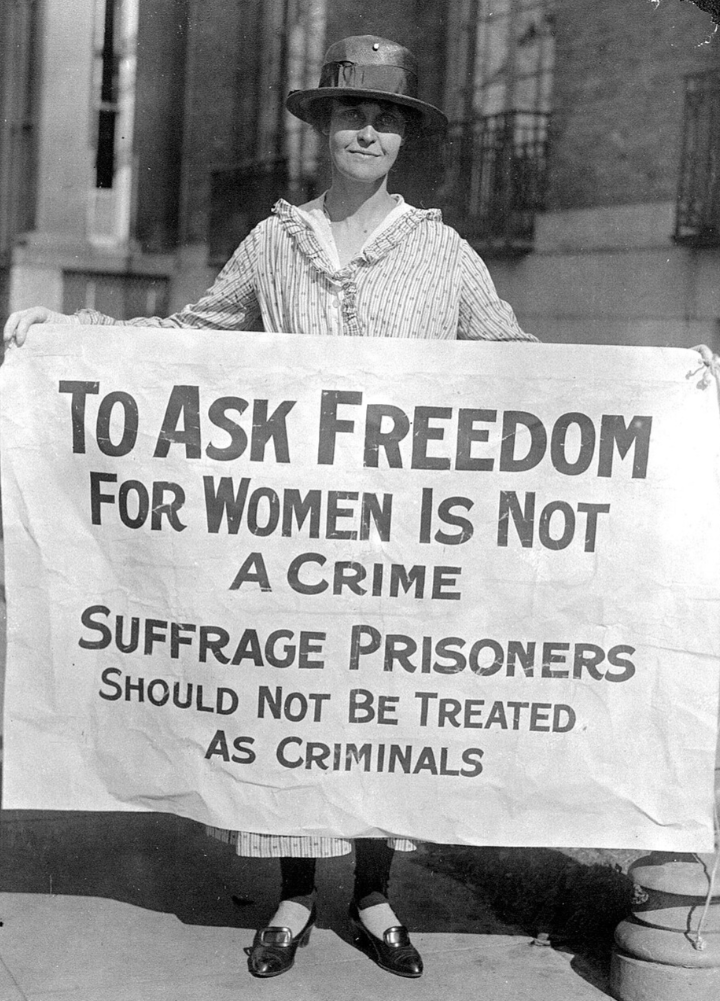
Stories of Summer People
In 1885, Mrs. Rebecca Winsor stayed with her five children for the summer at the Beach House Hotel in Sea Girt. The oldest, Mary, was 12, followed by Henry, 10, and James, 7. The two youngest, Rebecca and Ellen, were 5 and 3, respectively. Sea Girt was popular with Main Line Quakers.
Rebecca’s social importance was tied to her husband’s wealth and her family pedigree on her father’s side. Her Bidde and the Champan ancestors came to America in 1615. New money was respected, but old money was revered at the resorts.

Before getting involved in politics, the family traveled lavishly (Sea Girt Beach House in 1885 Library Company of Philadelphia MCM Collection)
The four women in the family had an outsized impact on progressive issues in the first half of the 1900s.
Her husband, James Davis Winsor, was the son of Henry Winsor of Massachusetts. James settled in Haverford, Philadelphia, among the country estates of the Philadelphia moneyed set. With his brother and father, the family made a fortune in steamships. The Quaker family traveled extensively. The children complained most of their vacations were visiting churches and graveyards, so the Jersey Shore was a treat.
At Sea Girt, Mrs. Winsor was traveling alone with the children while James worked. Like most millionaires, they brought along domestic help. Eldest daughter Mary noted that she was so closely chaperoned that “the greatest curse in the world was to be born a girl in a genteel family.” Mother Rebecca was not like her neighbors. Genteel, yes; soft-spoken, no.
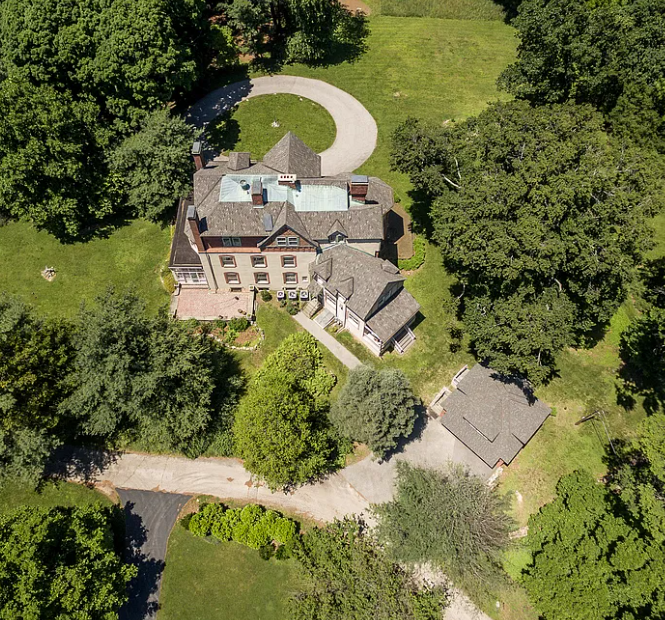
Winsor Family Home in Ardmore “Wee Hedgeley” (Zillow image)
Back on the Main Line, Rebecca lobbied for her community to purchase land for playgrounds and parks before the land in the area had become too expensive. The Winsor family owned extensive real estate, including a mansion called Wee Hedgely with 40 acres and stables, but Rebecca wanted all children to have places to explore. Her legislative efforts were compounded by the difficulty of meeting with male voters. She took thirteen years to achieve her objectives. She lamented later, “I would have accomplished my goals in one third of the time if women had the vote.”
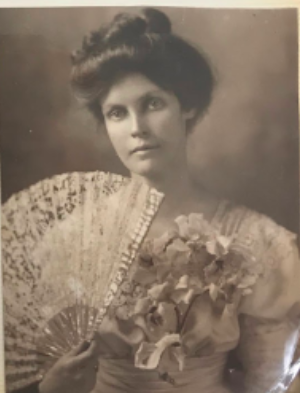
Mary Winsor around the time of her introduction to society at the Cricket Club in Haveford
In the 1890s, women around the country were joining women’s organizations of all types. They discussed peace, temperance, celebrated their heritage, pushed for charity, and argued the merits of suffrage. Mother Rebecca first joined the Colonial Dames, which was only open to women descended from early American settlers. The people she met there led her to the National Women’s Party.
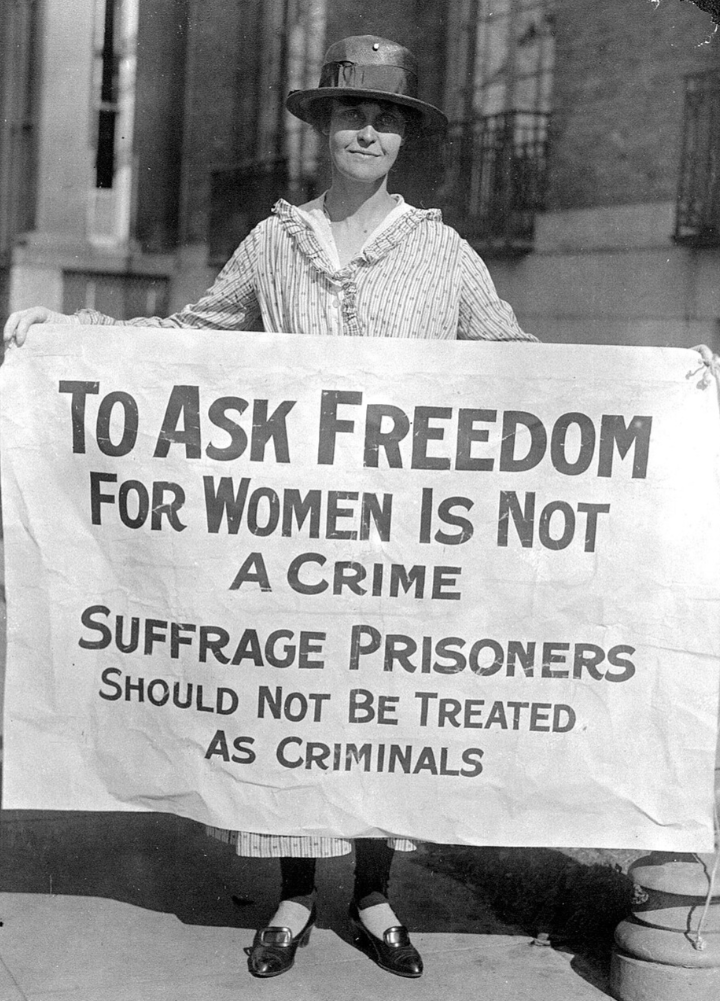
Mary Winsor after her imprisonment protested inhumane treatment
Elizabeth Cady Stanton, Lucretia Mott, and others started the Women’s movement in Seneca Falls NY in 1848. Widows and spinsters were the only women able to own property and serve on boards. None had the right to vote. They famously interrupted the Centennial Celebration in 1876 in Philadelphia, but made little progress toward voting rights.
Most of Rebecca’s conservative, wealthy friends were anti-suffrage. They often told her, “I have all the rights I need”. Rebecca answered, “But what about some other woman who does not have the rights she wants?”
Victorian American society put a premium on decorum and obedient women. The conversation around the Winsor home encouraged the girls not only to educate themselves. They were afforded permission to speak their mind on any issue.
As the girls grew up, they joined their mother in protesting for the right to vote. Daughter Mary was voted President of the Pennsylvania Limited Suffrage League in 1910. Mother Rebecca was a founder of the group, and Mary’s sisters Ellen and Rebecca were also members.
In keeping with their elite position in society, the group did not advocate for universal voting rights. They sought to restrict the ballot to educated, tax-paying, or property-owning women. Illiterates, criminals, or the poor were to be excluded. The group’s approach was to avoid the lobbying and protests that had not worked for sixty years, and put on plays and lectures to encourage the educated to do the right thing.
Three years later, the Winsors had moved with much of the nation to argue for full voting via a Constitutional Amendment. As Woodrow Wilson was about to be sworn in in 1913, the Winsors went to Washington DC to join in the protest of the National Suffrage movement. Attorney Inez Milholland led the parade on a white horse; it featured 5,000 to 8,000 marchers, 9 bands, and 24 floats.
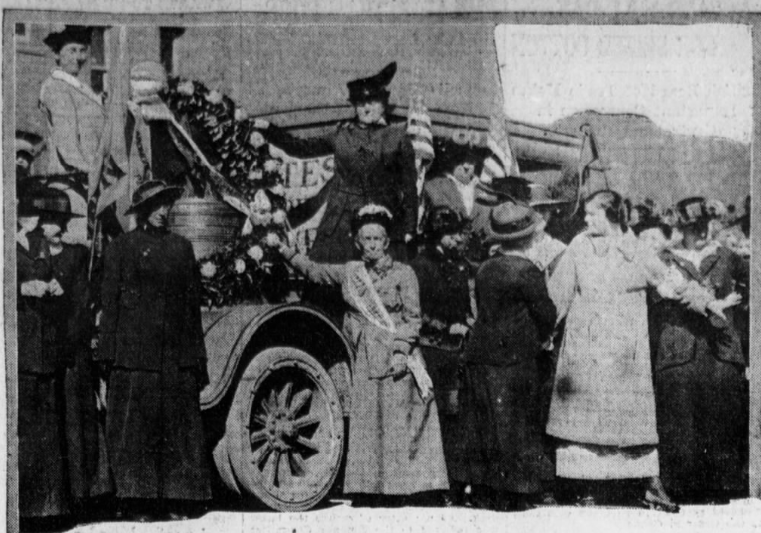
Mother Rebecca Winsor (center on ground) next to a Liberty Bell, paraded through the Main Line with its clapper tied to signify the silenced voices of women. Rebecca gave the speech at Ardmore (1915 Evening Public Ledger)
Mother kept her daughters to the center of the parade while she kept to the edge and stared down the men who came out to disrupt the proceedings. Men were hurling profanity and rocks, with little to no police support. Mary recalled that the men shouted, “Here comes Grandma”, but they were “overawed with her dignity,” which quieted the ruffians near the girls. Over 100 women were injured, and the US Cavalry were called to break up the mobs.
The brutish behavior helped build support for the cause. Rebecca sent Mary to London to examine the militant efforts of the movement in London for Bryn Mawr College, where she had studied.
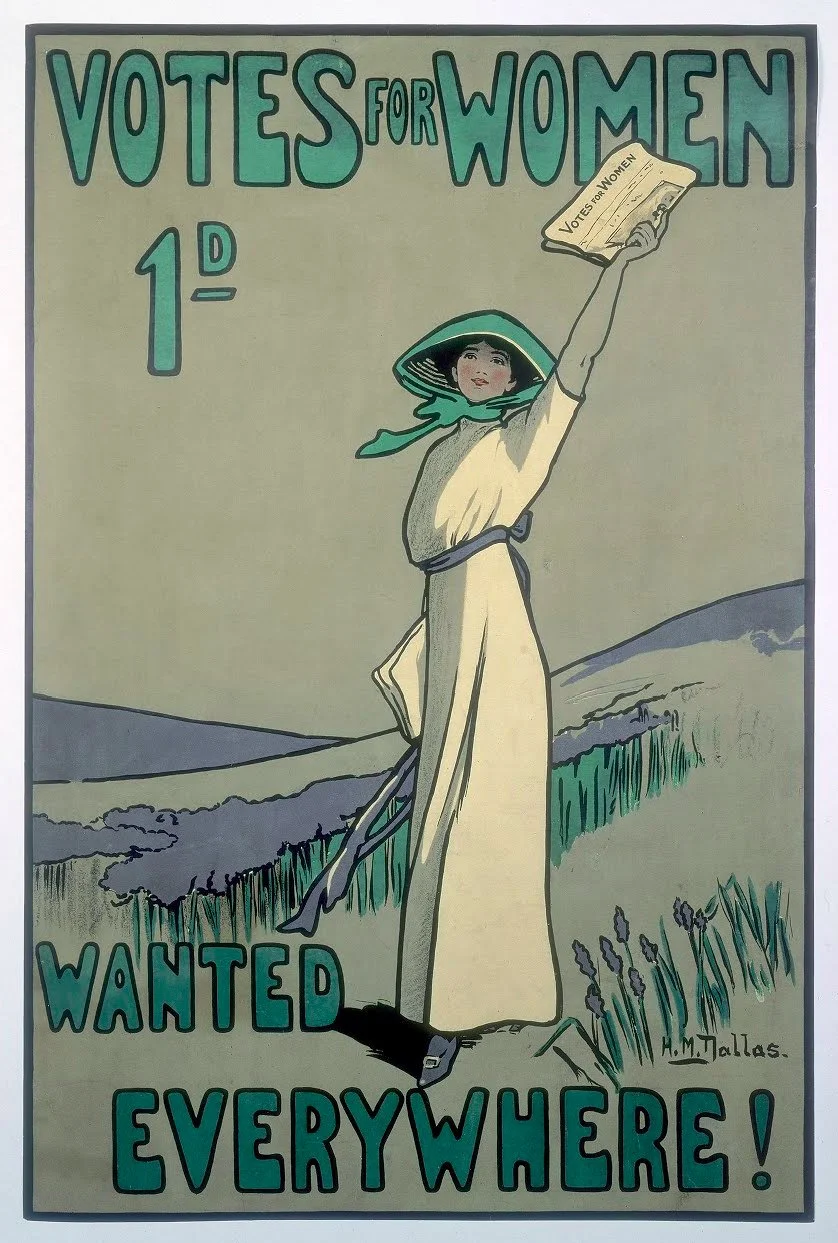
English Poster for voting rights 1910s
When Mary returned, her approach shifted. She did not agree with the militant actions of some English factions of the movement, but she strongly supported their commitment to civil disobedience. In 1917, she took her sisters to Washington DC where they joined the silent protest in front of the White House, the first of its kind, to pressure Woodrow Wilson to advance the vote.
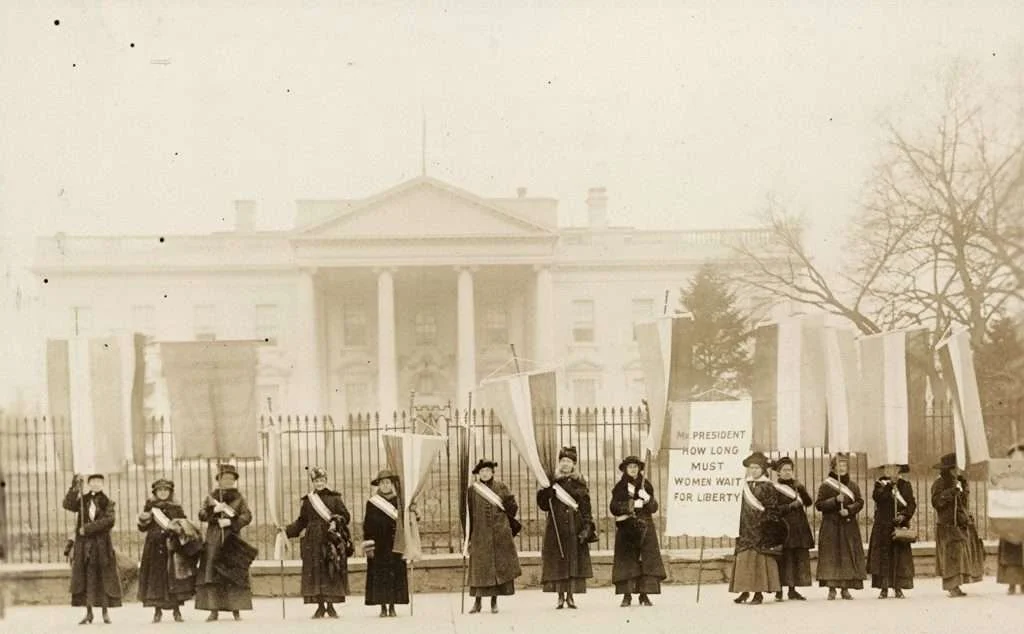
The first picketing at the White House, a silent vigil for the vote. 1917 public domain image
America’s entry into World War I ratcheted up the stakes, and the three women were arrested in September and sent to prison for blocking traffic on Pennsylvania Avenue, and burning “Wilson’s notes”. Their brother Henry came to bail out the girls after five days in prison, but Mary insisted no one pay her fines.
She spent sixty days in the Occoquan Workhouse in Lorton, Virginia. Thirteen of those were in solitary confinement, after a hunger strike, leading to her being violently force-fed. When news of the rats, lice, and abominable treatment reached the press, through a letter by Ellen to the judge, sympathies swung hard toward their cause. Mary was arrested and served in prison two more times before the 19th Amendment was ratified.
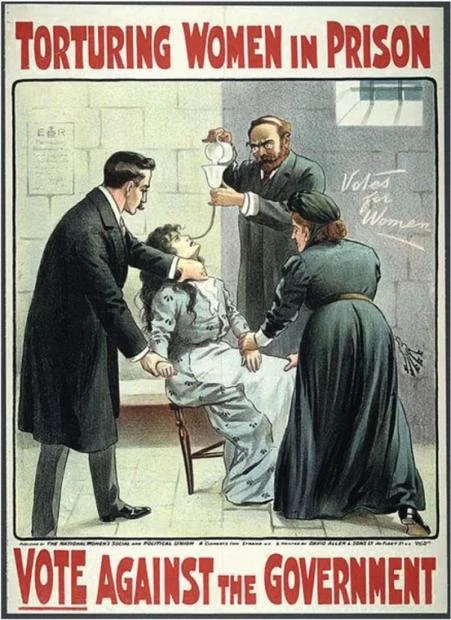
Mary and her fellow hunger strikers were force fed
The support women’s groups gave to the War effort also softened some ardent detractors and, faced with potential Democrat losses, Wilson threw his support behind full suffrage in 1918, and it passed the following session.
Mother Rebecca and Mary voted for the first time in 1920, and continued to vote together until Rebecca died in 1932. Mary also pursued non-violence, starting the Pennsylvania Committee for Total Disarmament, and she also pressed for safe contraception for women. Mary never married and passed away in 1956 at 87. Her obituary noted that she wrote, “I cannot wait to be old and unattractive so I can see life.”
Daughters Ellen and Rebecca were more extreme in their views and did not recognize any government, and thus would not vote. The younger women were intentionally ungovernable, quitting the NAACP when the group supported WWI. Later in life, they participated in the Tax Refusal Committee of Pacifists and refused to pay income tax because the money would be used by the federal government for weapons. They were arrested numerous times for principled protests. They refused inoculations, thinking vaccines and all chemicals were unnatural, even though it curtailed their vacations abroad.
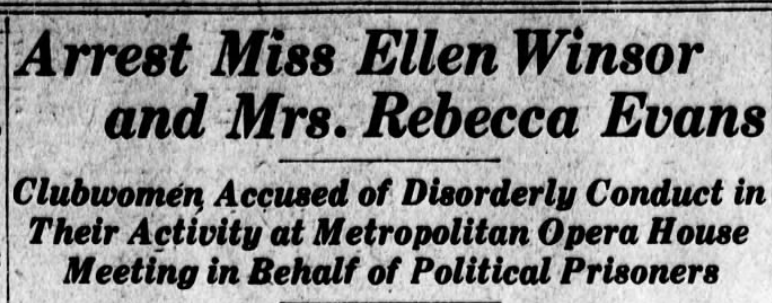
1922 Philadelphia Inquirer noted their arrest for protesting at the Opera
Their pacifism extended to animals, and they were strict vegans. Rebecca wrote a letter to the editor that noted, “Have you ever considered how you look to the pure eyes and mind of a vegetarian when you are eating corpses and thus making a morgue of your stomach?” Yet they threw lavish parties and drew a unique collection of intellectuals for spirited discussion. They called themselves peaceful anarchists.
In the 1920s, they became the prime benefactor for Albert Jay Nock, an essayist for limited government. He felt "Social power" (voluntary cooperation, culture, and trade) was inversely proportional to "State power" (coercion and the political means of acquiring wealth). In his view, the intelligent would have to preserve social power, because the masses were too easily manipulated.
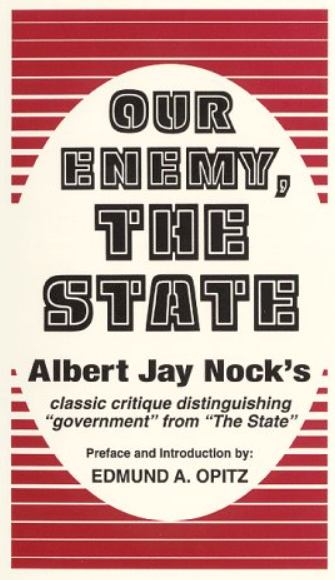
The sisters funded Nock’s work
"The only thing that the psychically-human being can do is to hold up a standard of the right kind of life, and mind his own business. The general run of humanity will not follow it, because it cannot... but the standard must be kept up for the benefit of the Remnant."- Nock letter to Sisters Ellen and Rebecca Winsor
As patrons of the arts, they protested that orchestra leaders and conductors received a multiple of the pay of musicians. They worked to spread classical music to children and the poor, and gave money to talented musicians, particularly African American and immigrants who, in their view, were undercompensated. One of their patrons, Virginia Lewis, sang solo for First Lady Eleanor Roosevelt at the White House in 1940.
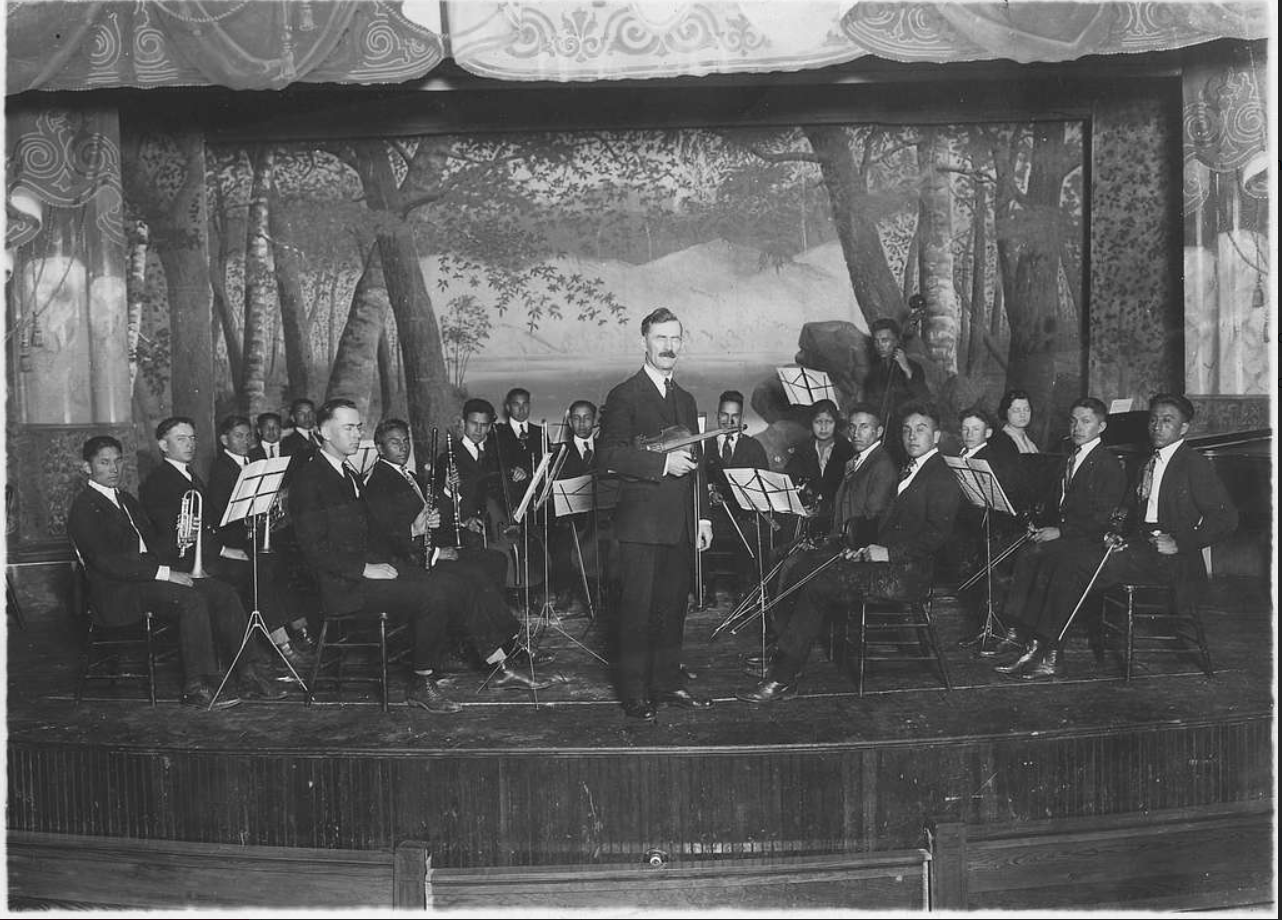
The sisters backed many talented musicians who were not paid very well compared to the orchestra leaders. (Library of Congress)
Rebecca married Edmund Evans and they had no children. As she aged and was widowed, she lived with Ellen. When Ellen died at 76 in 1959, Rebecca died within the hour “from shock” at age 80. The women left their home to the village of Radnor Pa. in their wills.